50 Words or Less
The autoFlex AutoPower golf shafts add a more conventional segment to the autoFlex family of shafts. The AutoPower Snipe driver shaft offers a familiar feel, while the AutoPower Flex is notably softer. Premium looks and pricing
Introduction
Five years ago, when chatter about Autoflex shafts began to show up in golf circles, many wondered if the brand would be anything more than a novelty niche. That notion was recently dispelled for me upon seeing the autoFlex Original – and its new name and spelling – in the mix of shaft options for Titleist’s GT drivers. Today you can find multiple shaft options for every club in the bag under the autoFlex umbrella. And now autoFlex has a new segment called AutoPower – “the perfect transition from conventional.”
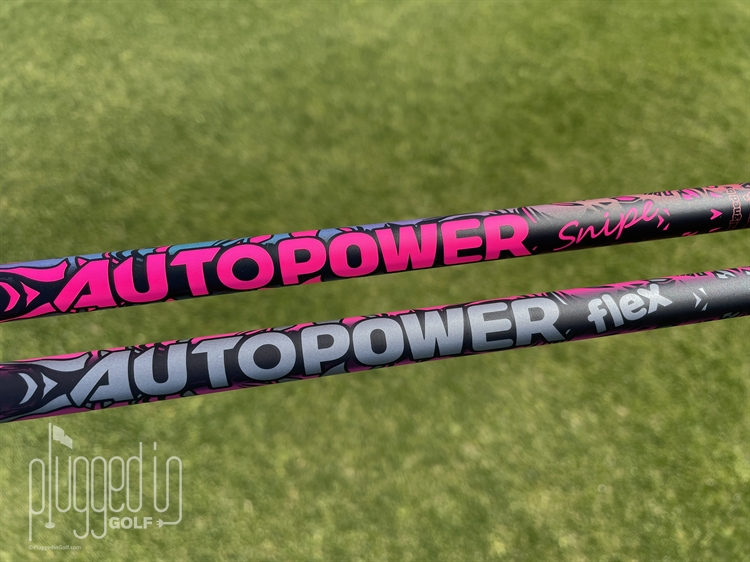
There are two models under AutoPower: Snipe and Flex. Snipe is advertised as “the first stepping stone on the path toward autoFlex.” And Flex is for when “you still need more time to adjust.” As you can surmise, autoFlex firmly believes the path to driver enlightenment is with autoFlex Original. Intrigued, I put both AutoPower driver shafts through the paces.
Looks
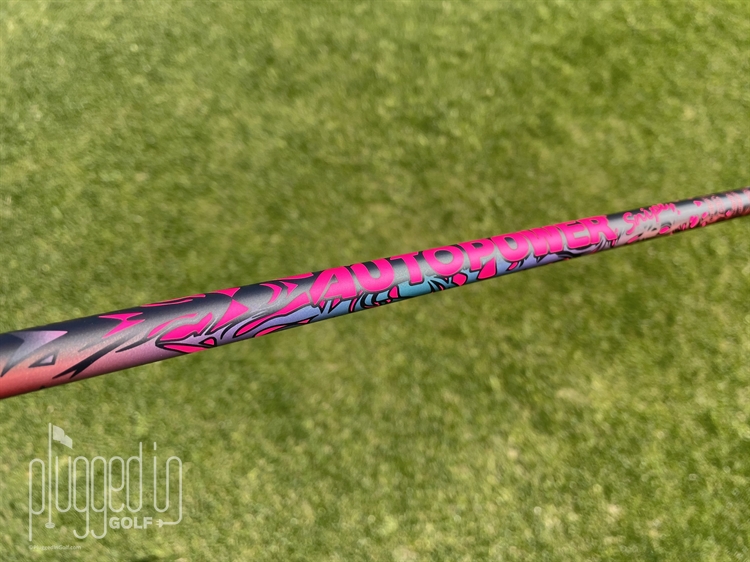
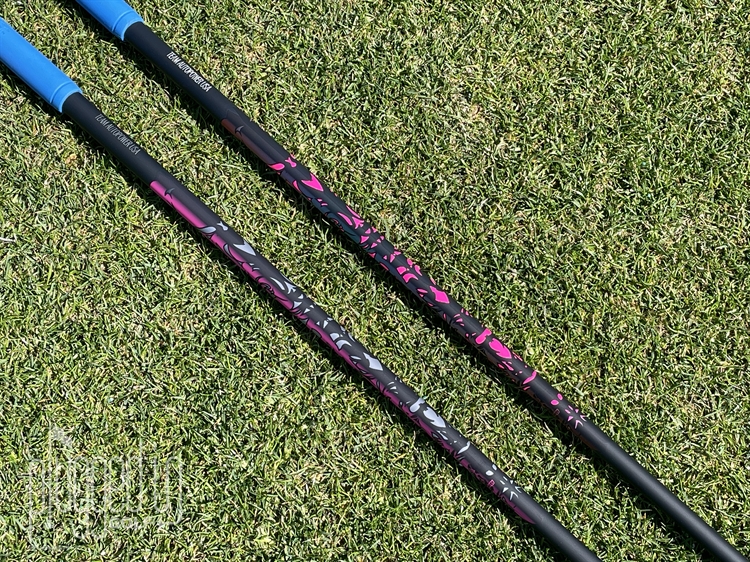
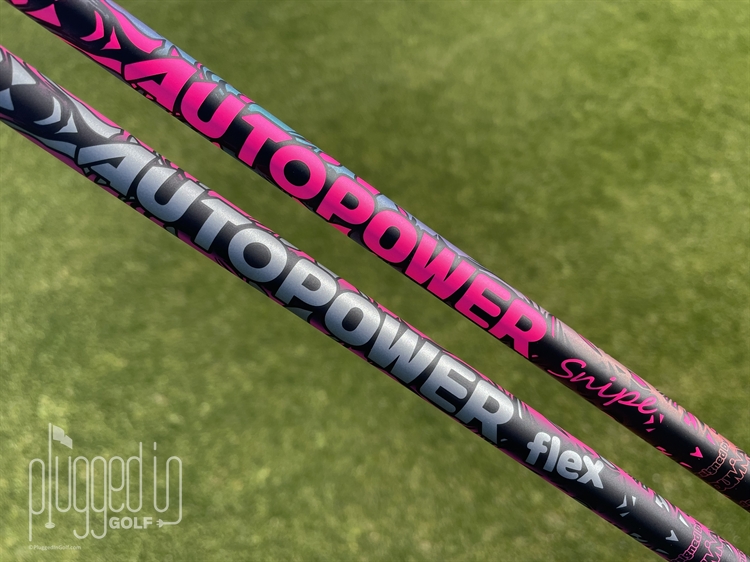
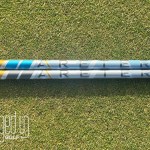
Much like the rest of the autoFlex family, the AutoPower shafts aren’t shy when it comes to colors and graphics. I love the bright pink paired with the groovy iridescent background colors of the Snipe, which is also available in red. The Flex is available in silver with a more subtle pink background. AutoFlex gives you the option of logo up or down when selecting grip installation (it’s a shaft+tip+grip package). As you can see from the photo below, even the logo down appearance still has a cool factor.
Feel
Feel is where both AutoPower shafts first distinguished themselves from their autoFlex siblings. Whereas Matt Saternus noted “a gentle wiggle gets this shaft moving” with the AutoFlex Dream 7 [review HERE], the AutoPower shafts wiggle movements were just around the tip section – similar, but slightly more than my gamer Mitsubishi Vanquish [review HERE]. The AutoPower Snipe butt section actually felt firmer than the Vanquish.
With a full swing, the Snipe clearly had more kick in the tip section than the Vanquish. The AutoPower Flex was notably softer than the Snipe from grip to tip. But the Flex is far from what I’ve experienced with the autoFlex Original [review HERE]. For both the Snipe and the Flex, swinging at full speed felt effortless and in control.
Performance
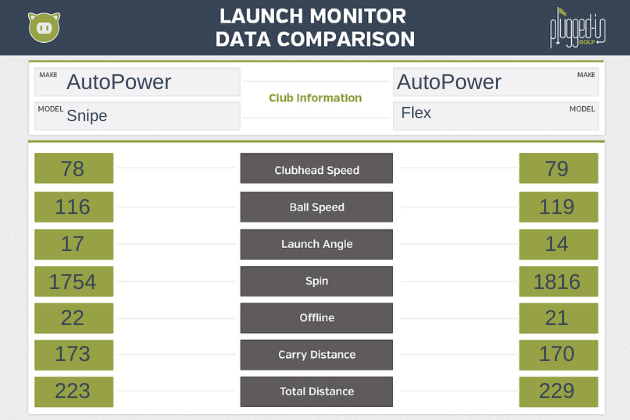
The AutoPower Snipe launch monitor results closely mirrored my gamer numbers. Launch angle and spin were a tad higher with the Snipe – both of which are positives for my swing. What I truly appreciated was the easy transition between shafts – no need for “get to know you” swings or adjustments. Dispersion was a little wider with the Snipe, but that’s a result that I could see improving with more reps. That said, the ‘best of the bunch’ shot was a true beauty that never left the target line.
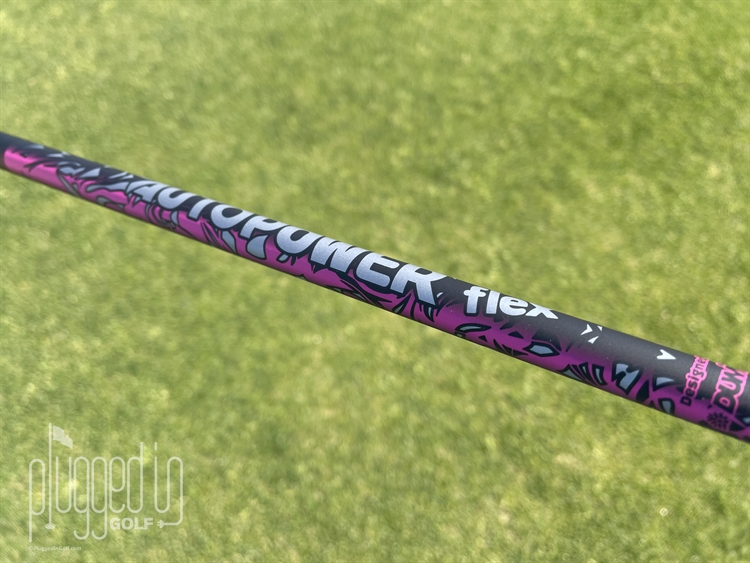
Switching to the AutoPower Flex, I needed multiple swings to find a playable rhythm – and it should be noted that I have a smooth, deliberate swing. In sync with the Flex, I picked up one mph in swing speed and three mph in ball speed. There was a clear left of center tendency (I’m right handed) in my results. The flexibility of the shaft placed an emphasis on lag and encouraged me to focus on body rotation rather than arm/wrist manipulation. The potential for more distance is there with the Flex, but I’d need a few true practice sessions to maximize performance.
What’s the secret to the AutoPower shafts? KHT – Korean Hidden Technology. As it’s been since the original launch, details on KHT are elusive. Where autoFlex shafts have KHT throughout, it’s “only in strategic locations” for the AutoPower shafts.
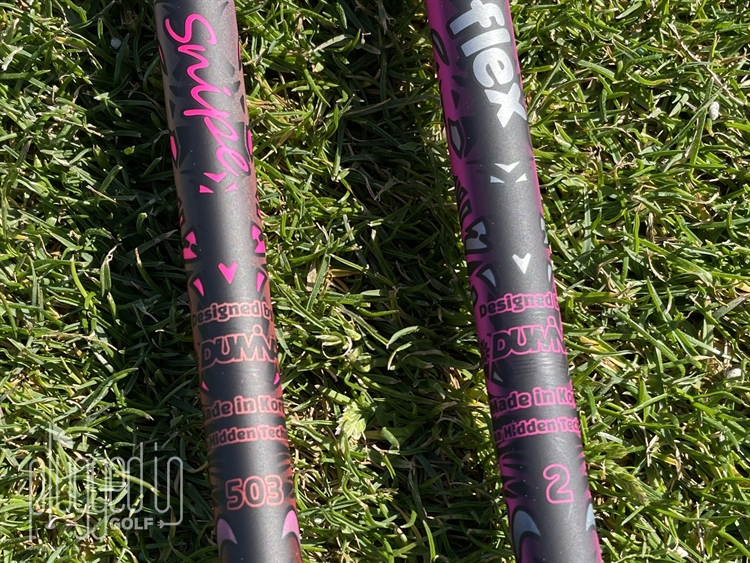
For gearheads, the autoFlex website [link at the bottom of this review] does list cpm and torque for the AutoPower shafts. And for what it’s worth, the Flex is one gram lighter than the Snipe in my respective models. On the subject of models, autoFlex lists swing speed ranges to assist in shaft selection. I went one more step and engaged the Online Fitting Tool. The program recommended the AutoPower Flex in the 80-95 mph speed. That equated to the “2” model, and I chose the same speed range for the Snipe, which was the 503.
Conclusion
The AutoPower Snipe and Flex golf shafts are an interesting addition to the autoFlex family. The autoFlex team clearly identified that not every golfer has the swing for, nor time to adapt to, an autoFlex Original. But they also make it clear that an autoFlex shaft is the pinnacle in the family lineup. Remember this line about the Snipe in my intro: “the first stepping stone on the path toward autoFlex.” Here’s the full line about the Flex: “if you still need more time to adjust, try the second shaft in the AutoPower lineup, the AutoPower Flex.” That’s a pretty focused message.
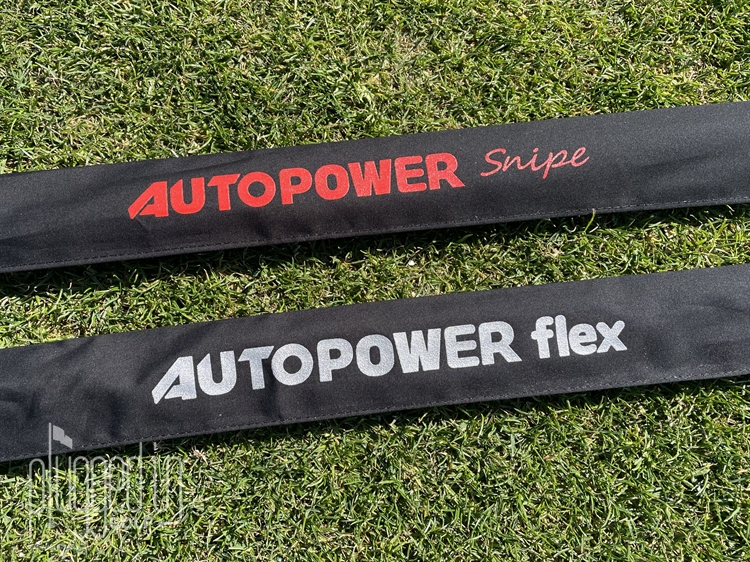
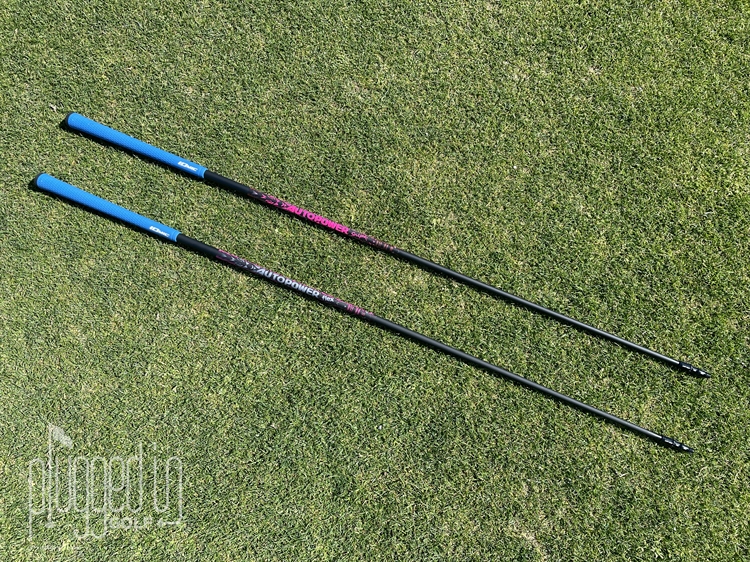
Following the path to the $790 autoFlex Original doesn’t come cheap. The Snipe rings in at $490 and the Flex at $590. If it makes you feel better, those prices include grip and tip (and you get to choose if installed or loose). Plus the shafts comes in lovely sleeves as shown in the Intro photo. Based on my results, the AutoPower shafts are worthy of consideration on their own – if you have a smooth swing.
Visit autoFlex HERE

- Bettinardi BB49 Putter Review - March 24, 2026
- TaylorMade Qi4D Driver Review - March 12, 2026
- XXIO 14 Hybrid Review - March 10, 2026


One Comment
Respectfulyl, I’m not sure how valid this review is if you’re only carrying 170.