
50 Words or Less
The Wilson DYNAPWR Carbon driver is a strong performance with premium looks and feel. A big step in the right direction for Wilson Golf.
Introduction
Wilson’s history in golf goes a long way when it comes to selling traditional irons like the Staff Model Blades [review HERE] or iconic putter like the 8802 [review HERE]. History, however, does not sell drivers, which is part of the reason Wilson has had a hard time establishing a role in the modern driver market. They aim to change that with a new lineup centered on the Wilson DYNAPWR Carbon driver. I tested it to see if it could modernize Wilson’s reputation.

Looks
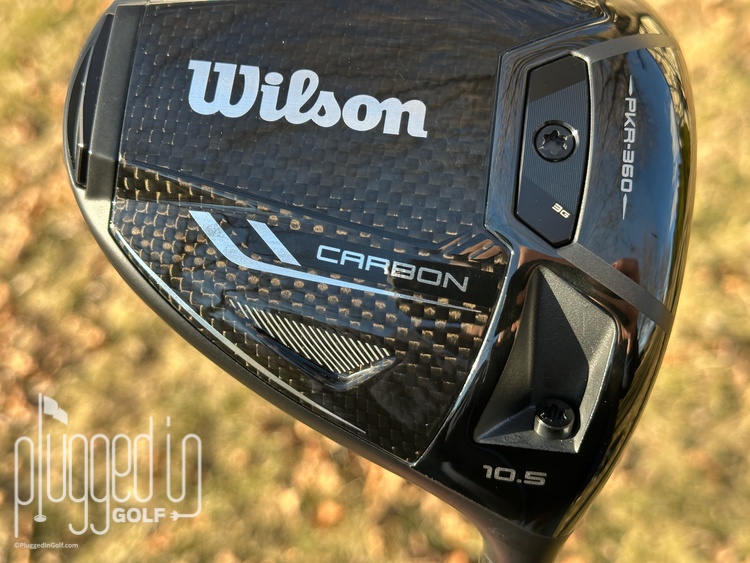
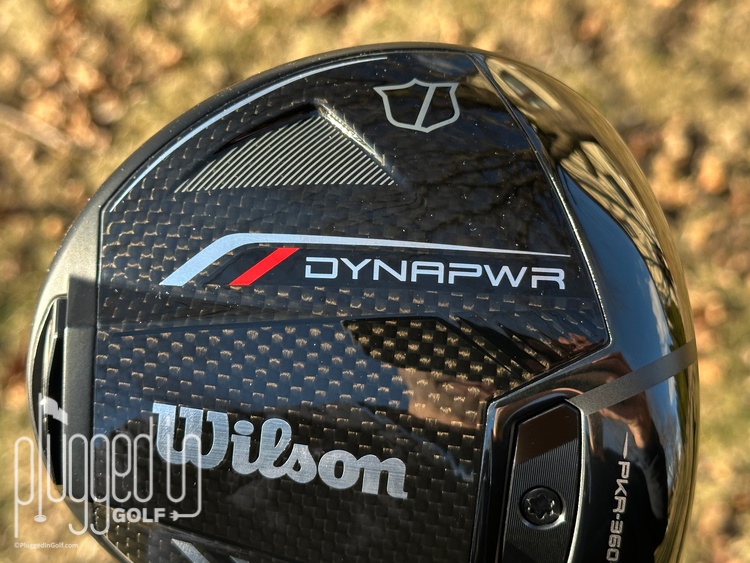
On paper, the look of the new Wilson DYNAPWR Carbon driver isn’t remarkably different than the Dynapower Carbon (note the spelling difference) from 2023 [review HERE]. Both have carbon fiber crowns with very modest graphics. In practice, however, the new DYNAPWR Carbon driver is a big step forward. The gloss finish on the carbon fiber looks much more high end, and the ribbon of steel at the leading edge is much thinner. There’s also been a subtle change to the shape with the new model sweeping slightly toward the toe.
Similarly, the look of this club in the bag has been elevated. There’s glossy carbon fiber everywhere, making it look like an F1 car. The Wilson branding is centered between “DYNAPWR” and “Carbon” toward the heel and toe and adjustable weights fore and aft.
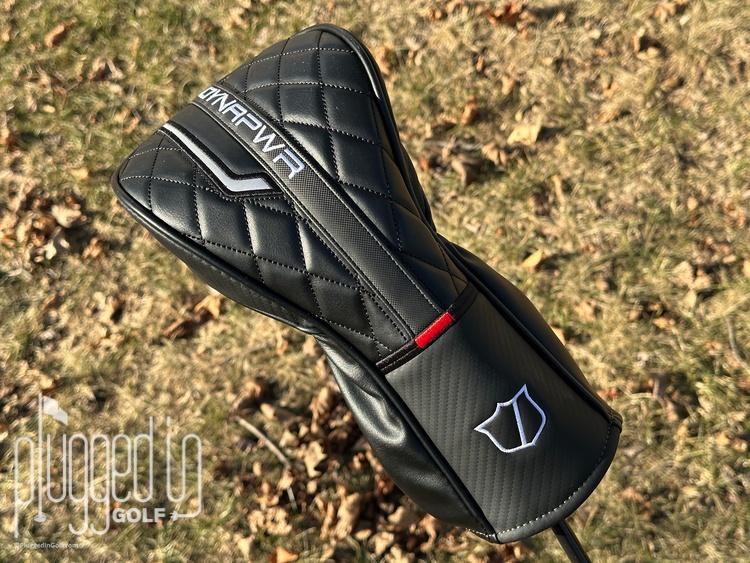
Topping off this premium look is the quilted headcover. This is a look we rarely see from OEMs, and I think it’s great. You might argue there are too many other things going on – they could have given the quilting center stage – but it’s definitely not a boring cover.
The Wilson DYNAPWR Carbon driver is the middle ground between the DYNAPWR LS [review HERE] and DYNAPWR Max. It’s not as long from front-to-back as the Max but not as short as the LS. All three models have tall faces, but the LS is about 1/8″ taller than the other two.
Sound & Feel
I started hitting the Wilson DYNAPWR Carbon driver in a dome, which I consider to be a torture test for the sound. If a driver sounds good in a fitting bay or a dome, it’s going to sound great outdoors. The DYNAPWR Carbon passed that test, prompting me to describe it as, “Delightful” in my notes.
On center, the sound is a little louder than average with mid-low pitch. It’s a round “pop” that is, truly, delightful. “Pop” may have you thinking that this club sounds hollow, but somehow it doesn’t. It’s a full, rich tone. Off-center strikes pick up a slight metallic character and become more of a whip crack. This provides strong audio feedback without making any strikes unpleasant.
The feel provides another strong form of feedback, but it takes a backseat to the sound. My hands got a solid sensation, and they knew where the ball met the face, but the satisfaction came from the sound more than the feel.

Performance
The most modern element of driver performance is ball speed and the preservation thereof, so let’s start there. On center, the Wilson DYNAPWR Carbon driver is in the running with the very best. My top swings produced ball speed on par with anything else I’ve hit this year. This driver also does a good job keeping speed up on mishits. It’s not among the elite in terms of preserving ball speed, but it still belongs in the game improvement category.
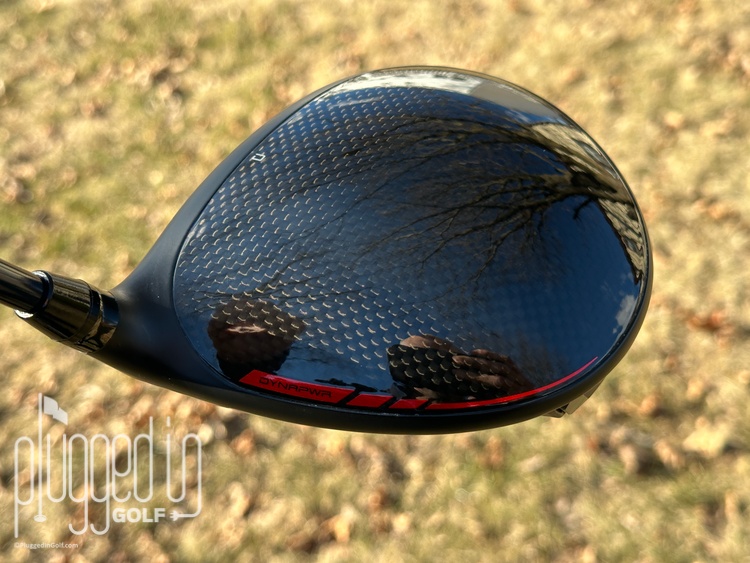
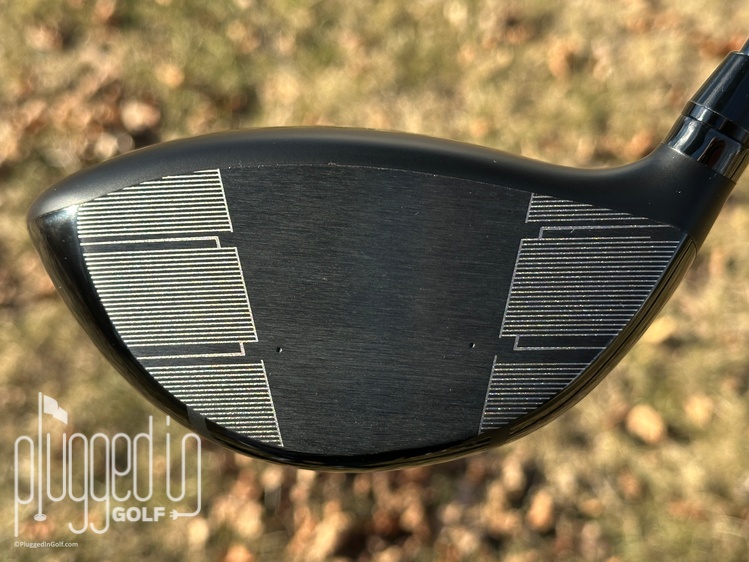
The Wilson DYNAPWR Carbon driver’s name is well earned: per Wilson, 58% of the surface area of is carbon fiber. Their goal in using this much carbon fiber isn’t just to make the club look cool – it’s to move weight into the positions where it will help golfers the most. With all this optionality, Wilson created a club with mid-low launch and spin. The stock shot hits a trajectory just north of boring with plenty of roll out.
*A note on the numbers above: I tested a 10.5 degree head with a 50 gram, stiff flex Fujikura Ventus TR Blue variant. I normally test 9 degree heads with 60 gram X-flex shafts.

Wilson also gave the DYNAPWR Carbon driver dual adjustability. The hosel has six settings, all related to loft and face angle. You can add up to two degrees of loft or remove up to one degree. These changes come with alterations to the face angle, as explained HERE.
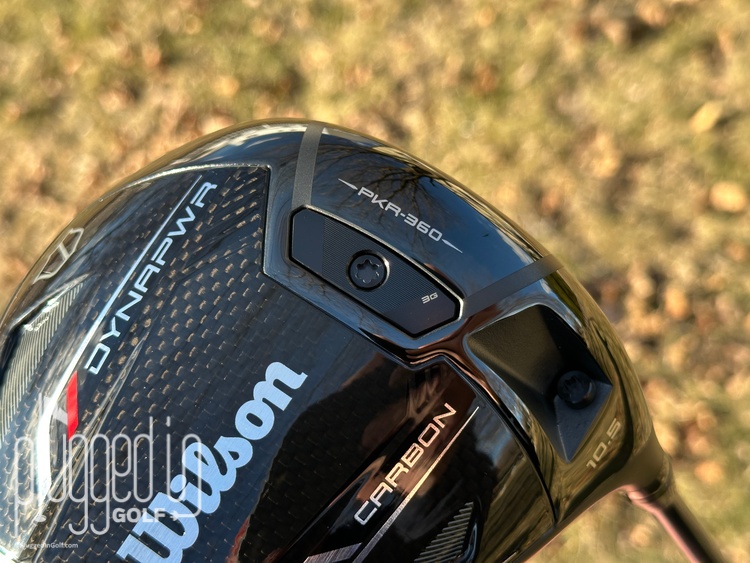
The other half of the adjustment puzzle are the movable weights. There are two weight ports – one near the face, one on the trailing edge. Per Wilson, the DYNAPWR Carbon driver comes with 6 and 12 gram weights, though mine came with weights that are 3 and 9 grams. Regardless, placing the heavier weight forward can lower spin around 150 RPM; putting the heavier weight back boosts the stability slightly. It’s not a game-changing adjustment but a way to fine tune the performance and feel.
Overall, the Wilson DYNAPWR Carbon driver does a good job as the “middle driver” in the 2025 lineup. It lives up to Wilson’s claims of offering a balance of “forgiveness and workability.” Players that need lower spin can find that in the Wilson DYNAPWR LS driver, and those seeking more forgiveness should try the Wilson DYNAPWR Max driver.
For more forgiveness, check out the Wilson DYNAPWR MAX driver HERE

Conclusion
I’m unsure if the Wilson DYNAPWR Carbon driver will fully reverse the company’s fortunes in the driver category, but it’s definitely a step in the right direction. Wilson has created a club with a premium look and sound and the performance to compete with the bigger names.
Support Plugged In Golf, Shop HERE
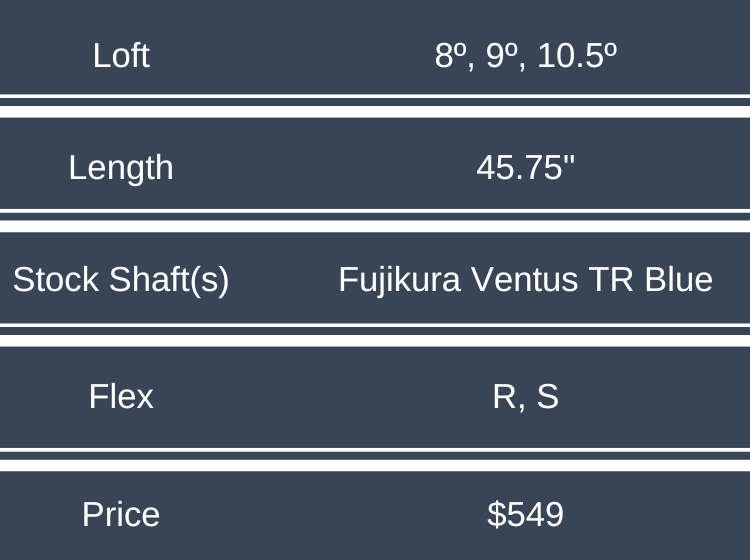
Wilson DYNAPWR Carbon Driver Price & Specs

He founded Plugged In Golf in 2013 with the goal of helping all golfers play better and enjoy the game more.
Matt lives in the northwest suburbs of Chicago with his wife and two daughters.
- PuttOUT AirBreak Max Putting Green Review - April 8, 2026
- 2026 Wilson DYNAPWR Forged Irons Review - April 7, 2026
- Takomo 201 MKII Irons Review - April 6, 2026





10 Comments
Nice review, thanks. The one concern I would have regarding the marketability of this club is that it’s what, $50 less than the top OEM’s? Given how heavily they advertise, I’m not sure if many people woodbury jumping to save $50. Again though, that’s why it’s important to hit these clubs and get fitted.
Mike,
I agree 100%. That’s beyond the typical scope of my reviews, but your comment opens the door for me. I think pricing is such a tough tightrope in golf (and other things). On one hand, your comment is deadly accurate: for another $50, most people are going to opt for the bigger names. However, if you drop to $500 or $450 where the savings are substantial enough to make people think twice, do you risk being perceived as a “value” brand, which most people perceive as “not as good”, and thus even those who do buy your drivers are perpetually hoping to “move up” to PING, TM, Titleist, etc. I don’t think there’s an easy answer.
Best,
Matt
I love Wilson clubs and have not had one in the bag for a while now. This driver is definitely attractive and would have no issues in the bag if it were to improve my distance and consistency hitting fairways. The price is what will keep this driver out of most bags as you both mentioned. A substantial decrease is needed without marketing, tour play and brand recognition with the under 40 crowd. Still will try it and see what it can do.
Grant,
Thanks for your comment.
I’m curious: as someone who loves Wilson clubs, what has kept them out of your bag?
Best,
Matt
Where can I find a 6g weight for the carbon driver? Wilson is no help when asked, only told they do not sell individual weights.
Shannon,
Unfortunately, I do not know. I would have advised asking Wilson; it’s disappointing that they weren’t more helpful.
Not to excuse them, but you might ask again in a few weeks after the clubs have been at retail for a bit. It’s possible that whomever you spoke to wasn’t aware of the weights being available because they aren’t in stock yet.
Best,
Matt
Nice review. I purchased a 2023 model about a month ago after watching several reviews from different folks. My used but looked new price was under $200. I’m very average! But inside a big box retailer test bay against 2024 premium models, my personal numbers were better with the Carbon Dynacore. I’d say, while it’s a mountain to climb, Wilson is on the right track and honest reviews from folks like yourself will “help the cause”!
Matt,
I was once on staff with Wilson as a young asst pro. I also had a set of FG-51 blades with the early Rifle shafts. Still one of the best blades ever. I would say from the mid-90’s to current, their offerings did not suit my eye. The newer stuff from the past 3-5 years has certainly gained my attention. Their latest irons, wedges and woods look really good. I am in the market over the next two years for new woods and irons and would test the Wilsons. Always want what performs best, what first fits my eye and improves my game. There is a lot more competition out there for Wilson.
With technology changing so quickly and new products breaking out daily… you might be better off finding the right shaft and the best grips. — and save yourself $200 or $300.
–
Great review, I saw this driver for the first time earlier in the week and it is one of the best looking drivers I have seen in a while but I never had the time to hit it, yesterday I got to test it and the 9 degree head with the Hzrdus Black Gen 5 60X shaft gave me excellent numbers but what was most surprising was that it combined low spin with loads of forgiveness, I would really like to test this driver with my favourite Diamana WB 63TX shaft.