

50 Words or Less
The Mizuno JPX One driver combines a classic-looking head with brand new proprietary face technology. All-around performance, targeted to golfers of all handicap levels.
Introduction
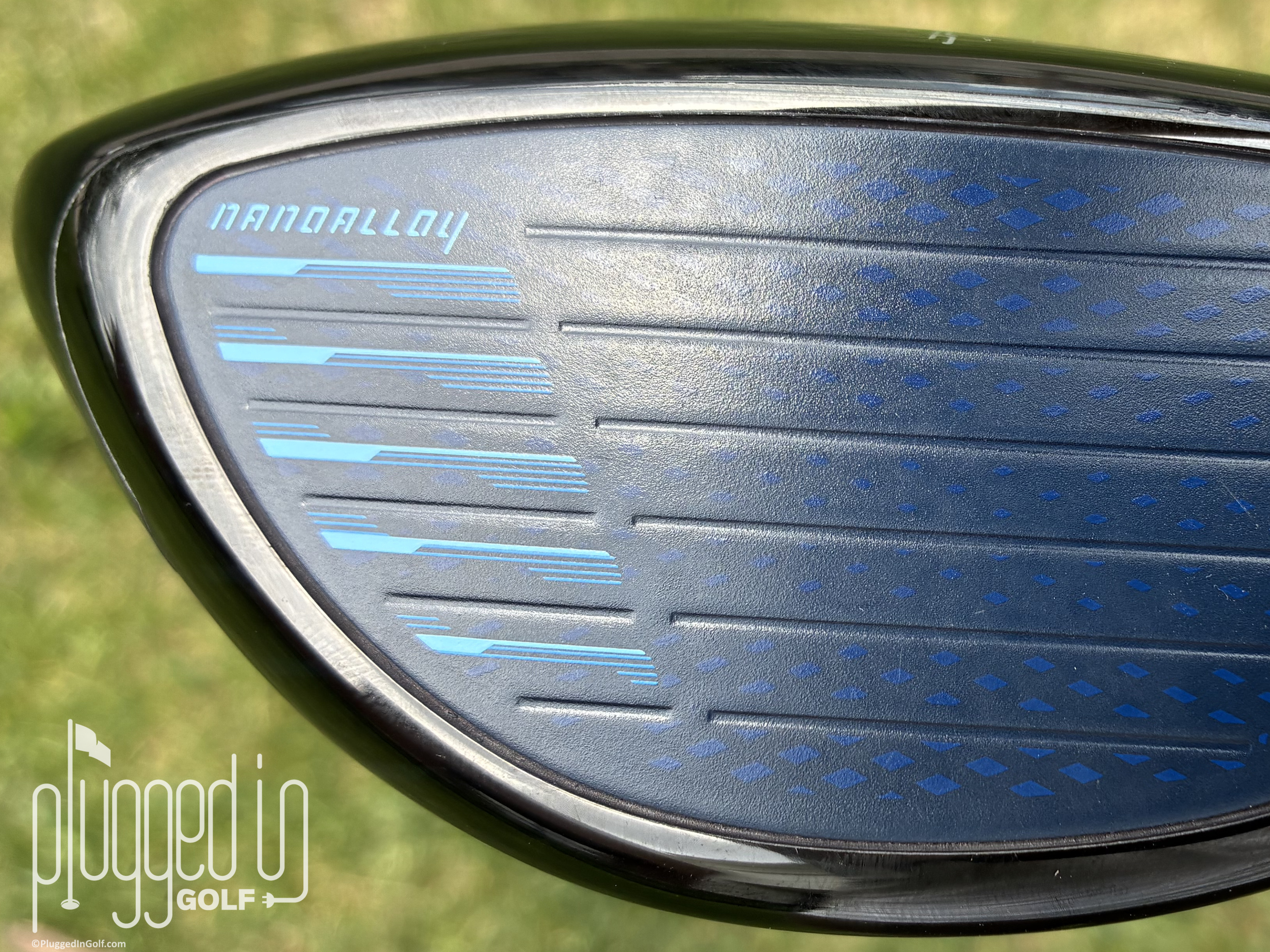
In the race to develop the longest and most forgiving driver, the club face has emerged as the latest frontier. By using new materials, OEMs are attempting to simultaneously save weight and create impact conditions that are faster and more forgiving. TaylorMade paved the way with the introduction of its “carbonwood” era beginning with Stealth in 2022. The ensuing drivers have received mixed receptions, in both the professional and amateur ranks. Yet, many of the big OEMs continue to push in this direction, seeking the slight competitive edge that will set them apart from the competition. The Mizuno JPX One driver is one such product, featuring the introduction of NANOALLOY™ face technology.
Looks
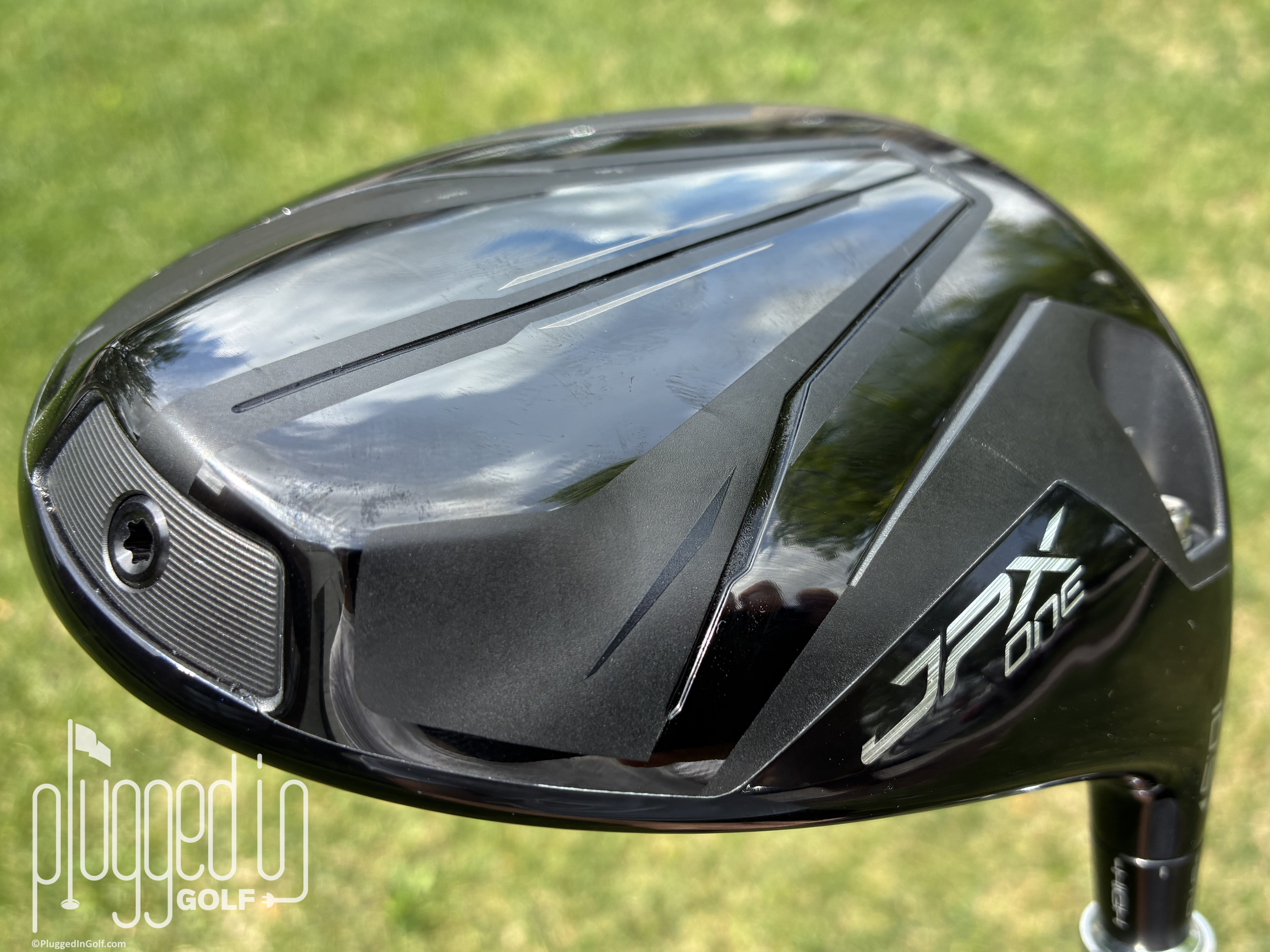
In many ways, the Mizuno JPX One driver is what one might picture when thinking about the image of a modern driver in 2026. It shares many characteristics of other recent drivers but manages to retain an identity of its own, primarily due to its blue color scheme, a color that has become synonymous with Mizuno over the years. It’s a good looking club. The clubhead looks forgiving but not massive.
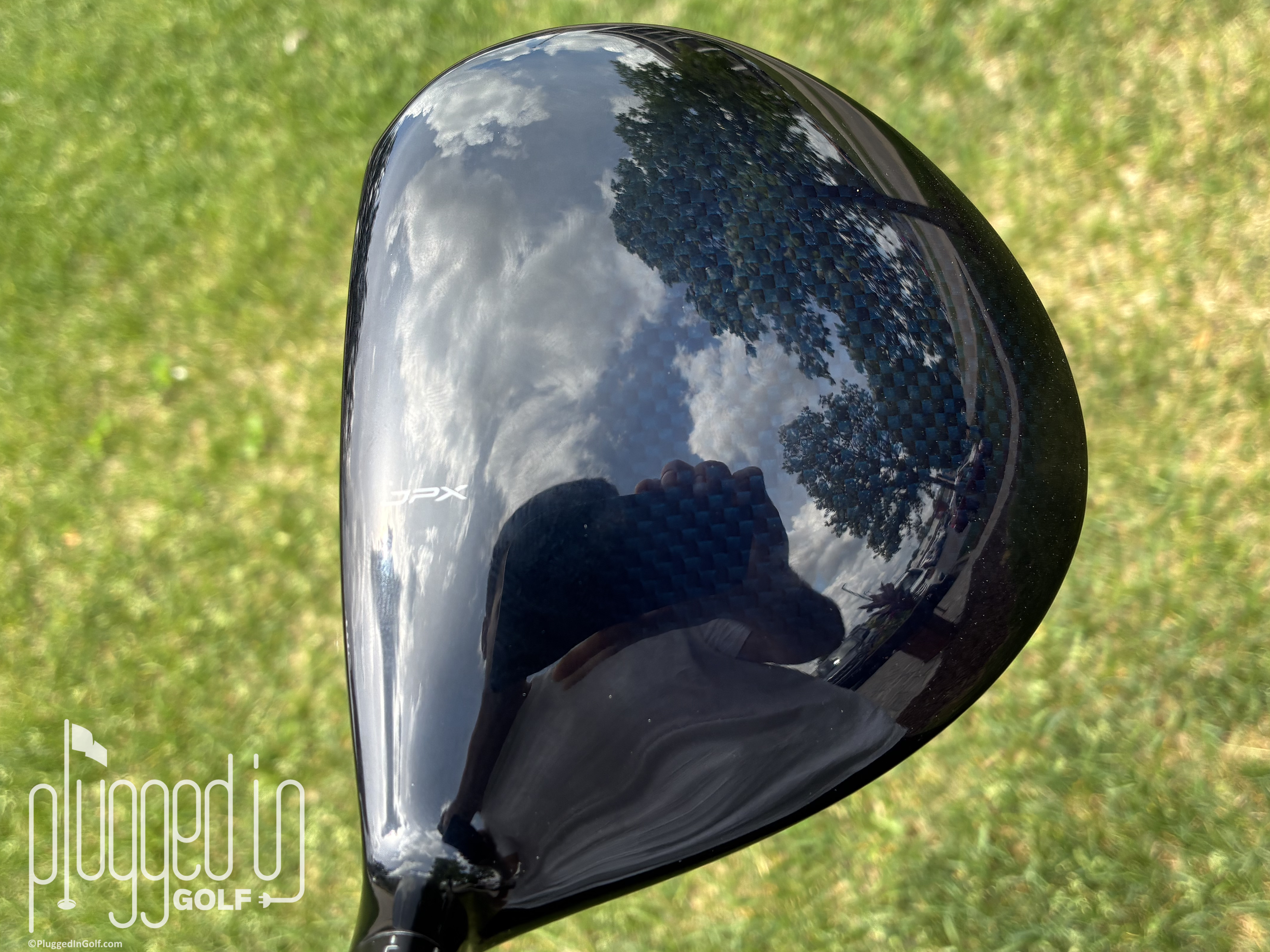
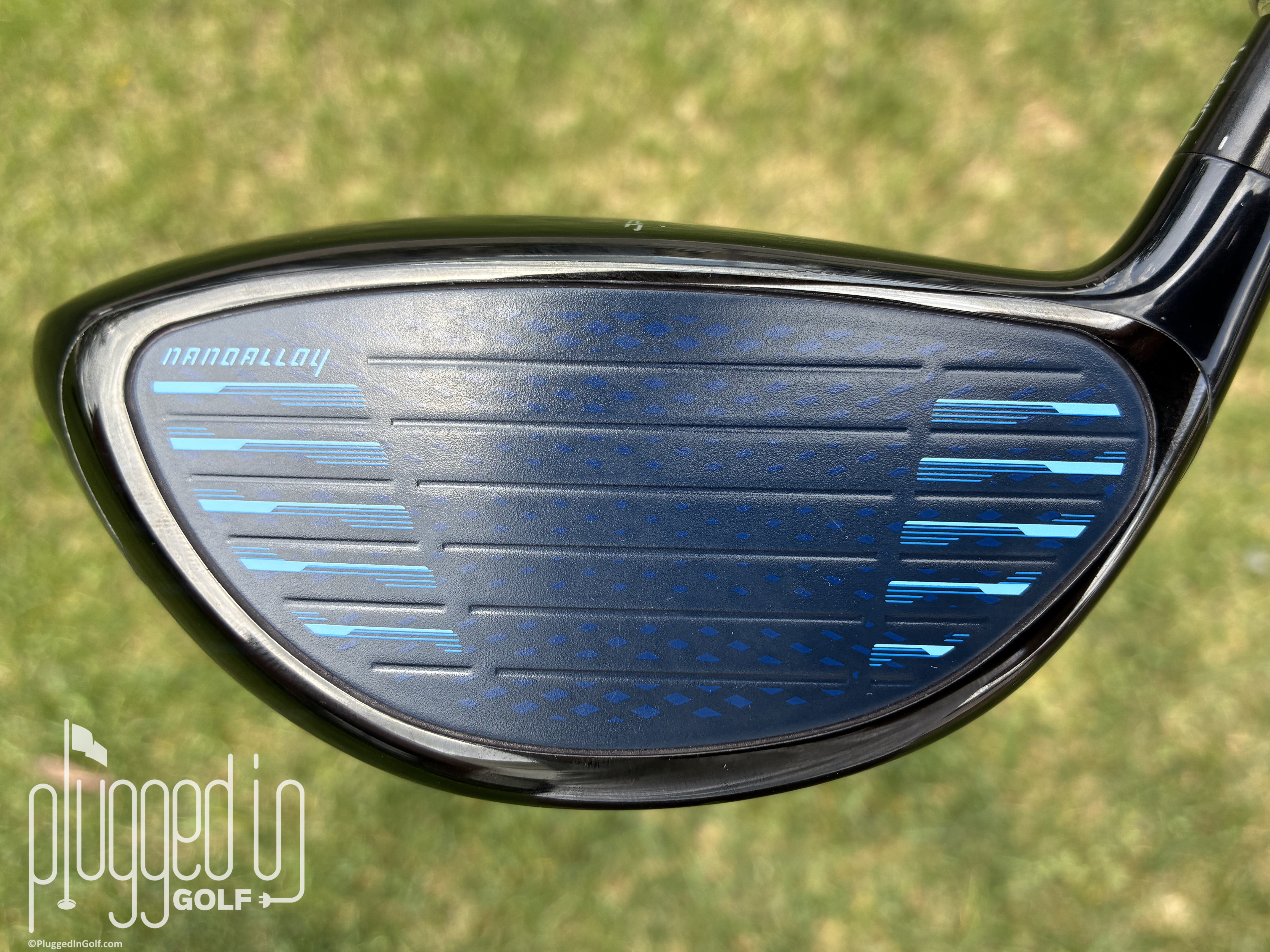
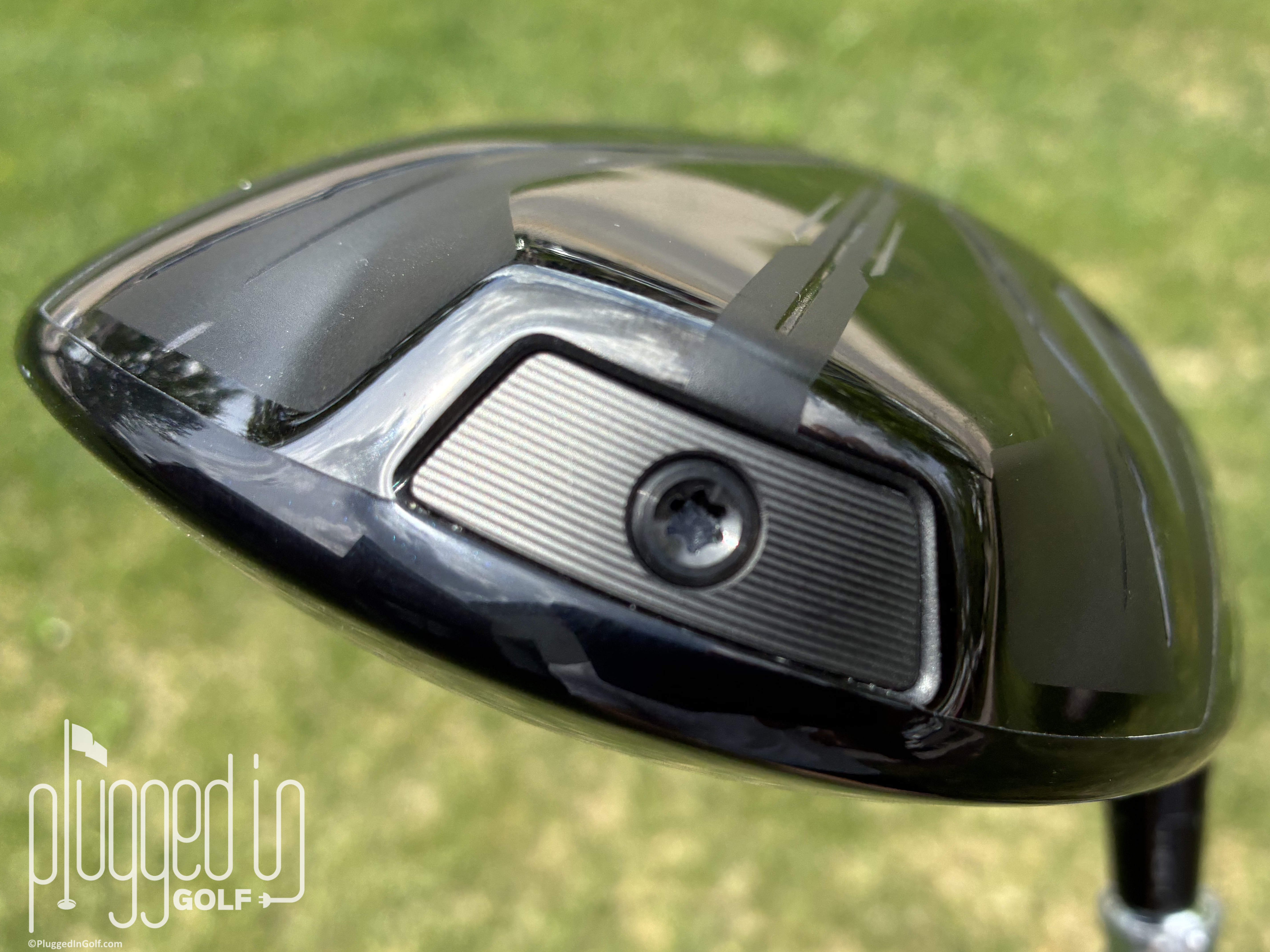
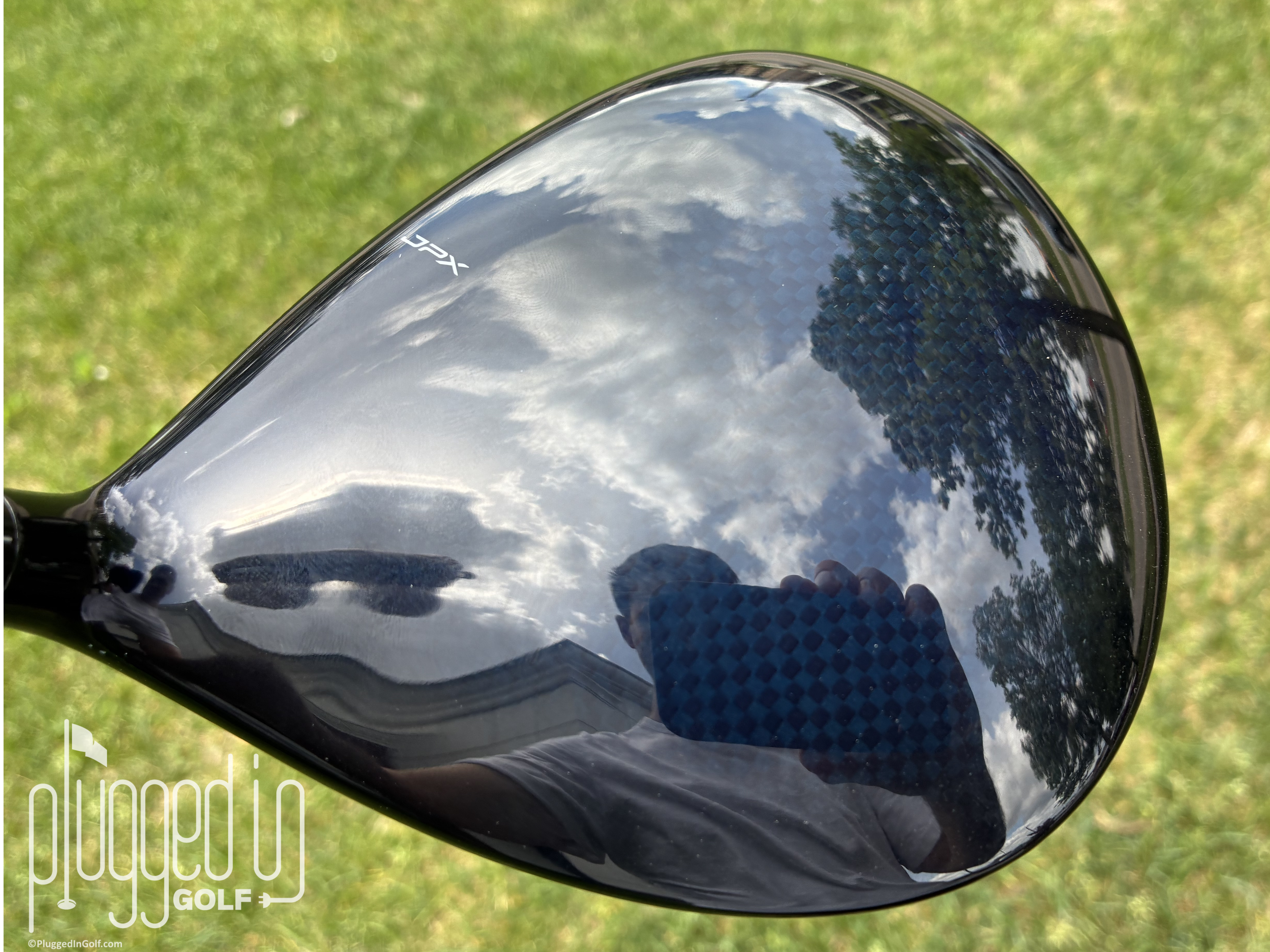
The glossy crown has a carbon fiber pattern that fades out to become a solid and subtly sparkly blue color towards the face. I love the design of the sole, which is very reminiscent of the Titleist TSR2 [review HERE], one of my favorite looking drivers in recent memory. The face announces itself boldly with a navy blue color with electric and royal blue accents. The face material appears to have a vinyl-like quality that reminded me of running my hand across the dashboard of a car. [See Price / Buy]
Sound & Feel
I’m not going to sugarcoat this: the sensory experience of hitting the Mizuno JPX One driver is not my cup of tea. I found the sound of impact to be thin and harsh, coming off as a plasticky ‘crack’ and lacking in resonance. The feel was similarly thin. I just did not get a great sense of the ball and how and where it was struck. I will say that, for me, this seems to be more or less a shared problem among drivers with carbon or composite faces, and not something specific to the Mizuno JPX One driver, although if I’m being honest, I did find this one to be particularly unpleasant.
I don’t doubt that investing in these materials may have performance benefits, but so far the sound and feel has not been improved, at least in my estimation. Everyone is entitled to their own opinion, and I’m sure there are players out there who will enjoy it, but my fitter did not disagree when I shared my thoughts with him.
Performance
As I’ve said, sound and feel is subjective. Results are not. This is the point in the review where I’d love to write the redemption arc and talk about how blown away I was with the performance. Unfortunately that’s not really the case. It isn’t that the Mizuno JPX One driver is a bad club. It’s just that I didn’t find anything that made it stand out above the level of other drivers I have tested recently.
First of all, I want to acknowledge the subjective nature of testing golf clubs. I was not having my best day swinging the club when I tested the Mizuno JPX One driver. For whatever reason, I had a hard time getting comfortable and never really got into a good rhythm. Eventually, I gathered enough data from good strikes to understand the performance characteristics of the club, but it took more searching than it typically does. As always, your mileage may vary.
Check out the new Mizuno JPX One fairway wood HERE
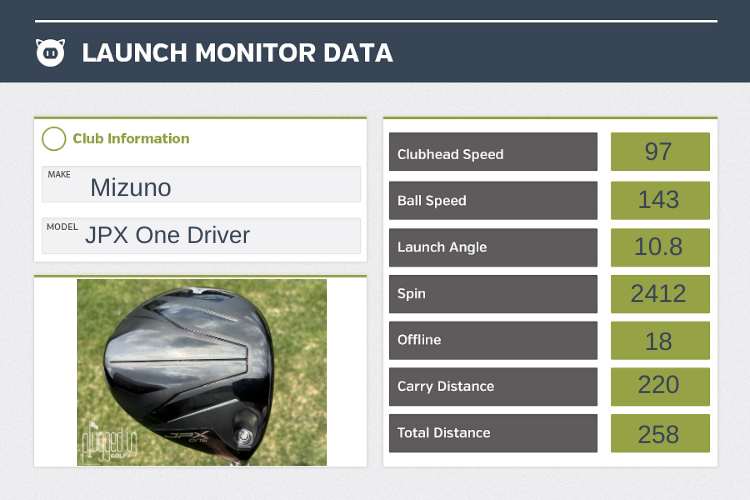
Overall, I would say the Mizuno JPX One driver is on the lower end of the spin spectrum. Of all the data I collected on decent strikes, spin never crept above 2750 revs. This is definitely unusual for me, as I will often see spin well over 3000 revs. Overall, the spin numbers were very consistent. This could be a good sign for players who have moderate to high swing speeds. It might not spin enough to create optimal carry for players who swing driver under 95 mph. The JPX One is also available in a tour-preferred model called the JPX One Select.
I would classify the distance of the Mizuno JPX One driver as average. It definitely carried a bit less than some other drivers I have tested lately, but I was also swinging it a couple mph slower, on average. The good strikes with higher swing speeds ended up being very close to the kinds of numbers I have seen from other drivers I have tested this year. It also seemed to offer a decent level of forgiveness on different strike locations across the face. According to Mizuno, that’s the main achievement of its new face material.
According to the company’s marketing material, NANOALLOY™’s unique properties allow it to “dynamically change its elasticity at impact.” It goes on to claim that this “conserves the golf balls energy by reducing frictional losses due to deformation, thus delivering ball speed gains across a wider area of the face.” As a layman, I’m not sure what to make of that. I believe that there’s real science behind what they’ve developed but I didn’t notice any significant gains in ball speed compared to what I might see from other drivers.
One of the issues with carbon face drivers that have been released by other OEMs has been durability. I found it interesting that the Mizuno website included some guidance about its NANOALLOY™ club face and how to keep it clean, stating that ensuring the face is clear of any sand, debris, or dirt before hitting will get the most out of the technology.
It also notes that scratches may appear on the face of the Mizuno JPX One driver if balls are struck with any debris or dirt attached to them, but that these scratches will not affect the integrity of the face or the performance of the club. It will be interesting to see if this technology has the durability to stay in golfers’ bags for the long-term. [See Price / Buy]
Conclusion
The Mizuno JPX One driver is a solid performer. Other than its sound and feel, which was very off-putting to me, I found its performance to be in line with many other modern drivers. While I wasn’t inspired by its new face technology, I’m open to the possibility that Mizuno may have something to build on or that it might start to show more value at higher swing speeds. At $600, hardcore Mizuno fans will want to give it a spin. Others will probably be happy sticking with other big OEMs. [See Price / Buy]
Who It’s For: Golfers seeking maximum distance, forgiveness, and consistency with a confidence-inspiring driver that promotes a straighter ball flight.
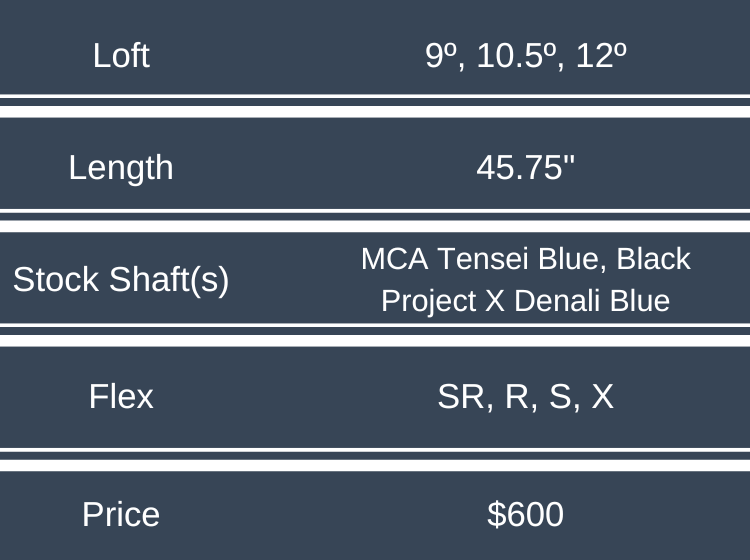
Mizuno JPX One Driver Price & Specs

- Cobra KING Irons Review - September 24, 2026
- Payntr Reserve Classic RS Golf Shoe Review - September 16, 2026
- Sun Mountain Matchplay Ballistic Golf Bag Review - September 3, 2026





Join the Conversation | 6 Comments
… I’ve had one sitting (Select One) in my golf room for a few months now. I purchased it with a Denali Frost Blue Regular Flex. I really wanted a Black Stiff but my pro shop guy said I should give it a try. I did go ahead and order a Hzrdus Gen 5 Black Stiff. Nevertheless, most reviewers have stated it spins numbers are higher than most other drivers they’ve tested. It’s a good looking driver and I was and still am curious. Always looking for more, right? I’m currently bouncing around between the GT2, 440G LST, Qi4D and my main squeeze the Quantum Triple Diamond Max. One of those will be my gamer for the next 3-5 years, I’m sure.
Update: I’m still experimenting around with a few drivers (GT2, 440G LST, Qi4D Core, Select One, Elyte TD Max and Quantum TD Max). With my current swing specs (100 – 105 mph and higher spin rate), I’m using the Tensei 1k Black Stiff Shaft in all drivers.
The GT2 is nice but temperamental (a hook out of nowhere). The 440G LST is straight but harder to work. The Qi4D Core is harder to draw but hits some of the most strongest power fades I’ve ever hit but not easy to draw. Both the Callaway Drivers (Elyte and Quantum Triple Diamond Max Drivers) give me the most forgiveness, distance and versitility to work the ball. The Select One has a really nice look, strong impact sound (to my ears), a good amount of forgiveness, easy to work the ball (left or right) and distance close to the Callaway Triple Diamond Max Drivers.
Last week I added a Cobra Optm LS to the mix. I was skeptical about trying another Cobra LS model but it felt pretty nice overall. I just need more time with it. Most likely my new gamer will end of being the Callaway Elyte and Quantum Triple Diamond Max Drivers but I’m still very curious about the Mizuno Select One. I believe Mizuno is onto something with their new face technology. It’s not as spinny (for me) as several other reviewers have found. With that said, I find it to be a very intriguing new driver.
Update #2:
The Ping G440 LST, Titleist GT2, GT3 are going on Market Place. Waiting on a new Tensei 1k Black for the Cobra Optm LS.
Still experimenting with the TM Qi4D Core. So far the Elyte and Quantum Triple Diamond Max Drivers are my favorites.
With all that being said, the more I use the JPX ONE SELECT, the more I’m liking it. I feel it’s still a little fade bias but I can still pull out a slight draw. It seems the more I use it, the longer it gets. I did get a weight kit for it. I switched the stock weight to something in the middle ( can’t remember what gram weight is in it). However, with the Tensei 1k Black shaft, it’s giving me distance close to the Elyte and Quantum Triple Diamond Max.
I even went and ordered a Select One driver head.
As good looking of a Driver it is, I think people just wrote it off.
At this point, it’s better than my Titleist, Ping and TaylorMade drivers. It’s getting very close to my Callaway Elyte and Quantum drivers. Weird? I know, right?
For a 97 mph swing speed and 143 ball speed isn’t bad but you need to launch that baby higher to at least 12*-15* to enjoy gains from that driver.
As my fitter told me, “The JPX One is a good club but not $600 good when you can get a Titleist GT series for $449 or any current top tier for abut the same price.” After hitting both the JPX One and Titleist GT2 in a fitting….the Titleist is what’s in my bag (and I wanted to like it, having gamed the Mizuno ST-Z 230 for the last 3 seasons).
I need to comment. So far 2026 has provided me with ownership of 3 new Drivers in play.
The Callaway Elyte Standard, Elyte Triple Diamond, and this one. Despite my shorter backswing and I guess advancing age (sigh) I did like the lower spinning Triple Diamond 9 degree set at 11 degrees.
Great feel, not much carry but decent numbers with the roll out. However not the look of high flying mini bombs I wanted to see off the tee. So incoming, the Mizuno JPXone experiment. Very attractive club in my opinion with interesting tech.
The reviews have it right and wrong. The higher flying spin numbers of the standard model can be of benefit for players like me. Playing with a cut down Tensei Blue Reg shaft, after some adjustment back to 10.5 I am seeing impressive flight, higher numbers and gaining back my reputation as a ‘bomber’ from 40 years ago. Absolutely a unique feel off the face and a sound that I can enjoy. Blogger opinions are all over the place on this one ,but I am very much in favor of what Mizuno has given me back in enthusiasm.