
50 Words or Less
The Mizuno Pro M-15 irons look great in the bag and at address. Disappointing sound and feel. Strong lofts and low spin lead to plenty of distance.
Introduction
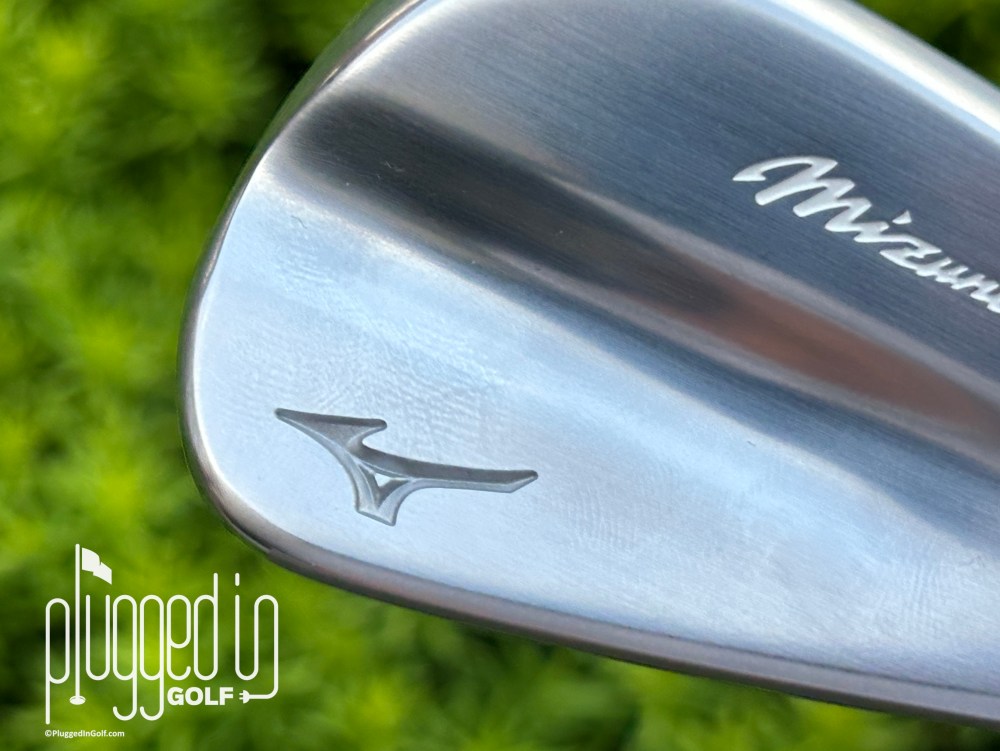
The new Mizuno Pro M-15 irons are the successor to the Mizuno Pro 245. In his review of the Pro 245 [find it HERE], Zack praised Mizuno for packing modern distance into a head with classic looks. I tested the new Pro M-15 to see if they could build on that performance or if this is just the same iron with a new look.
Looks
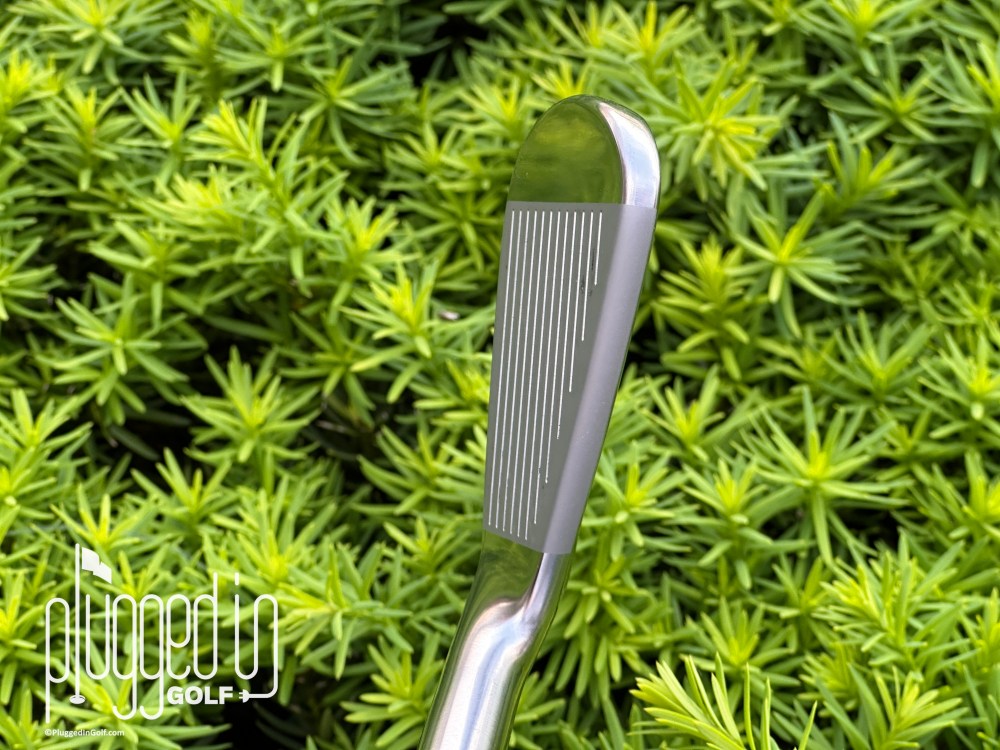
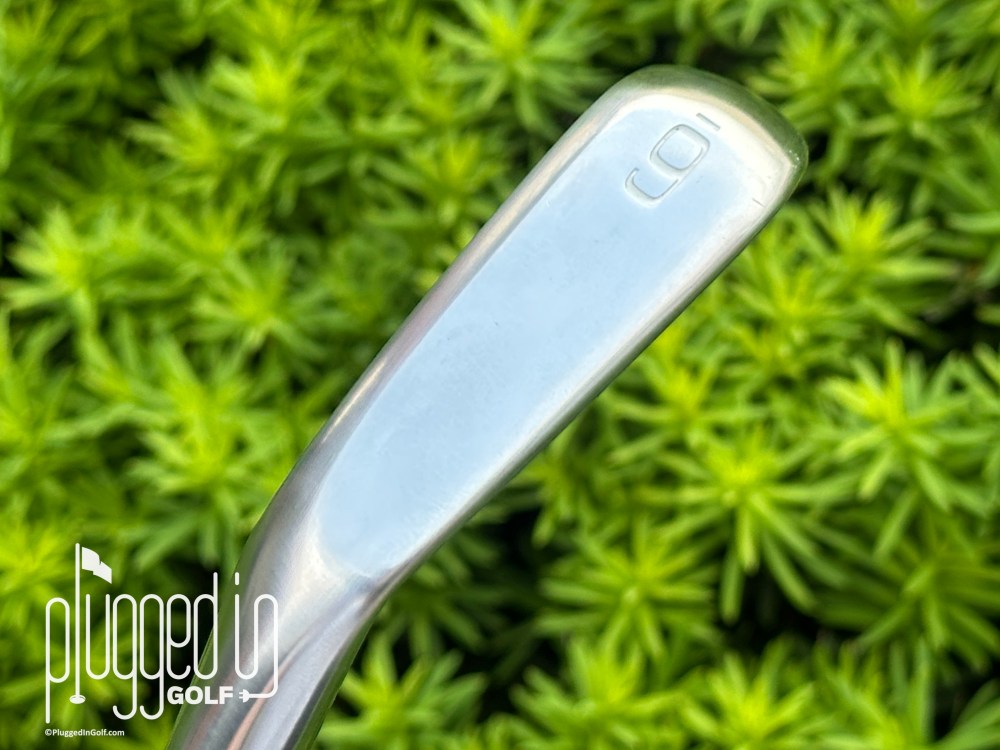
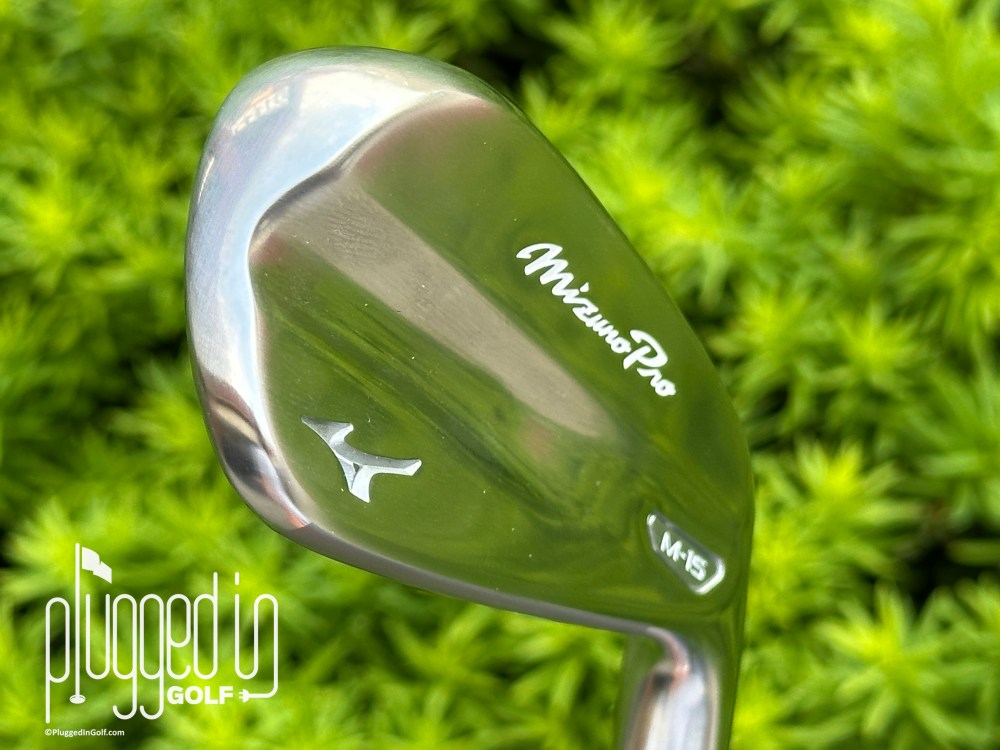
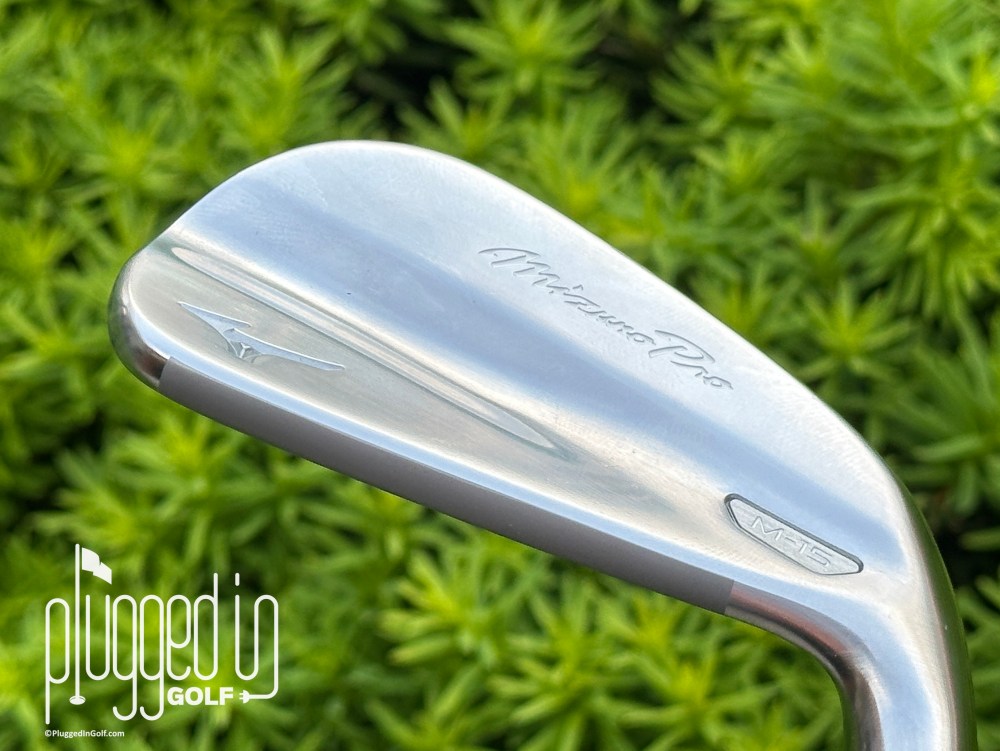
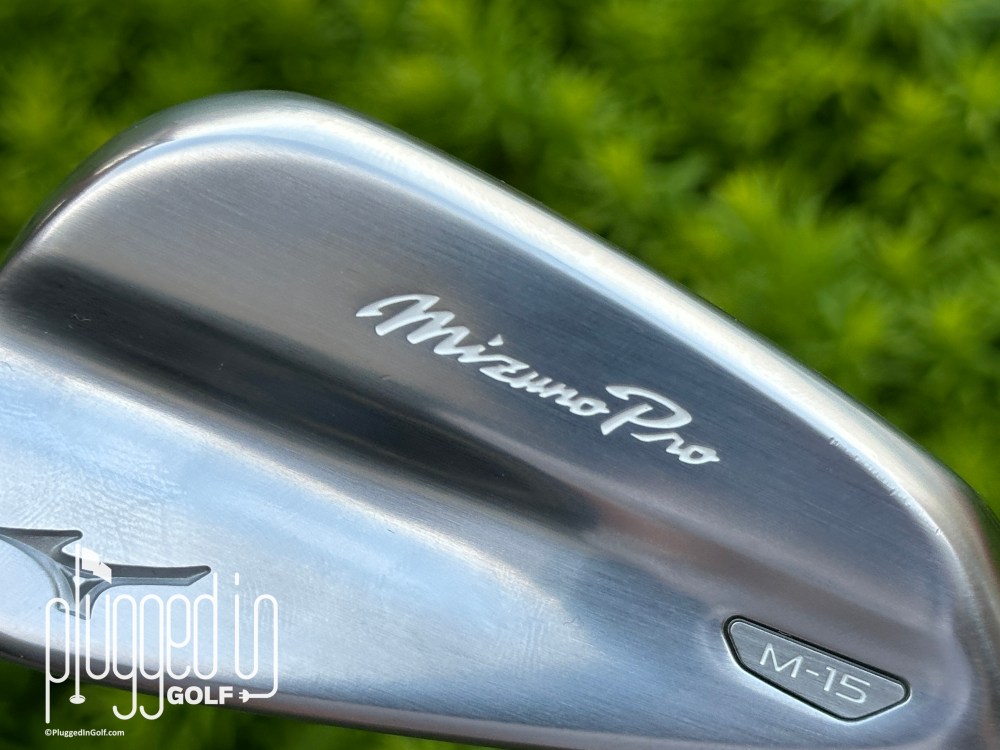
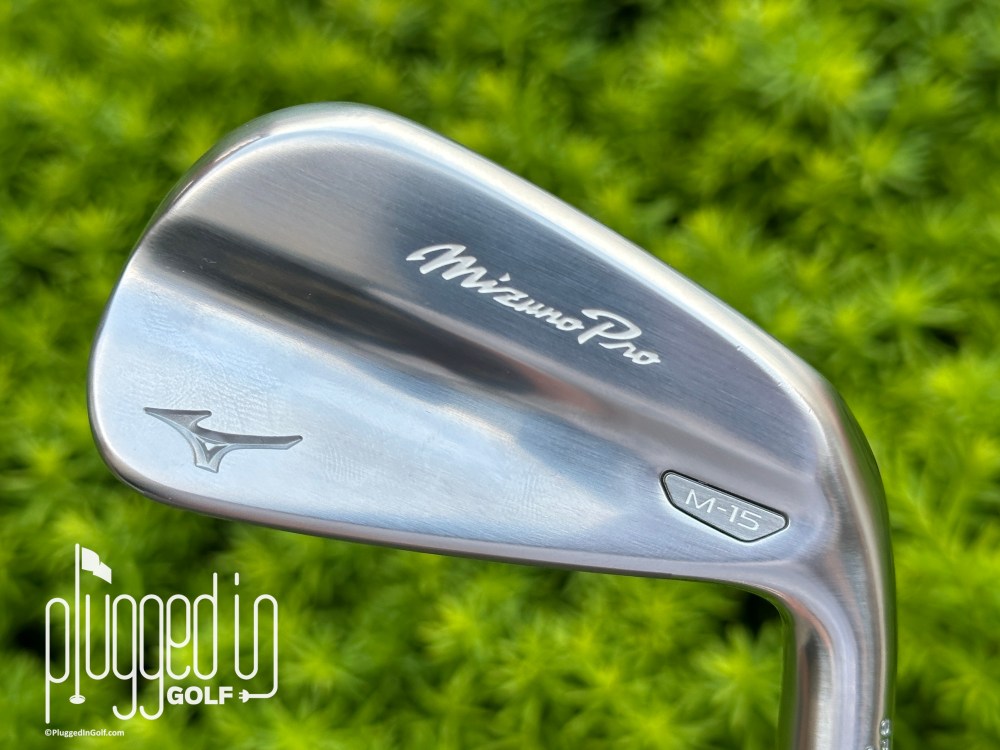
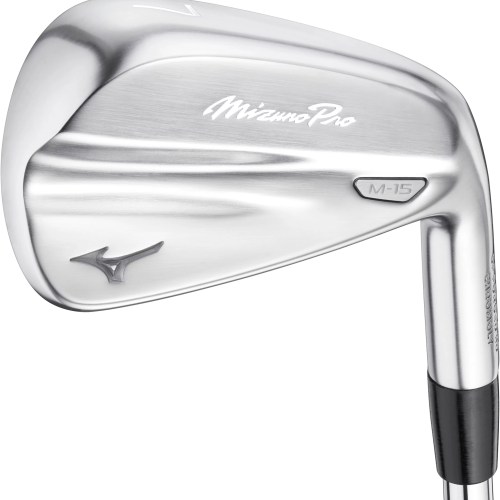
At a glance, you could easily mistake the Mizuno Pro M-15 irons for a true blade rather than the semi-hollow faux blade that they are. In the bag, they look great. The branding matches the Pro M-13 with light touches on the toe, heel, and top. A gentle wrinkle in the middle of the head provides some visual interest while the Nickel Chrome Satin finish adds a durable, timeless appeal.
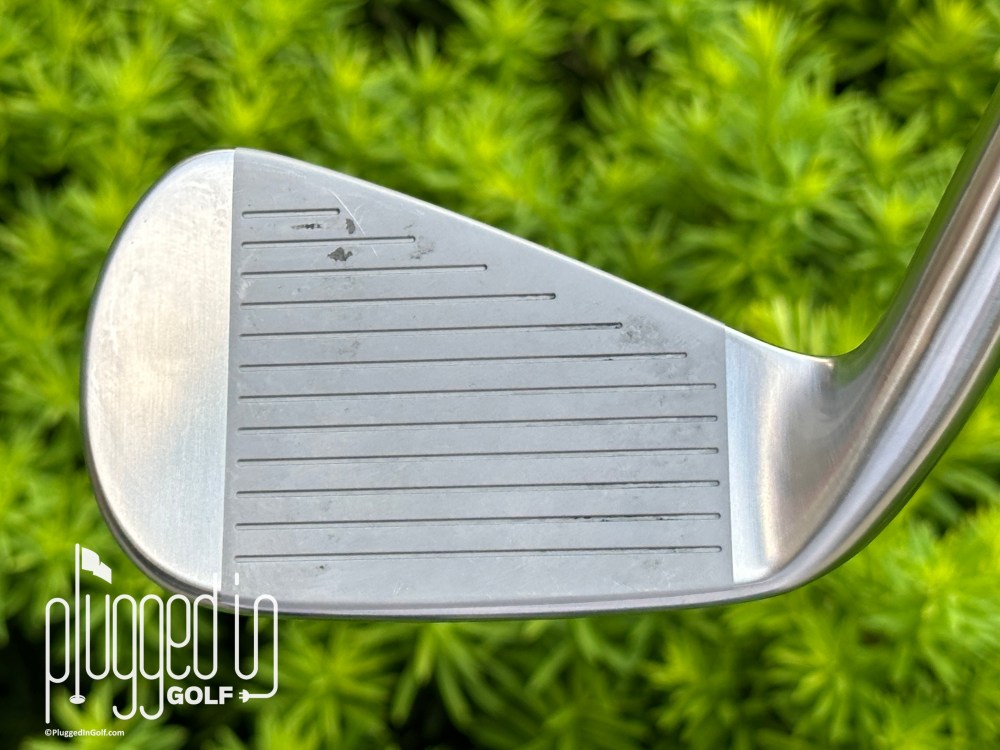
In the playing position, the Pro M-15 looks like a thick blade. The heel to toe length is modest – only 3 to 5mm longer than Mizuno’s true blade, the Pro S-1 [review HERE]. There’s virtually no offset – 0.04″ more than the S-1 in the 4I – but the top line is noticeably thicker. Comparing the Mizuno Pro M-15 irons to the Pro M-13, the M-15 has a thicker top line, a slightly longer head, fractionally thicker sole, and the exact same offset. [See Price / Buy]
Sound & Feel
When I was hitting the Mizuno Pro M-15 irons, I was shocked by how loud they were. These are miles from the gentle, forged “thud” that we expect when we see “Mizuno” on an iron. This is a harsh, noisy iron. I’d be disappointed with this as the sound in a super game improvement club; I’m shocked to see it from a Mizuno.
Turning to the feel, Mizuno touts “Harmonic Impact Technology” that is meant to deliver a “soft yet solid impact sensation.” I couldn’t disagree more. On the best very strikes, the Mizuno Pro M-15 irons are firm. Get away from the sweet spot and they’re downright hard. Again, these are unimpressive in a vacuum but given the Mizuno reputation, they’re quite disappointing.
Performance
Like their line mate, the Pro M-13 [review HERE], the Mizuno Pro M-15 irons are a combo set in disguise. The 4 through 8 irons employ a “Multi-Material Hollow Construction” – a Chromoly face and neck with a stainless steel back. In the 9I through GW, Mizuno uses a “Partial Hollow 1025E Forging.” These clubs also use a stainless steel back but have a body made of forged 1025E HD steel. As with all combo sets, the goal is to provide more forgiveness in the long irons, more precision in the scoring irons.
The other key piece of tech inside the Mizuno Pro M-15 irons is “Suspended Tungsten Weighting.” Mizuno has packed approximately 50 grams of tungsten inside the long and mid irons to “increase forgiveness” and promote “straight ball flights.”
In my testing, what stood out the most was the consistency of the ball speed. For an iron of this size – a players iron – the consistency is strong. It won’t compete with something like the PING G440 [review HERE], but that’s a bigger iron. While the consistency is solid, the peak speeds aren’t particularly impressive. For an iron that’s trying to hang its hat on distance, I was hoping for a bit more.
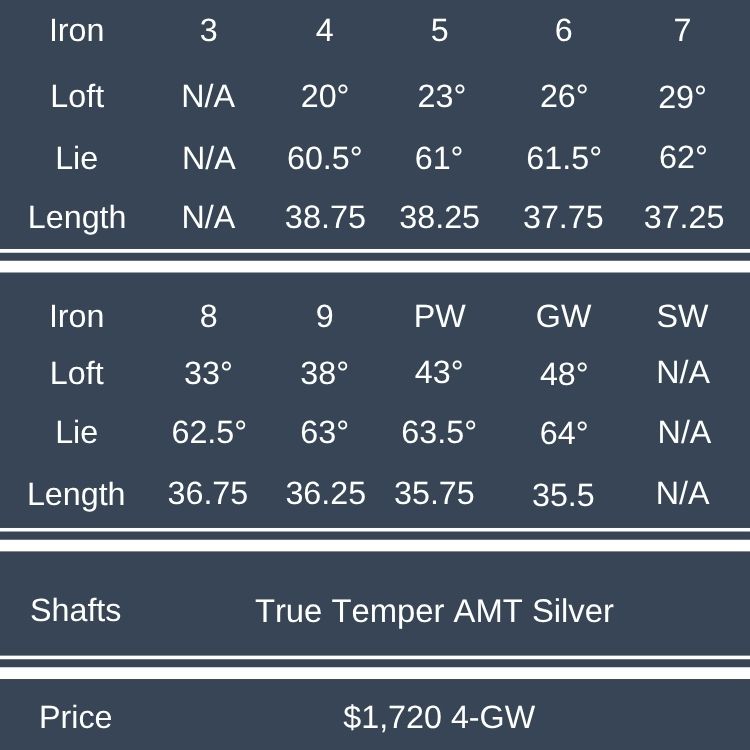
The lofts of the Mizuno Pro M-15 irons are two or three degrees stronger than the Pro M-13 [review HERE]. Compared to the JPX925 Forged [review HERE], they’re one degree stronger 4-8 and the same in the scoring irons. While this isn’t the bleeding edge of loft jacking, these are clearly modern lofts. Unsurprisingly, the result is a lower ball flight. These launch a bit below average with low spin. If you’re a high launching, high spin player, these irons will likely give you more distance. For those who are not very high spin, you may end up with more distance in your short irons, but your long and mid irons are likely to be clumped together.
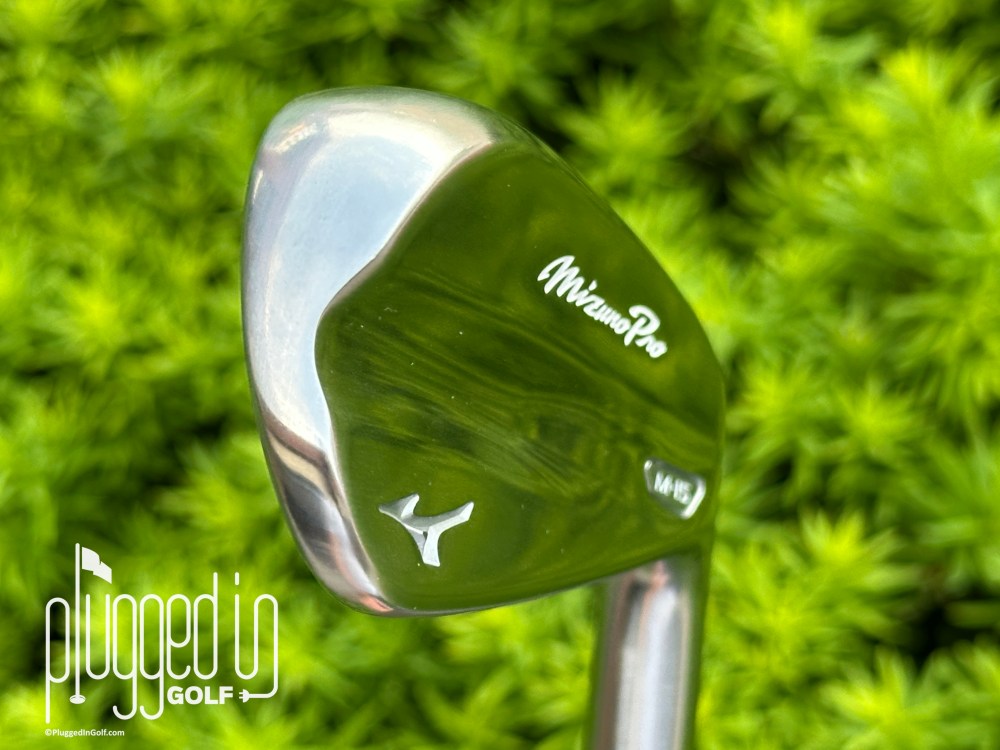
All this brings me back to my frequent critique of Mizuno’s irons. There’s not enough to differentiate the Mizuno Pro M-15 irons from the JPX925 Forged. Is there a difference in their construction? Yes. Does that mean there’s a meaningful difference in how they play? To me, no. And while they do look different in the bag – again, I think these irons look very sharp – they have nearly identical measurements. [See Price / Buy]
Conclusion
For the player that wants a distance iron with decent forgiveness in a compact package, the Mizuno Pro M-15 irons fit the bill. Outside of the sound and feel, there’s nothing objectively wrong with them. My primary complaint is that I’d like to see Mizuno offer fewer models or give golfers more meaningfully different choices. [See Price / Buy]
Who It’s For: Players seeking higher launch, added forgiveness, and modern playability while retaining Mizuno’s classic forged feel and shaping.
Mizuno Pro M-15 Irons Price & Specs

He founded Plugged In Golf in 2013 with the goal of helping all golfers play better and enjoy the game more.
Matt lives in the northwest suburbs of Chicago with his wife and two daughters.
- Aldila Rogue ∞ Blue Shaft Review - October 9, 2026
- Avoda Golf W2 Wedge Review - October 8, 2026
- SlackBoard Review - October 7, 2026




Join the Conversation | 39 Comments
Could not disagree more on the sound and feel on these. They feel soft-ish for what they are and really good. The thing about them is they are so forgiving that you can miss them all over the face and when you look up it looks like you hit a good shot when in reality you missed the sweet spot by quite a bit.
You’re certainly welcome to your own opinion on the sound and feel.
-Matt
I’m with you MM. They sounded and felt great to me; having said that, I went with the 245s as I preferred their aesthetics.
I’ll have to 2nd this reply. The sound and feel I’ve experienced with these is quite the opposite. Quiet/ butter melting feel on centered strikes and slightly firm off center. Appropriate feedback in my opinion.
Love ready your reviews non the less, would love to see you do a take 2 on these!
Thanks for all you do.
Do you think that they were poorly assembled with too much epoxy? I accidentally destroyed the sound/feel of a 505H that way once….
Anything is possible, but I’ve never experienced that personally.
Best,
Matt
Too much epoxy? I’ve never heard that before…any excess epoxy squishes out and you wipe it off when assembling? How can there be “too much?”
I can def understand a loss of feel in irons like this though. I had that experience with the likes of the 0317T PXGs ..great irons, but nowhere near the forged feeling they were touted for.. just better than the XF range. Miz Hot Metal Pro and JPX Forged also when I tried those. Not horrible…just not that classic solidity. Tradeoffs I suppose. Cheers!
#SecretGiveawayH50
Not sure what M13 sound and feel has to do with the M15. These are miles better than say a Ping 540.
Mizzi lovers are not going to like this review. How dare someone besmirch the vaulted Mizuno feel!
Love my Mizunos. Thanks for the review. #SecretGiveawayH50
In the second paragraph of “Sound & Feel” in the sentence, “On the best very strikes, the Mizuno Pro M-13 irons are firm,” I believe you meant to refer to the M-15 unless I’m mistaken.
Dean,
Thank you, yes. I’ll fix that now.
Best,
Matt
I trust your reviews and this was very timely as I am starting to look to upgrade my Ping i525 irons. My i525 are a bit firm and louder than others (particularly on mishits) – but I am ok with that. They look good and perform well. What I don’t want is an iron that is louder, firmer and potentially low spin (I understand there will be a 1-2 degree loft difference). This helps in my search! #SecretGiveawayH50
I was very disappointed in the lofts of this model. The first thing I thought was that they were similar to the JPX925, which I like, but they’re way too long for the target audience in my opinion. #SecretGiveawayH50
Haven’t had Mizuno irons for a long time, but this review would scare me away from these. #SecretGiveawayH50
I found the 245s to be a better looking iron. I may still go that route.
Not a fan of the stronger lofts.
I went to a fitting and hit both the M15 and Pro 245; for me the 245 is much more pleasing to the eye and they feel and perform exactly the same. I went with the 245s.
Wow—you are the ONLY one to give the M-15s a negative review. That says something to me.
Great review! I play the JPX921 forged, I had a chance to hit these and feel the same as you, a little disappointed to say the least. I’ll keep rocking the 921’s! #SecretGiveawayH50
I have not hit the 245’s , but compared to my 225’s , the M-15’s are a noticeable improvement in sound, feel and forgiveness. If you dislike the sound and feel of the M-15’s you will hate the Ping i540’s because those are louder and feel harder.
I still play my old MP33 ninja swords, excuse me, golf clubs occasionally. I played them for 10 years before I decided the masochism was over LOL. Even Tiger went tungsten a little bit. Bummer these Mizuno 15 clubs missed the mark, but no worries, they’ve git another 100 models to choose from. #SecretGiveawayH50
Sharp. #SecretGiveaway H50
Looks nice. #SecretGiveaway H50
Thank for the article. Find your opinions to be always spot on. Will be looking at other manufacturers for my new irons. #SecretGiveawayH50
#SecretGiveawayH50
The one thing I have loved about Mizuno irons in my 60+ years playing golf is the soft, silky feel. I would not be a candidate at this point for these irons because I love my JPX 923 Hot Metals, but your comments about the feel and sound (“thud”) would keep me from considering upgrading to them.
Whoops…..I forgot #SecretGiveawayH50
Like the majority of Mizuno irons, they sure do look pretty. Really disappointed to read that the sound and feel were both letdowns as those two aspects are generally what sets Mizunos apart from other forged irons. #SecretGiveawayH50
It’s refreshing to see a review that gives an honest opinion, even if it’s not glowingly positive.
#SecretGiveawayH50
Appreciate the candid review… you earned my trust years ago and glad you continue to do teviews. I got to hit them yesterday. Coming from Pxg Gen 3 0311t irons, to say he M-15 was ‘firm’ would be and understatement. For me, on center strikes these were very comparable to Ping i540, and were firmer than the newest p790 in my opinion. Looks though are gorgeous. #SecretGiveawayH50
#SecretGiveawayH50
I’ve always thought mizunos were slightly overrated. Good for sure, but they have some clunkers and now their lineup is EXTREMELY bloated. #SecretGiveawayH50
Never played Mizuno’s until i replaced my Titliest T-200’s with M-15’s after a fitting. These sound and feel so much better than the t-200’s! the biggest reason for the switch was that the sweet spot is everywhere on the face with these. because of the ball speed all over the face, I can hit them thin, fat, heel, toe, and I’m still straight down the middle and only slightly short. the forgiveness is so much better than the t-200’s and distance is about the same. I get that they may not have the distance p790’s have, but the playability of a players iron with the forgiveness of a game improvement iron gives me exactly what I was missing with the t-200’s
Though I normally agree with your opinions I couldn’t differ more on sound and feel, and the performance is out of this world. I’ve been gaming T150’s with T250 in the 5 and 6. My iron game has improved immensely in the three weeks I’ve had the M15. They are all ten yards longer than my Titleist, and I can do nothing but hit them straight, and they feel soooo much better than Titleist. I was worried about spin, but last weekend I hit three par 3s with my five iron in the 185-195 range and they stuck. Only the worse mishits feel bad, which I would want.
I’ve been gaming these since the release. I’ve played the 225 the 245 and now the m-15. I was shocked at the review of the sound and feel. My experience has been quite the opposite. I believe they feel/sound better than the previous models and the forgiveness in a small package is outstanding. Most reviews on these have been great, this one surprised me.
Matt
Like your reviews. My what you compare the Ping I230 irons to in the Mizuno irons?
John,
I have a full review of the PING i230 here: https://pluggedingolf.com/ping-i230-irons-review/
The PING is much more forgiving than the M-15.
Best,
Matt
I recently purchased a set of Mizuno Pro M-15 irons. I see some takeaways from this review that shouldn’t discourage anyone from these irons. The shaft fit first and foremost gave me about 6000 rpm’s of spin +/- , my decent angle with the 7 iron was averaging around 45. I’ve played several different sets of Mizunos and always return to my buttery Mizuno T-Zoid Pro II’s. These M-15’s are not your blades, muscle backs, 5 step forged Mizunos. They are a distance, players iron. I gained 12 yds per club and not much drop off on off center hits. Great feedback on toe strikes, but not so much on heel strikes. I launch them high and spin them well. The noise and feel are not my Pro II’s, bit aren’t meant to be. I hit them against the new P790’s and the shorter blade length of the Mizunos are shorter, easier to hit consitantly. If you compare the sound and feel, the M-15’s blow the 790’s away. The P790’s had a whack type sound, shorter on miss hits and jumpers of 10 yds off avg strikes. Once I got used to the Mizuno’s the sound and feel kind of was a non issue. Performance, distance, dispersion, and all around great stick. I’ve been in the golf business 40 years. I managed shops, golf courses, built clubs, repaired clubs, and I teach in my spare time.
I hit these irons yesterday and thought the feel and sound was great, is it a matter of swing speed ?, I’m a senior with swing speed of 70 mph 6 iron and also using graphite shafts. I’m interested in purchasing these irons so comments are useful. One thing I’ve read is that spin is lower on scoring clubs so some have gone to M-13 on those clubs, comments please.