
50 Words or Less
The PING i540 irons are a players distance iron. Stronger lofts and forgiving air pocket technology gives players some help while still looking visually appealing.
Introduction
PING has just about every category of golfer covered with their irons offerings. From the PING Blueprint blades [review HERE] to the G740 game improvement irons [review HERE], there is something for everyone. One particular category that most agree PING does quite well is the players distance irons.
This all started with PING i500 [review HERE] and has evolved to what it is today – the PING i540 irons. These are meant to look like a players club but have more distance and forgiveness for those that need just a bit more help in their iron set. I got a full set of these new i540 irons to test and see how they perform.
Looks
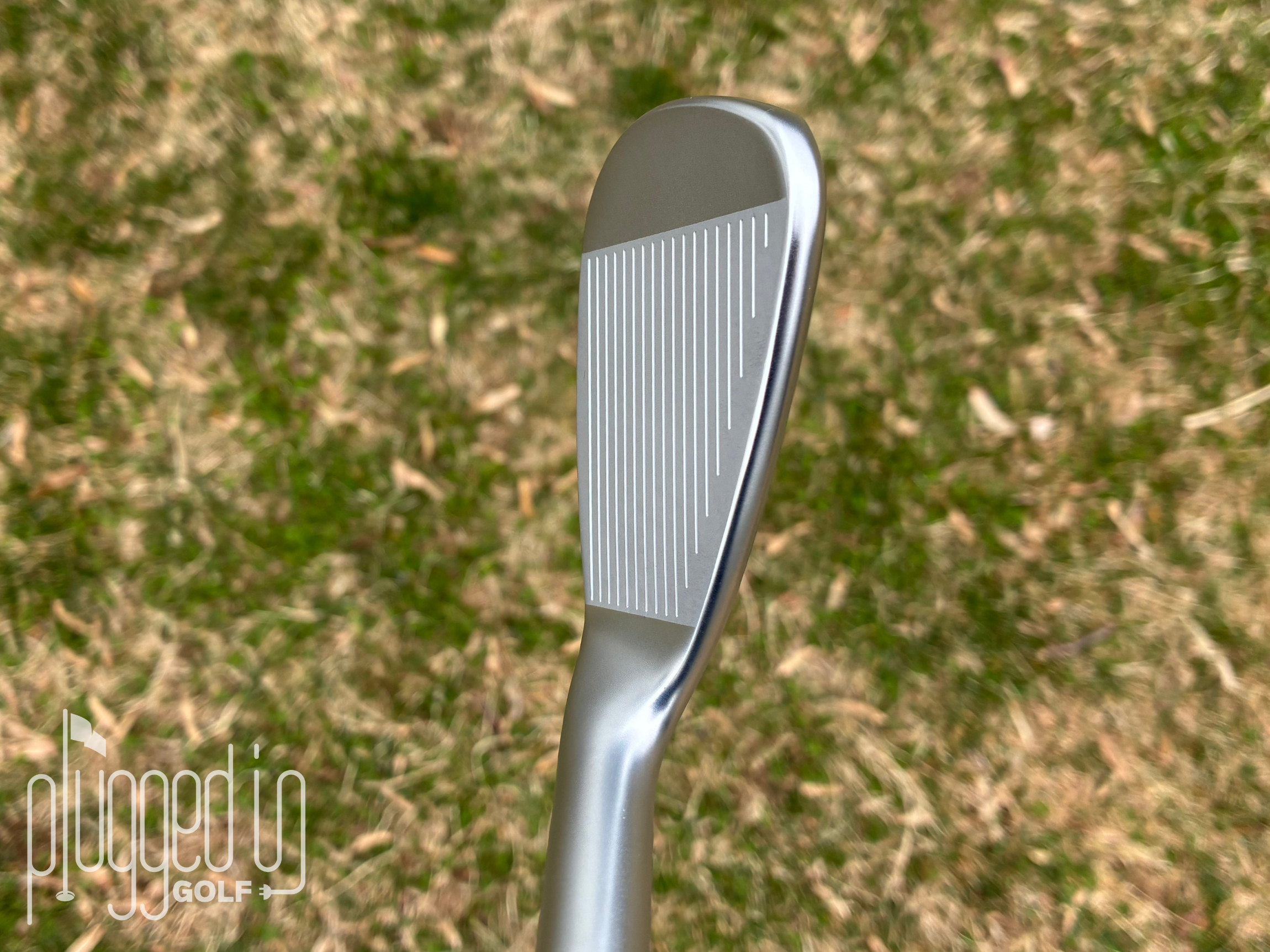
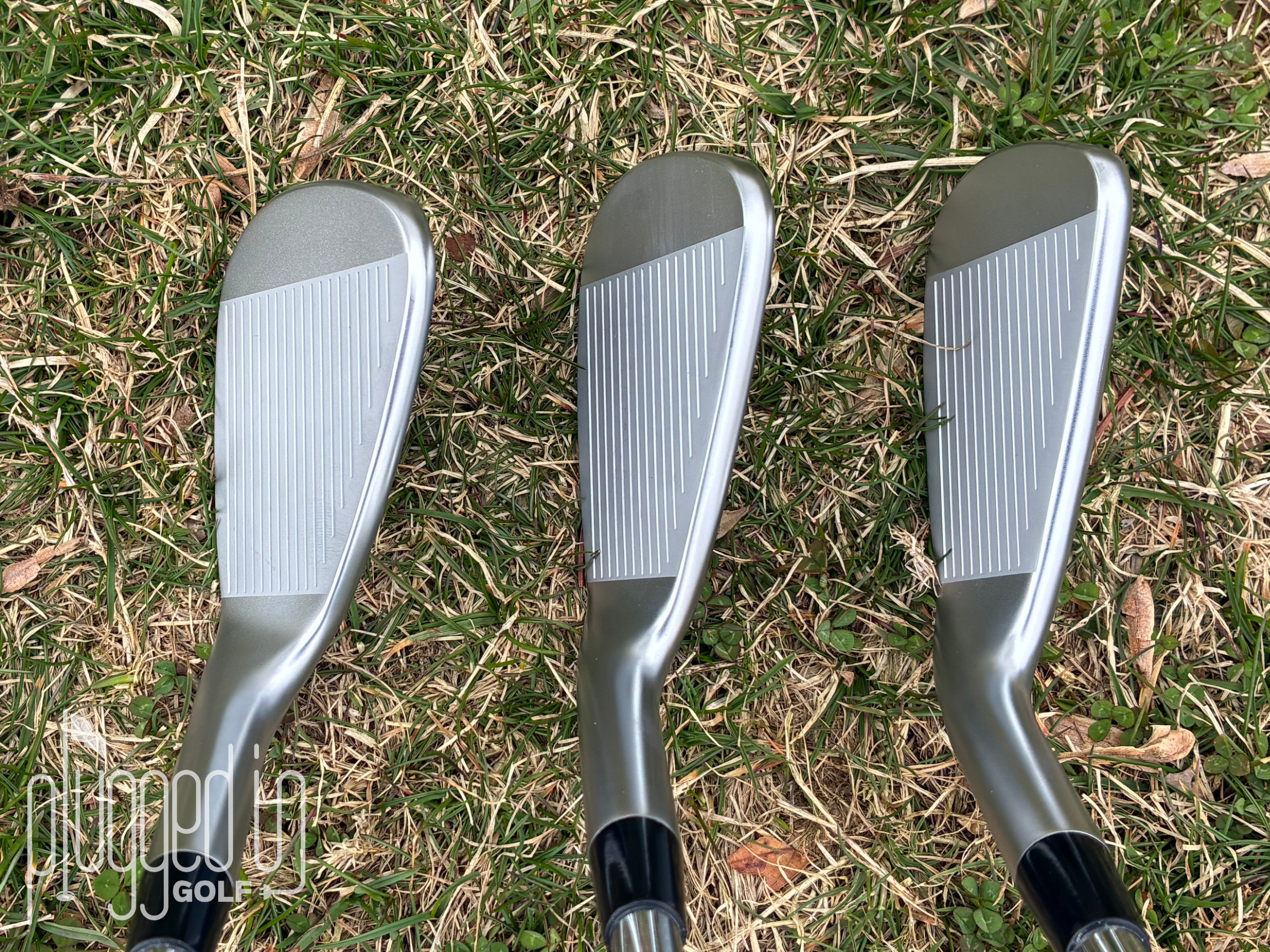
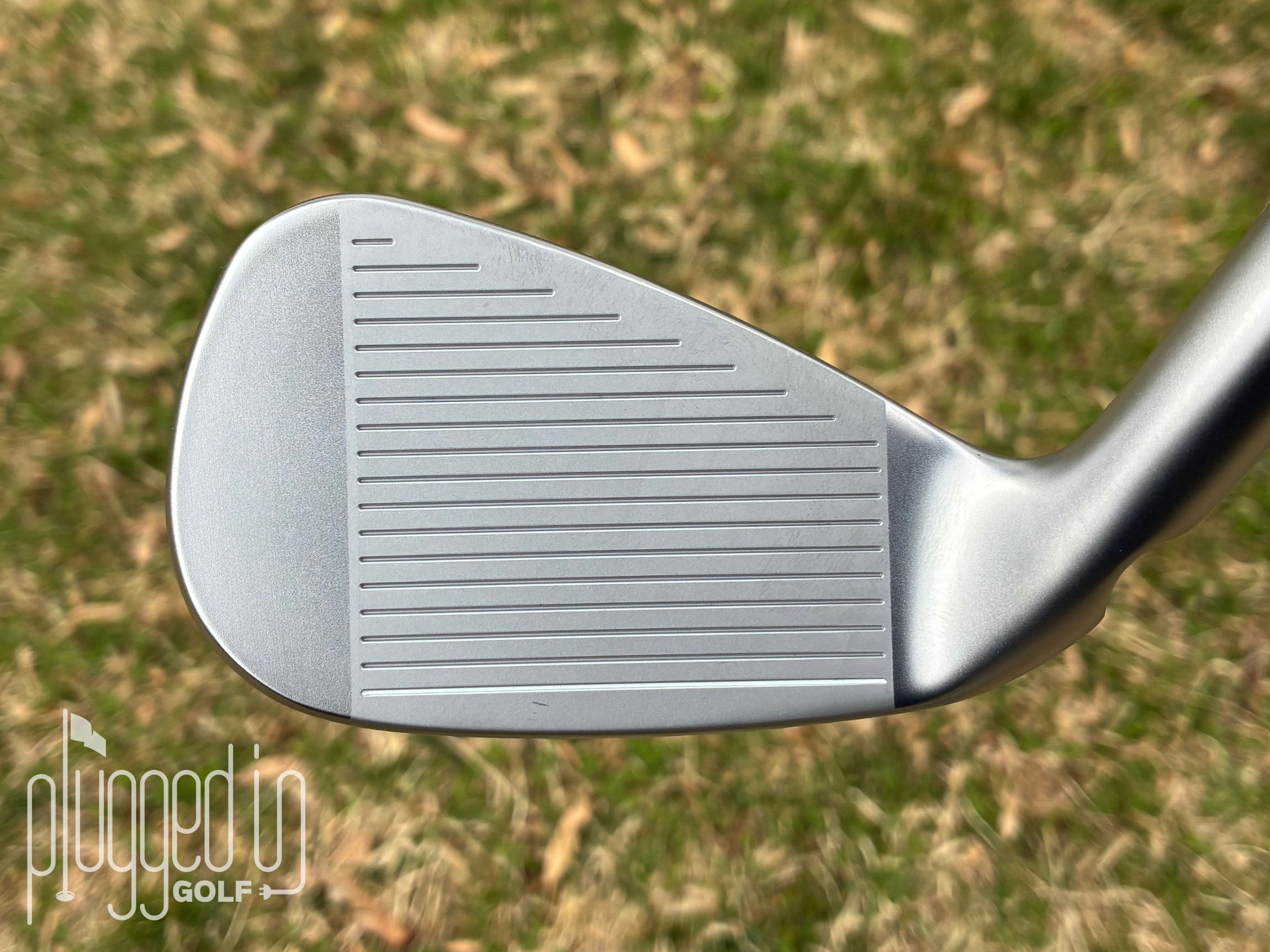
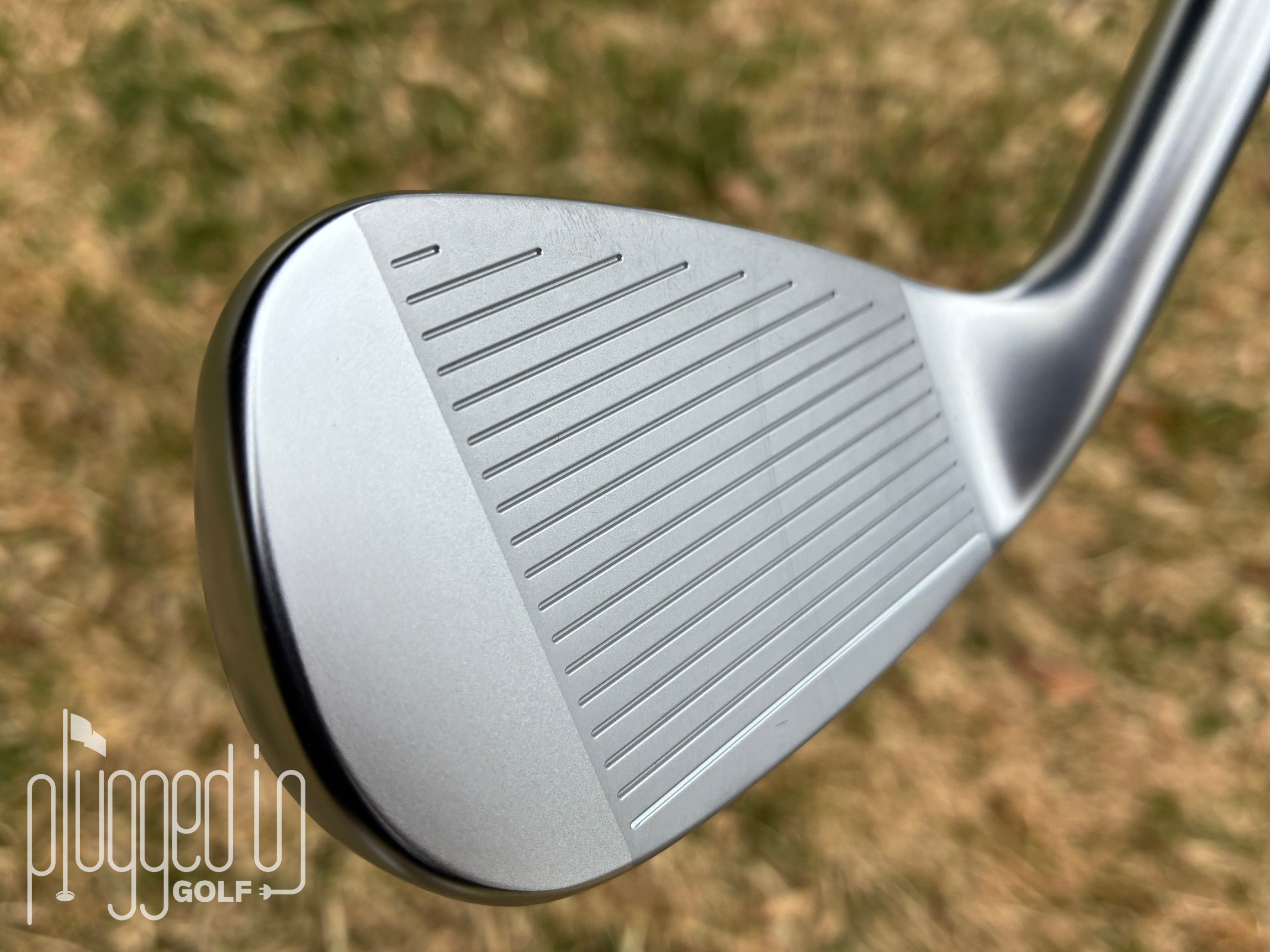
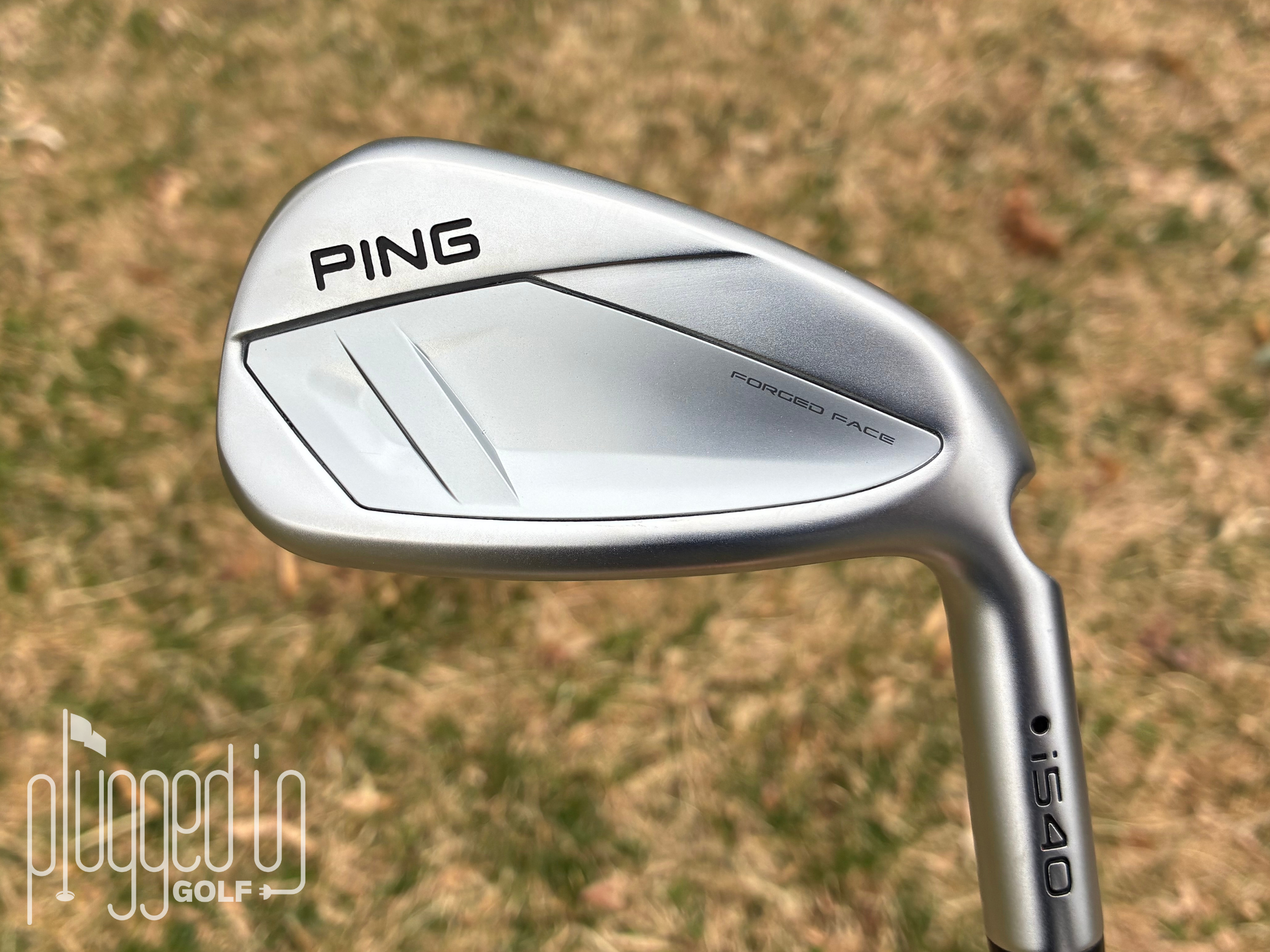
I have to hand it to PING, the new i540 irons look so good. At first glance, these look closer to a blade iron than the players distance irons that they are. The top line is moderately thin that progressively gets larger as you move towards the long irons. At address the shorter irons are more round in shape with sharper corners in the long irons.
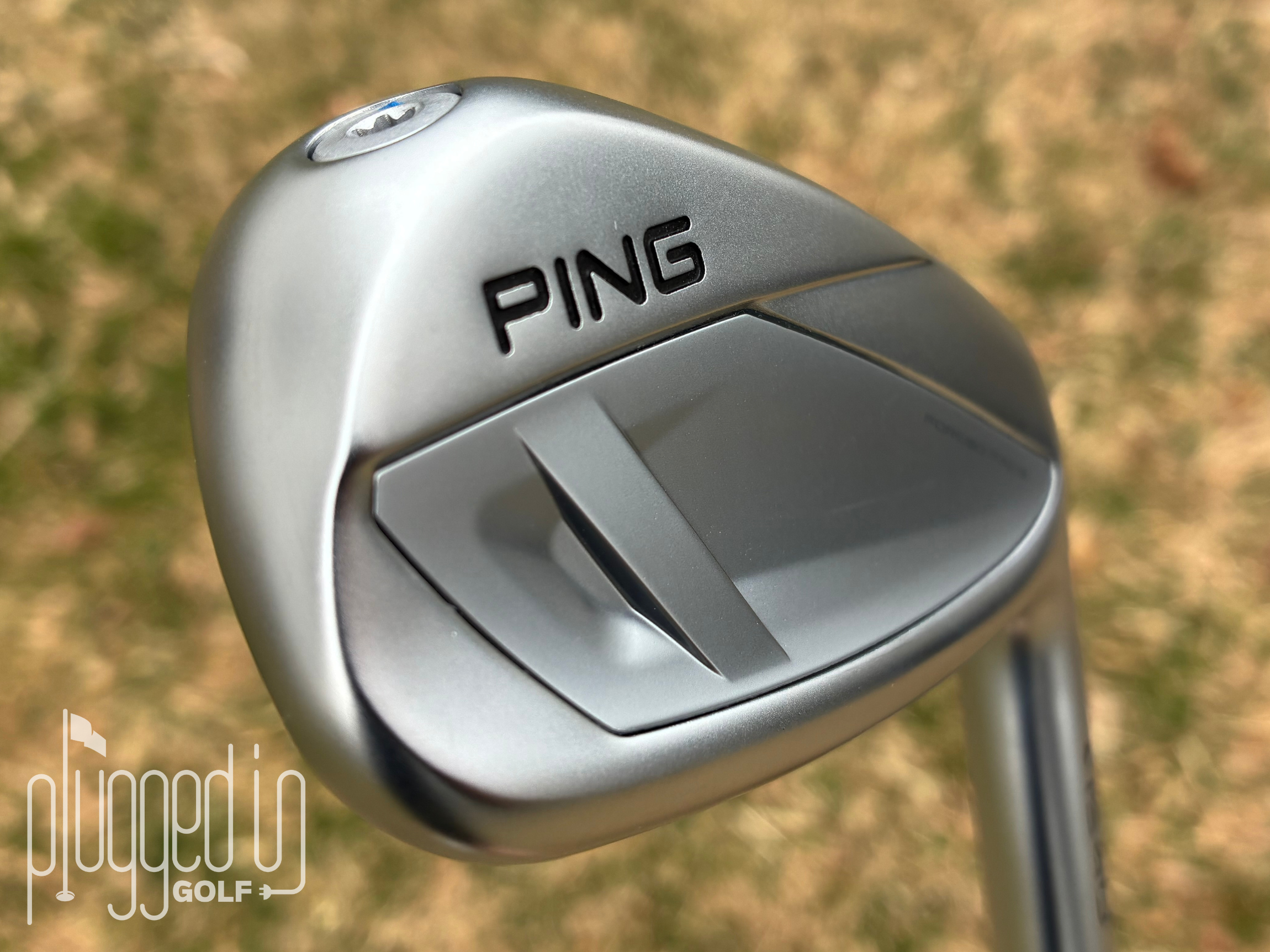
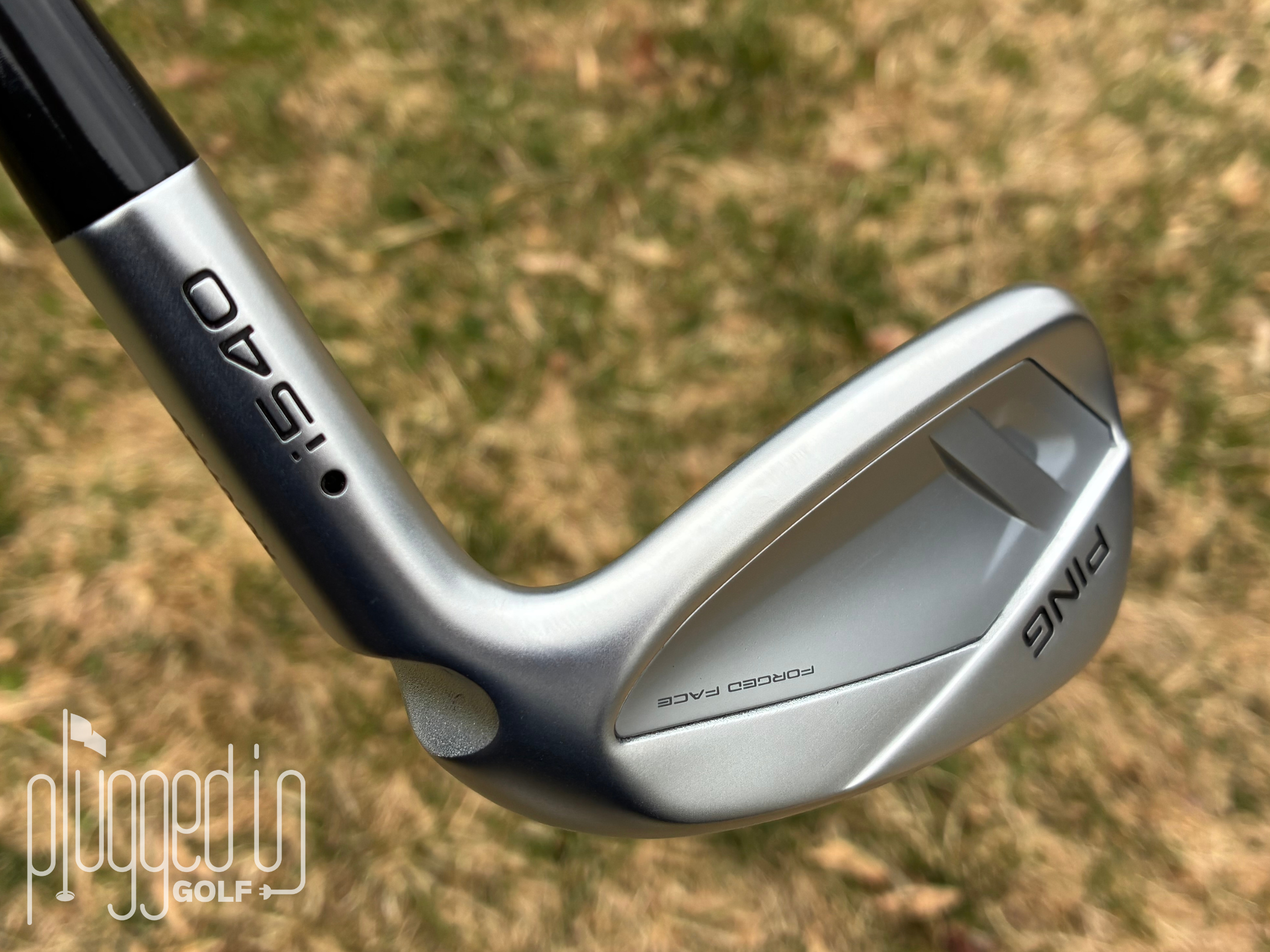
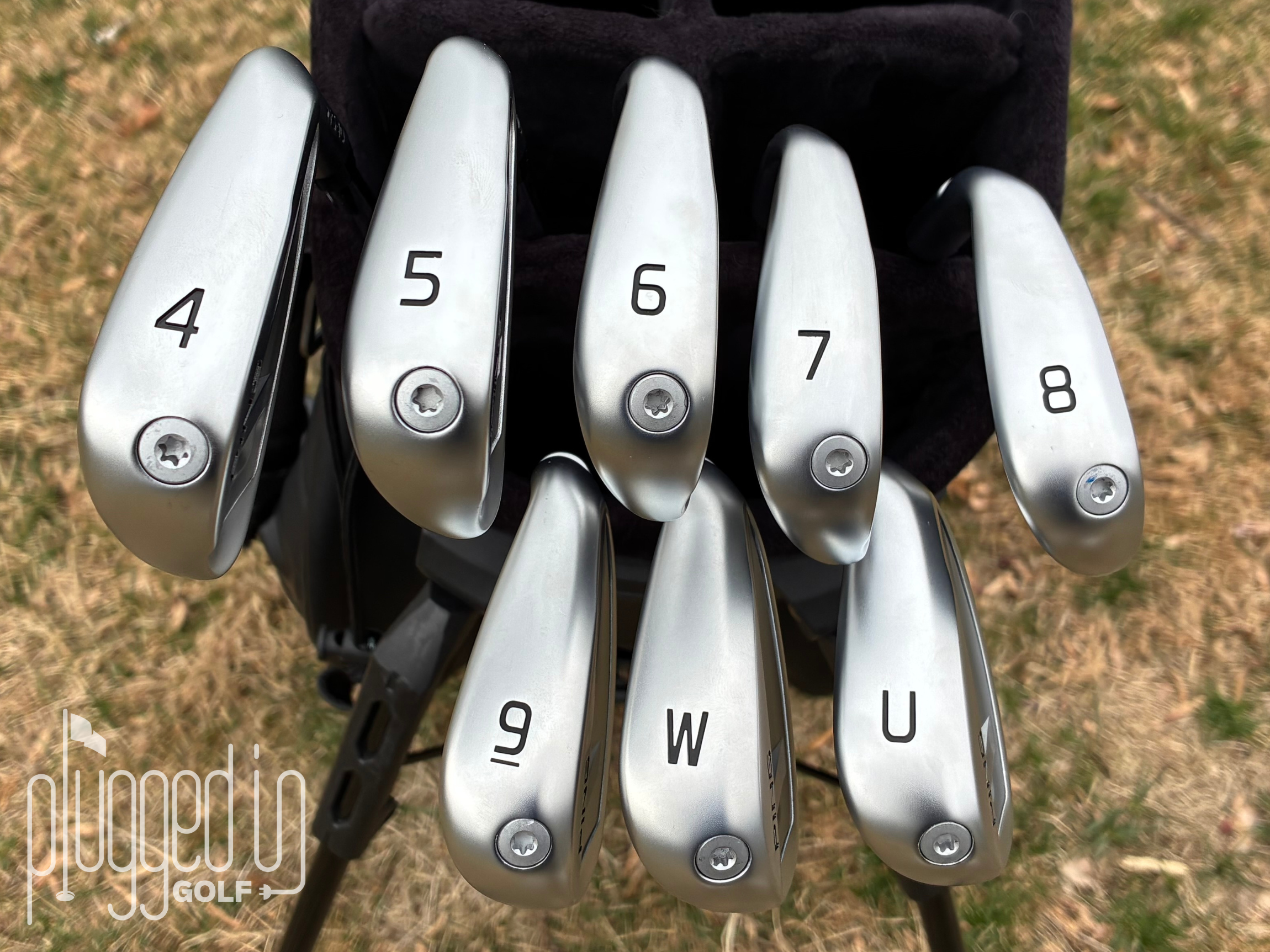
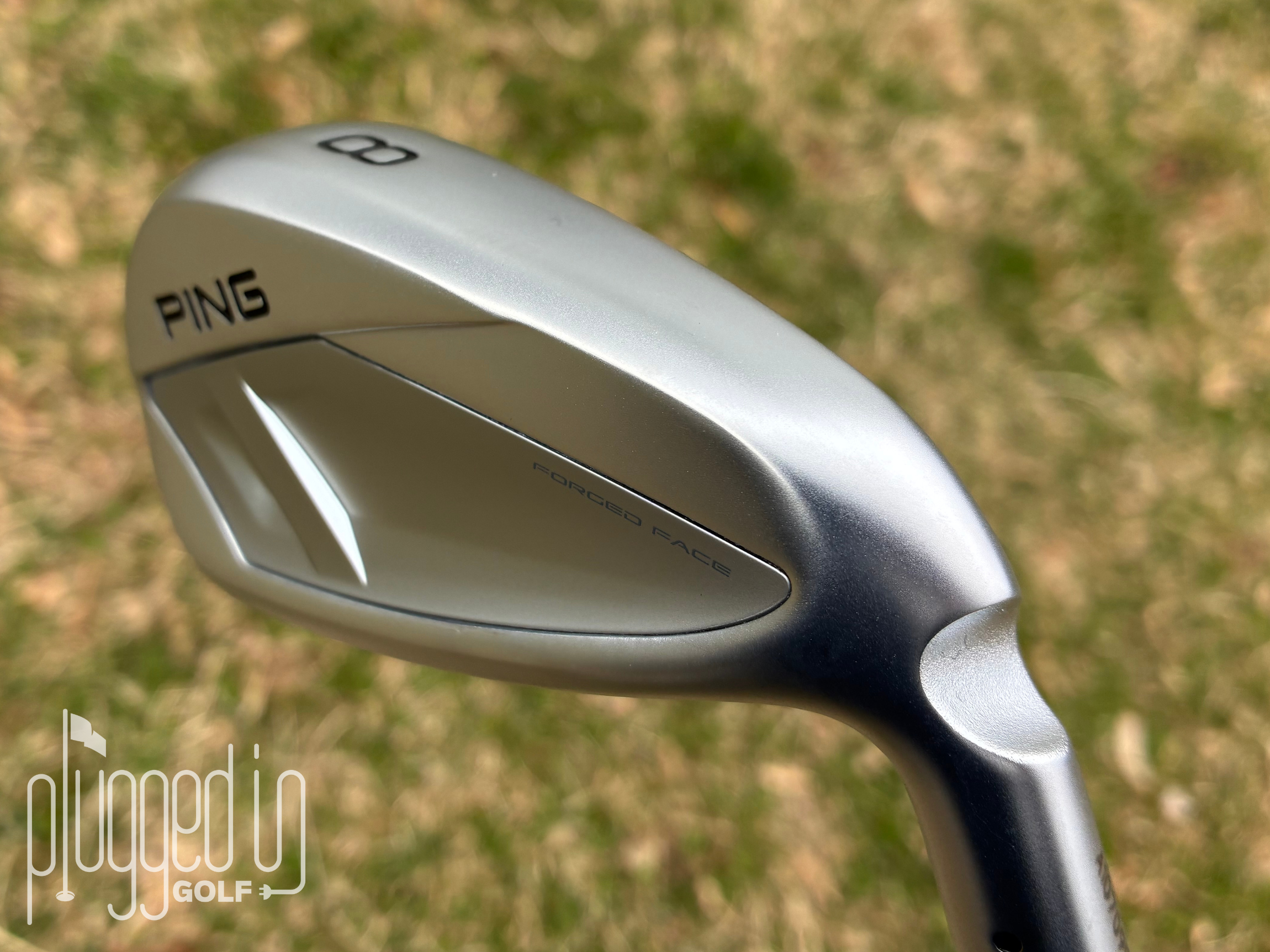
In the bag, the rear badging has a clean look with no visible cavity and a single PING logo out near the toe of each club. The sole is a little beefier than a blade with a single weight port screw on the toe.
The PING i540 irons also have some elements that we commonly see in PING irons: the matte steel finish and unique notch on the hosel. I think a lot of golfers are going to like the look of these. [See Price / Buy]
Sound & Feel
The sound in the PING i540 irons is a crisp “tick” at impact with any well struck shot. As you move away from center, the sound is less friendly with strikes producing more of a “knock.” No matter where you strike the ball, the sound tends to be on the louder side.
If you were standing near someone hitting the PING i540 irons and then hit them yourself, you’d probably be surprised by how muted each strike felt compared to its sound. I would’ve expected something more harsh in the hands, but this couldn’t be further from the truth, especially considering the face is forged. The feel is devoid of harsh feedback or vibration through the hands, even on poor strikes.
Performance
The PING i540 irons are the next generation of the i530 irons [review HERE], so my first step was to see exactly what’s changed and whether those changes actually deliver better performance.
The biggest upgrade is PING’s new INR-AIR technology. This is essentially an air pocket positioned behind the face, designed to improve both sound and feel while also allowing the face to flex more. The result is increased ball speeds. While the previous PING i530 irons also featured a hollow body construction, those didn’t include this air pocket design.
As I began my testing, the increase in ball speeds were immediately noticeable. I credit a lot of that to the INR-AIR tech and hollow body design. I play a traditional players iron, so this isn’t a direct apples-to-apples comparison, but the marked increase is real. With my 90 mph seven iron swing speed, I had no trouble carrying the ball over the 180 yard marker.
While I was able to match the ball speeds of the PING i540 irons with my current players irons on my best swings, I didn’t do it consistently. I routinely fell short of that mark, which highlighted how reliable and consistent the i540 irons are.
Looking closer at the face, PING introduced a thinner, maraging steel face compared to previous models. This thinner face contributes to the increased ball speeds that I mentioned above in addition to reducing spin. Initially I expected a bit of a trampoline effect, but that wasn’t the case. Instead, the irons produced consistently low spin and impressive ball speeds, most notably with off center strikes.
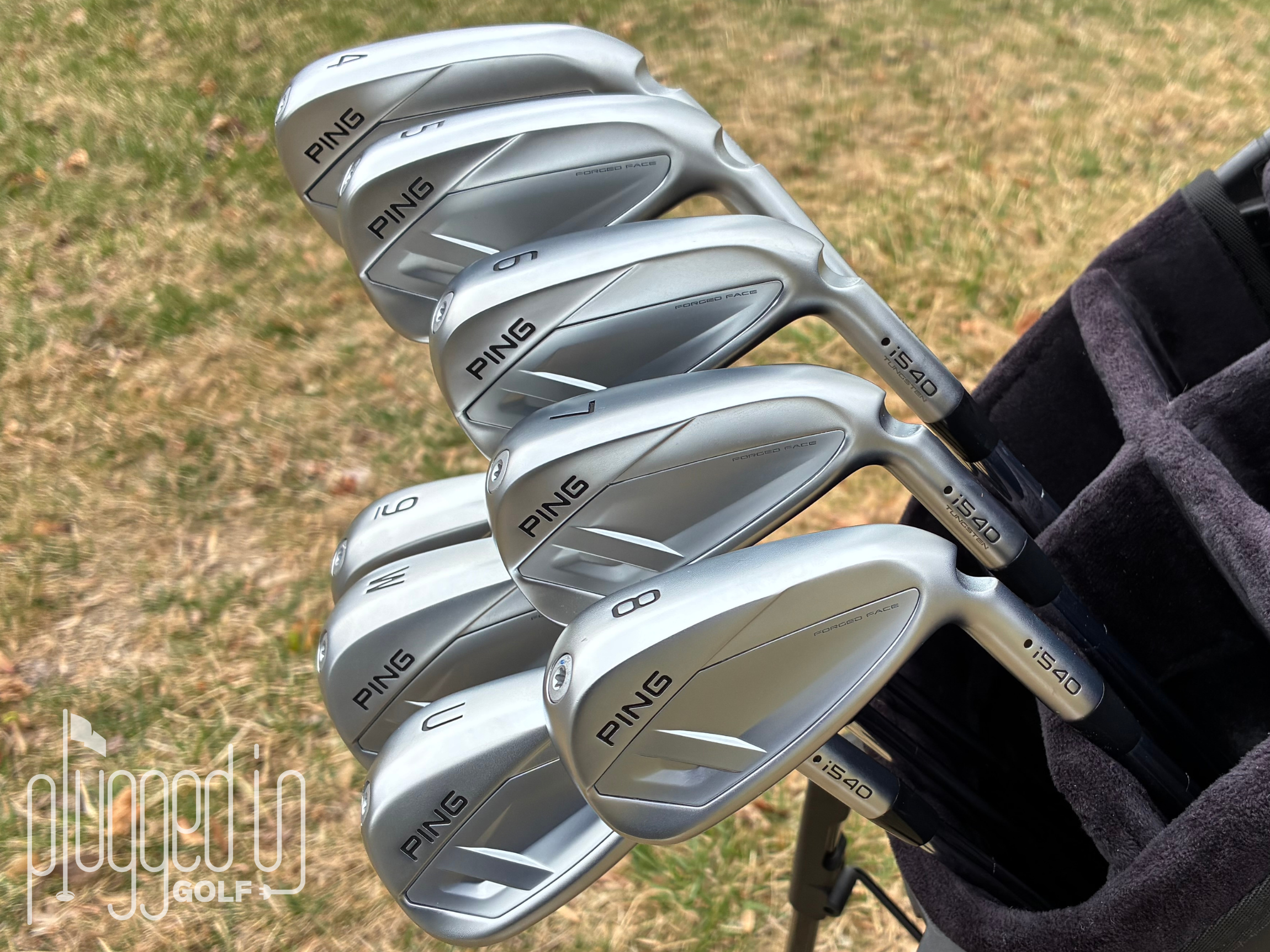
Internally, PING added an I-BEAM structure to support this thinner face. While this is primarily a structural feature, it plays an important role in maintaining stability and ensuring the face can flex properly. The end result is improved forgiveness and a more consistent ball flight which is where the i540 irons really shine.
If there is a drawback, it is in the shot manipulation. I found it slightly more difficult to take something off a shot when I had an in between yardage. Players who rely on creativity and shot shaping may find these irons somewhat limiting. Instead, these irons seem best suited for the mid to high handicap player who prefer the look of a compact iron with the benefit of consistency, forgiveness and reliable distance.
Finally, it is worth addressing the stronger lofts. A 42 degree pitching wedge is aggressive on paper but in practice, it was never an issue. The lowered centered of gravity, helped by the tungsten weighting, makes it easy to launch the ball high enough to hold greens. Even with the longer irons, where rollout could be a concern, I saw solid stopping power.
The PING i540 irons are offered in a 7 piece set for $1,499 on their website and most golf retailers. While PING has their own stock shaft, they also offer a wide variety of no upcharge shafts, all of which are listed in the specifications sheet below. [See Price / Buy]
Conclusion
PING has done a nice job cementing themselves as a leader in the players distance category. They took the forgiveness of a wide sole, thinner face, and an air pocket design and packaged it all in a compact body that looks both good at address and in the bag. The PING i540 irons should be on every mid to high handicap players list to test in 2026. [See Price / Buy]
For golfers in search of more speed and distance with stopping power, the i540 Players Distance iron is packed with score-lowering innovations.The i540 iron features weight savings from a lighter and shallower face and covered cavity, allowing for tungsten weighting to be placed inside the club along the sole of the 4-7 irons. This lowers the CG, leading to increased ball speed and higher launch angle for better stopping power.
PING i540 Irons Price & Specs

- Cobra OPTM Hybrid Review - August 25, 2026
- GOZO GF07B Electric Push Cart Review - August 18, 2026
- Cobra OPTM LS Fairway Wood Review - August 12, 2026




10 Comments
Thanks for the review! I played the i525 for a while, and I regularly noticed the “hot” hits.. I’d hit an 8 iron a couple times and it’d be typical distance, and then suddenly the third one would feel the same but fly over the green and go over one club further. It happened often enough that I did have to put it down to the club and not just the variable contact of a rec golfer. They were great overall..launched high (though a bit low spin) and went forever..a gap wedge was a must, and worked great. But even at my level, that renegade bomber every once in a while wasn’t great, and I went back to my old set that just spun more but never had those nuke jobs. Definitely great looking clubs these new i540..I like these, though some find them ugly. I’m glad Ping keeps making this line…the forgiving player distance that look so tidy. The soles are wide but the top line isn’t. Good stuff.
These irons also come with 3 loft options. I got fitted by a PING fitter ( outside ) and we decided that the retro specs were best for me ( weaker lofts). These irons carry further with excellent stopping power ! The review is spot on in regards to the feel when you hit a shot. They set up really nice and are great looking clubs. Off center hits do not lose distance, the dispersion is also very tight. Go with their shaft, PING designs shafts to go with their heads.
I can’t square the following quote, “ While I was able to match the ball speeds of the PING i540 irons with my current players irons on my best swings, I didn’t do it consistently. I routinely fell short of that mark, which highlighted how reliable and consistent the i540 irons are.” I’m not certain how a failure to match your current players irons best swings ball speeds=“reliability & consistency(?)” from Ping?? Currently, I game the Ping G730 irons and my most recent Ping fitting into the G740’s yielded me zero gains, in any swing/ball speeds /distances categories. My swing coach told me to hold steady with what I had.
Dennis
You may have misinterpreted what I wrote there. I meant that my absolute best swings with my current players irons could match the average distance of the i540. The i540 average was well above my current irons average distance.
I specified this because the i540 is not some crazy distance machine where your 7 iron will reach 200+ yards. It’s just better at generating great ball speeds all over the face with consistency.
Hope that clears this up!
Zack
In your opinion, is there enough difference between this iron and the i530 to upgrade?
I have 25 rounds on my I540s built to my specs and could not be happier. I am longer, more consistent and forgiven for my sins when I miss. Love the feel,, forgiveness and looks behind the ball. The only area of this review where my experience is difference relates to the ability to hit partial shots which I have no trouble doing with the I540s. For me. compared to other “players distance” irons I have hit including P790, Cally Apex AI 200 the Pings are a cut above.
With all due respect: What on earth was Ping thinking when they approved this design ? 😱
While the i530 is, IMVHO, one of the most beautiful golf clubs ever produced, the design of the i540 is, well, let’s put it charitably: “interesting” and “takes some getting used to.” 🙄
Less charitable folks would even call them hideously ugly. 🤮
They can’t possibly be that good that I’d play with them – I’d have no choice but to stare at them constantly ! 😵💫
No way, sorry!
Thank goodness there’s no accounting for taste! To each his own!
Hi, I agree with your comment that the i530s are better looking, but I’ve just been to a fitting where I tried heaps of “good looking” clubs and the i540 just performed so much better (for my old, slow swing speed). So I guess I’ll just have to close my eyes – which might, thinking about it, help. Would still prefer to play the look of the previous model but I want to enjoy my golf and beat those mates of mine who keep giving me stick, so i540 it is. Cheers PP (old and loving life – and, hopefully golf again)
Tried these in a fitting and they were long, forgiving & looked great. They just didn’t spin for me. Ended up w/Mizuno jpx pro. Have a golf buddy who purchased the 540’s and loves them.
Thank you for the write-up. Well done. I’ve played many Ping Irons over 3 decades. But I always avoided the i500 series because of flyers, poor feel, and so-called hot spots – it seems Ping has solved those issues and made a hotter, more consistent face. I played the i230’s but I don’t know, I started shying away from Ping irons and went to SrixonZXi5. Not as much distance – a different kind of iron but satisfying looks and feel. Ping – I like this iron, it looks great for a “players” distance iron, and if in the market, I’d definitely give them a hard look.