

50 Words or Less
UST Mamiya LIN-Q PowerCore Red is the highest launching LIN-Q. Most active feel, nice kick. Speed feels effortless. Great for players who aren’t too aggressive in transition.
Introduction
In the world of graphite iron shafts, UST Mamiya is #1. Their Recoil is the top-selling graphite iron shaft of all time with an astounding 10 million pieces sold. However, that success hasn’t translated to wood shafts.
That’s changing with the new LIN-Q family. With loads of professional players putting it in the bag and a couple trips to the winner’s circle, the LIN-Q generated big buzz in 2025. In 2026, recreational golfers are getting the chance to experience it for themselves. Those that want a more active feel and higher launch will gravitate toward the subject of this review, the UST Mamiya LIN-Q PowerCore Red.
Looks
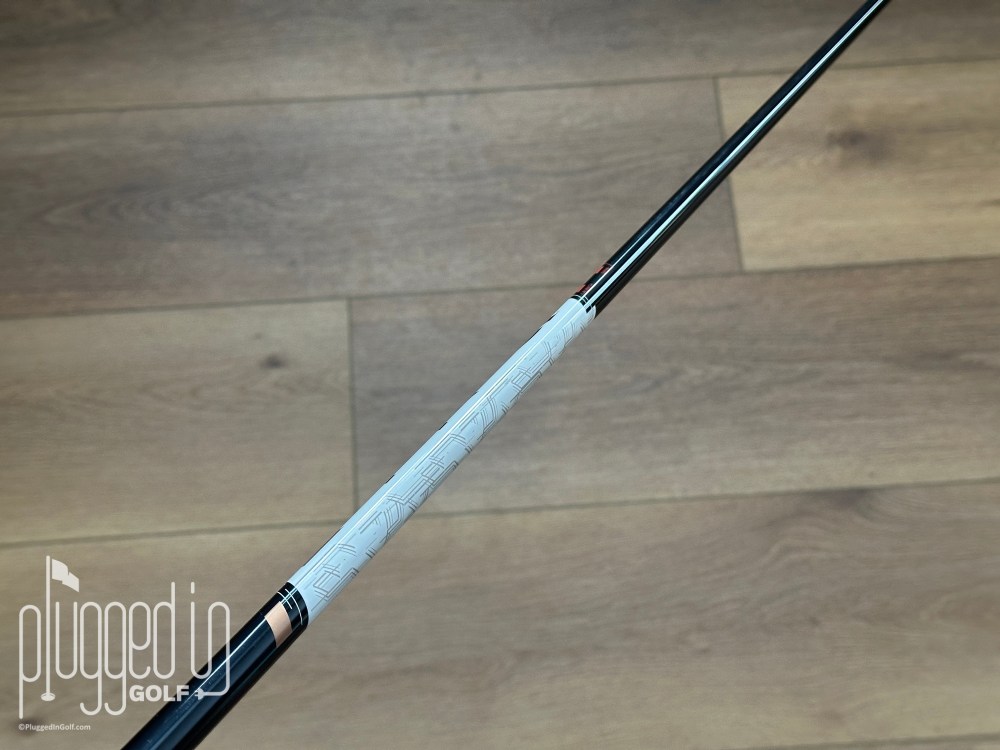
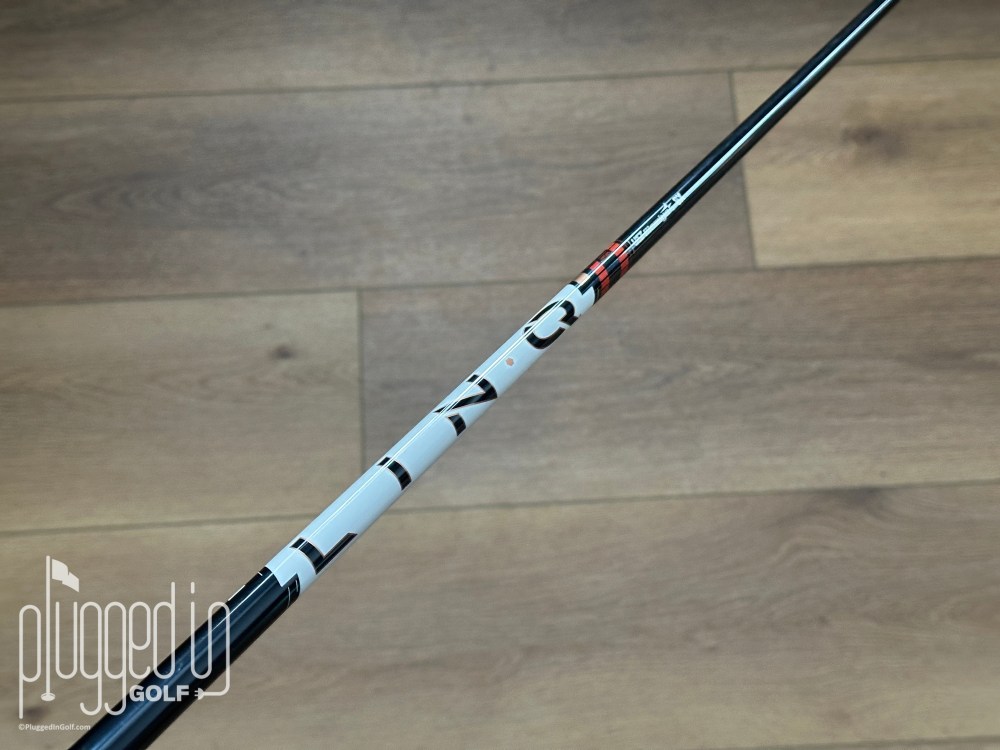
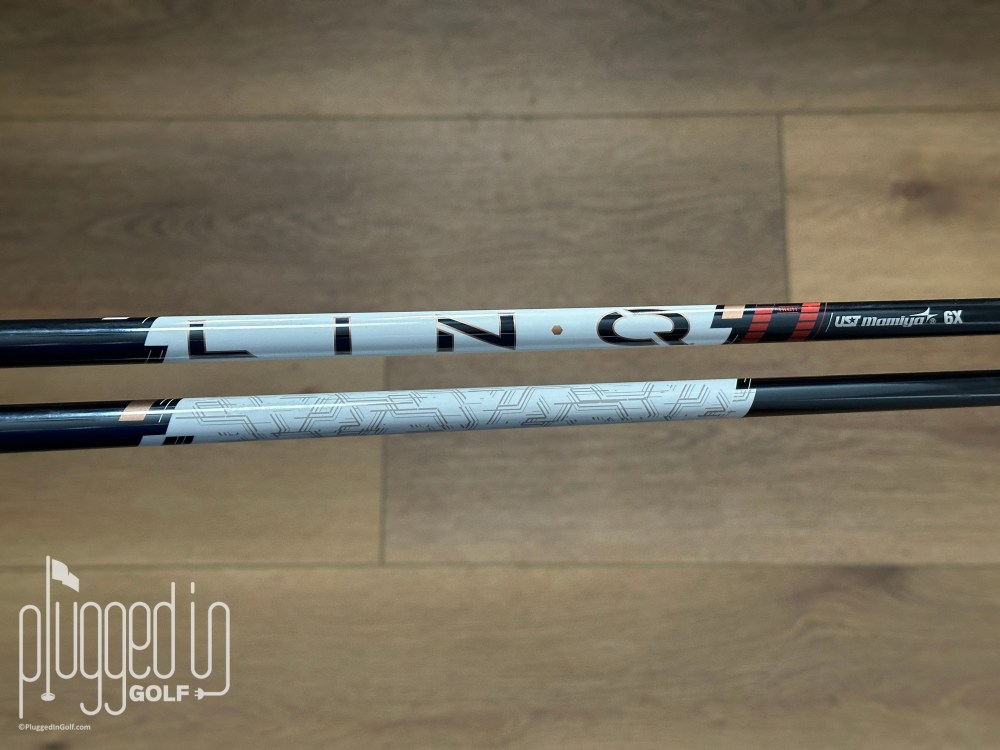
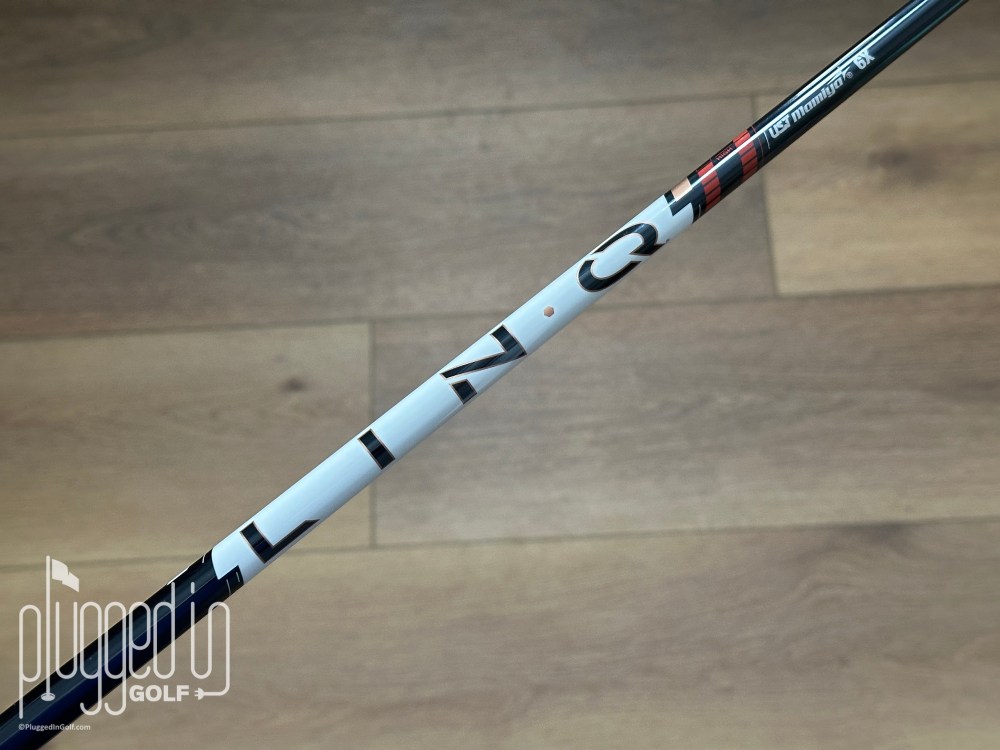
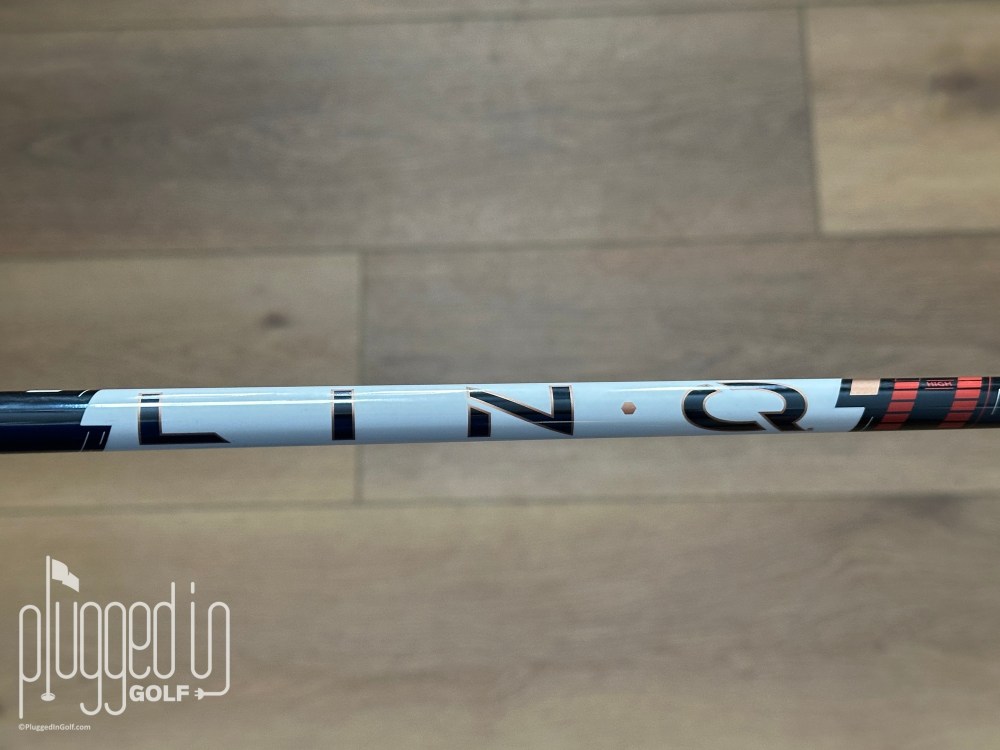
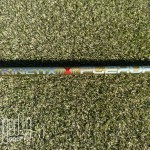
At a glance, the UST Mamiya LIN-Q PowerCore Red could easily pass for one of its brothers. It’s predominantly gloss black – a clean, traditional look. Below the grip is a white block approximately seven inches long with clear, bold “LIN-Q” branding. The model and specs stand out a little more on the Red than on the others – the red launch and spin characteristics are more eye-catching. If you go for a logo down installation, the white section has angular graphics in a beige/gold color.
Overall, the UST Mamiya LIN-Q PowerCore Red is distraction-free at address and will fly completely under the radar of most golfers. However, for those that follow equipment closely will be able to spot this the moment you pull it out of the bag.
Feel
The UST Mamiya LIN-Q PowerCore Red has the most active feel in the LIN-Q family. Giving it the wiggle test, you’ll feel the bend slightly lower, or closer to the club head, and you’ll feel more bend. During the swing, the LIN-Q Red starts to cross the divide from “smooth” into “active.” There’s a noticeable kick in the downswing, which is an exciting feeling. You get the sense that the shaft is doing some of the work for you. While there is a healthy kick, the tip feels fairly stout, not twisty or high torque.
Across the LIN-Q family, the three shafts are like siblings: there are shared traits, but each one has their own personality. As I noted in a previous review, changing colors brings about more change in feel than a change in flex. Said another way, there’s a bigger gap between LIN-Q Red 6X and LIN-Q Blue 6X than there is between LIN-Q Red 6X and LIN-Q Red 6S. [See Price / Buy]
Performance
The tech story behind the UST Mamiya LIN-Q PowerCore Red is the same as in the LIN-Q Blue and LIN-Q White [review HERE]: PowerCore. This is what UST calls the combination of materials and construction methods that produce better energy transfer and more consistency. Feedback on Tour is that this feels great and provides more stability.
That stability is particularly important in a higher launching shaft like the LIN-Q Red. I’m in that group of players who could use higher launch and wouldn’t be hurt by a little more spin. On top of that, I prefer the feel of a more active shaft – who doesn’t like a big kick adding energy to your tee shots? The problem is that most active, higher launching shafts are too unpredictable in terms of dispersion and hook prevention. [See Price / Buy]

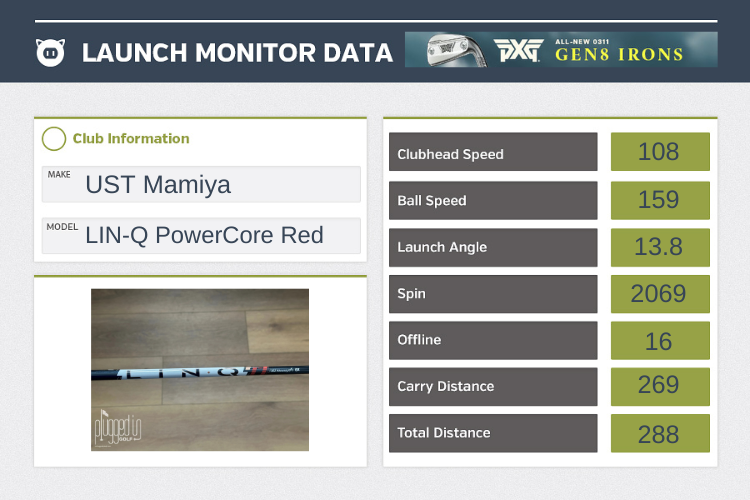
In my testing, the UST Mamiya LIN-Q PowerCore Red showed itself to be one of the more stable high launching shafts that I’ve tested. In the 6-TX configuration, it’s not too far from the LIN-Q Blue 6-X [review HERE] which I used pretty effectively. The spin and launch are measurably higher, especially when comparing equivalent flexes.
Across all the LIN-Q testing, my favorite drives were hit with the LIN-Q Red. When I was able to ease off in transition just a bit, I got great speed, it felt easy, and the ball flew on a string. The other side of that coin, predictably, is that when I didn’t contain my aggressive tendencies, the ball went left. Again, compared to other high launching shafts, the LIN-Q Red does a good job keeping the overdraw in check, but it’s not on the same level as the LIN-Q Blue or White.
UST created similar EI profiles for each LIN-Q shaft so that players could mix and match LIN-Q models to fit the needs of various clubs – for example: more launch in a fairway, less spin a driver. My testing included only drivers, but I can see the potential given the range of colors, weights, and flexes. As a low launch player, I think a LIN-Q Red 7TX could be amazing in a fairway wood.
Finally, the UST Mamiya LIN-Q PowerCore Red is available in weight classes ranging from 50 grams to 70 grams. In the lightest range, they offer stiff, regular, and A-flex. At 60 and 70 grams, there are three flexes, too, but they’re shifted up one: regular, stiff, and X-flex. TX models are available through UST’s TSPX dealers like Club Champion. [See Price / Buy]
Conclusion
The UST Mamiya LIN-Q PowerCore Red rounds out a family of shafts that I think is going to be hugely successful in 2026. LIN-Q Red offers players higher launch and a more active feel without giving up all the stability and consistency that have made the LIN-Q a favorite on Tour. [See Price / Buy]
Visit UST Mamiya HERE

He founded Plugged In Golf in 2013 with the goal of helping all golfers play better and enjoy the game more.
Matt lives in the northwest suburbs of Chicago with his wife and two daughters.
- ARETERA AO2 Shaft Review - March 27, 2026
- Shot Scope LM1 Launch Monitor Review - March 26, 2026
- TaylorMade Qi Max Irons Review - March 25, 2026




6 Comments
Hi Matt,
I know that your advice is “get fitted”, which I agree with. However, with all of the shaft options, is there a good way to approach fitting since trying everything may not be realistic for most golfers?
Or is this where a good fitter comes in, who can see your swing and knows enough about the different models and manufacturers to get you into a good direction for your swing?
You nailed it.
I think it’s great to walk in and say, “Here are 2-3 shafts I’ve read about and think might work/want to try,” but I don’t think that’s necessary. I’d also be willing to hear the fitter say, “Yeah, those shafts are good but aren’t for you.”
Ultimately, it always comes down to you and the fitter. If you don’t trust them, don’t work with them. If you are going to work with them, let them do their job. You absolutely get to (and should) give input during the process (“This doesn’t feel good” or “I don’t like how this looks”), but they are the expert.
Best,
Matt
Thanks for the feedback, Matt. I always appreciate what you guys do. My last driver has a stock shaft, and I hit it well enough at the range so that’s what I ended up with. For my next purchase, I do want to be a little more aware of what my options are, and why they work/don’t work.
Hey Matt-are these playing pretty much to standard on stiffness. The blue s flex seemed to feel more like a regular. Thanks so much
Steve,
With the caveat that there is no industry standard as to what “stiff” means, I think these are pretty close to “normal”.
Best,
Matt
Thanks much Matt! I appreciate the forum very much and it is extremely helpful!