
50 Words or Less
The PXG Lightning hybrid has unbelievable consistency. Robust launch, spin, and ball speed. Industry-leading adjustability. Seven available lofts allow you to consider replacing half your iron set.
Introduction
Buried among three new drivers and two new fairway woods is this lonely hybrid. There’s just one model. It has to fight for bag slots with utility irons and everyone’s new favorite, the high lofted fairway wood. But the PXG Lightning hybrid is not sad. It knows that it just might be the best club in this exciting new family, as I’ll explain in this review.
Looks
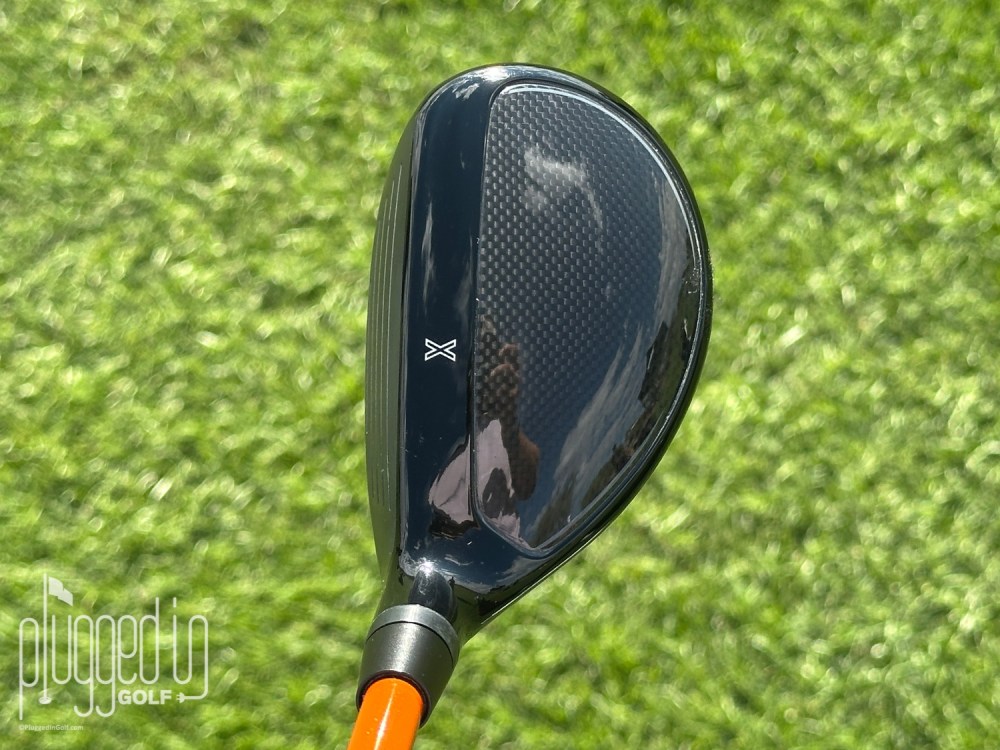
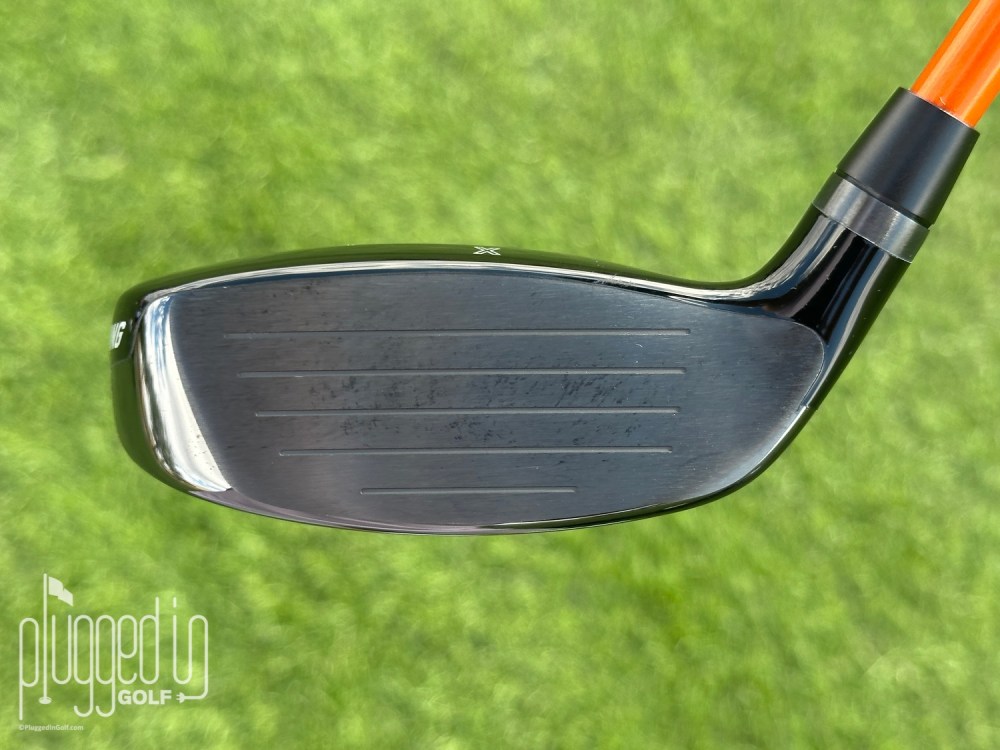
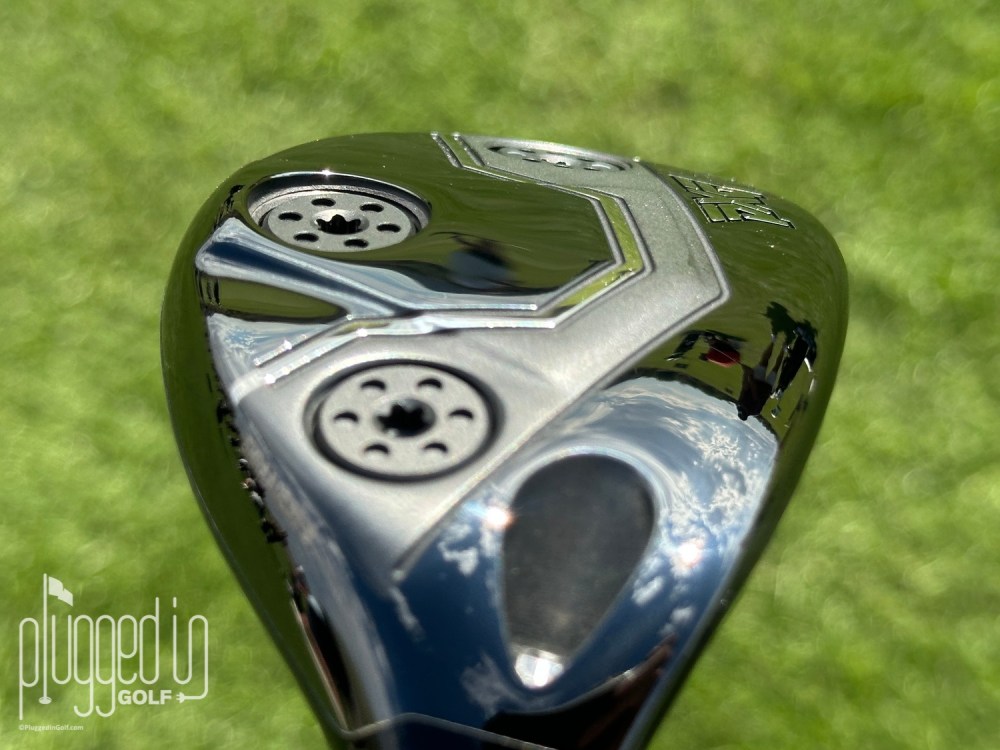
The address look of the PXG Lightning hybrid has a lot in common with the Black Ops hybrid [review HERE]. Both feature a large swath of carbon fiber on the crown and an “X” alignment aid. In terms of shape, the Lightning is more symmetrical and shorter from front to back; Black Ops is more pear shaped. Also, the crown graphics are almost nonexistent on the Lightning hybrid. Overall, I would rate the address look as tilting slightly toward the better player, but it’s not intimidatingly compact.
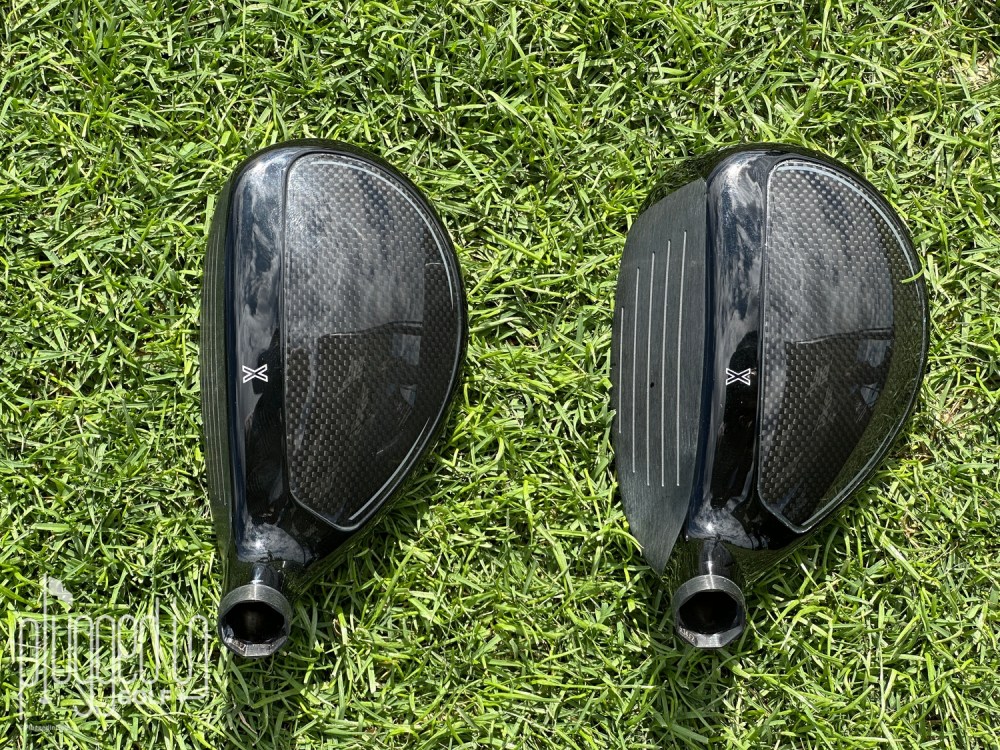
My comments relate to the 22 degree hybrid that I was fit for, but, as you can see above, the shape of the PXG Lightning hybrid changes dramatically depending on the loft you select. On the left is a 19 degree model, on the right a 31 degree hybrid. As you add loft, the club gets noticeably longer from front to back, making it rounder and more fairway wood-like.
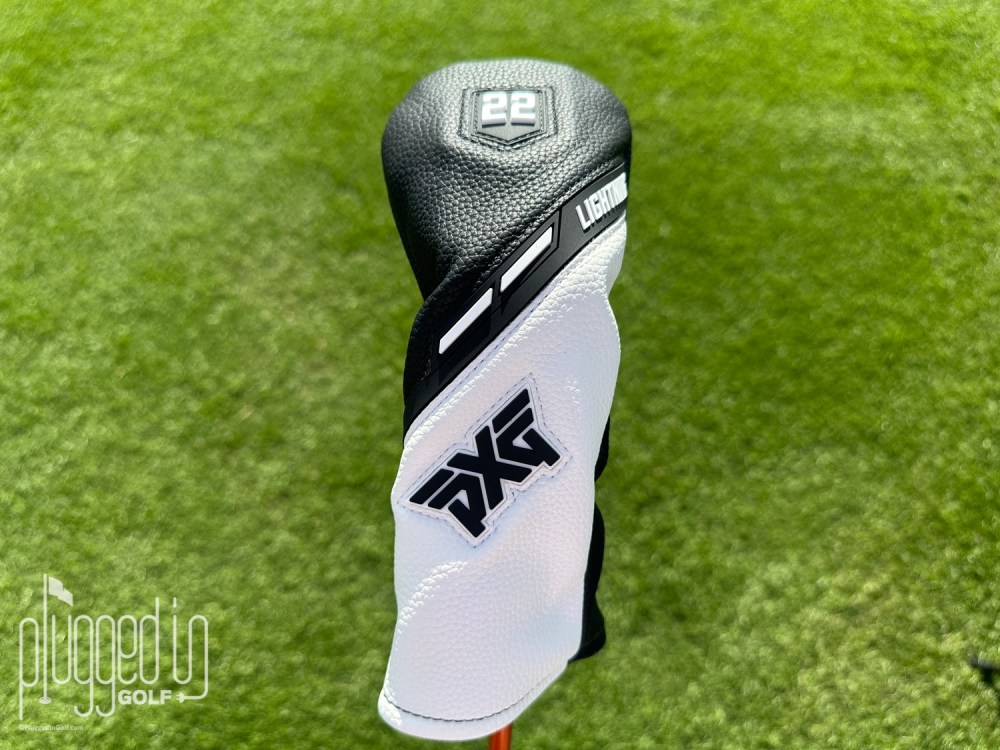
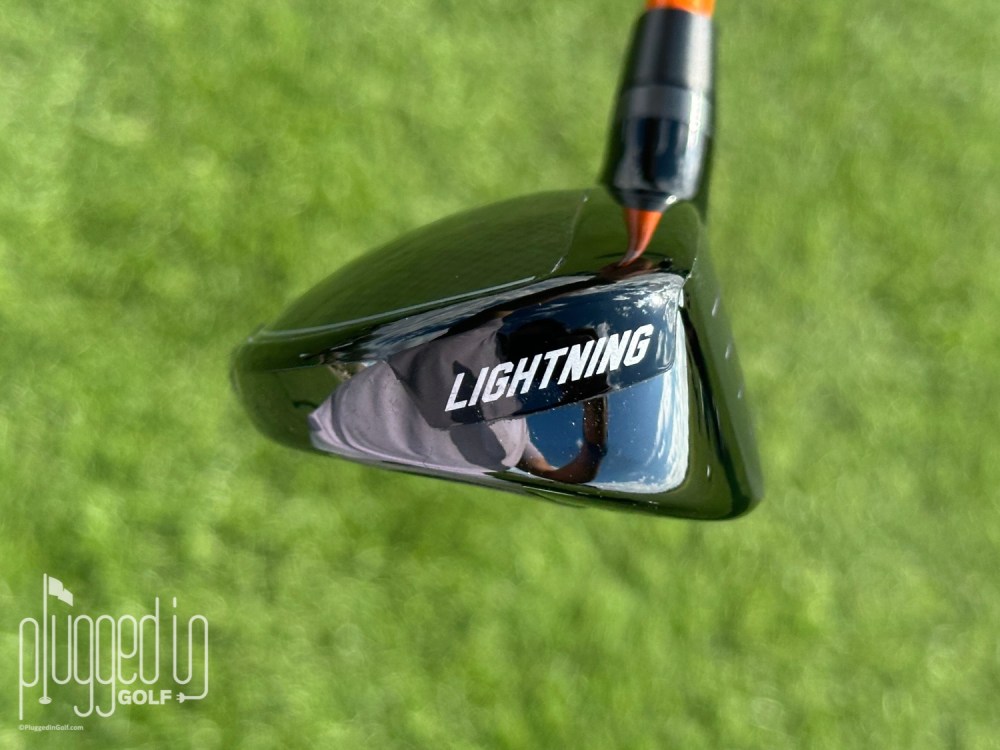
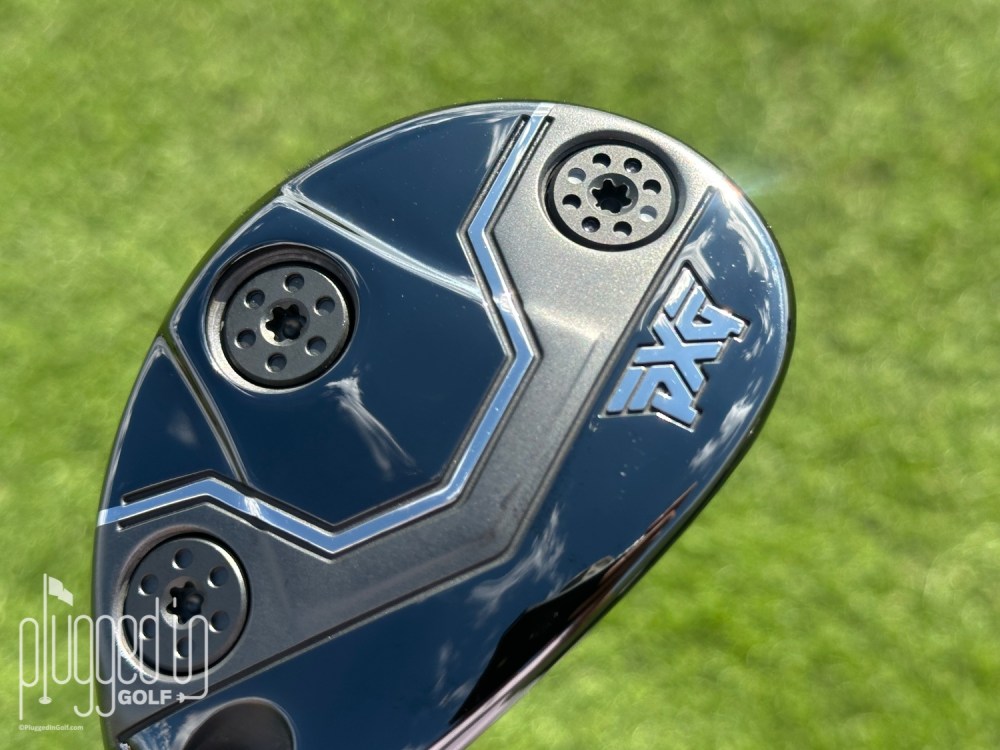
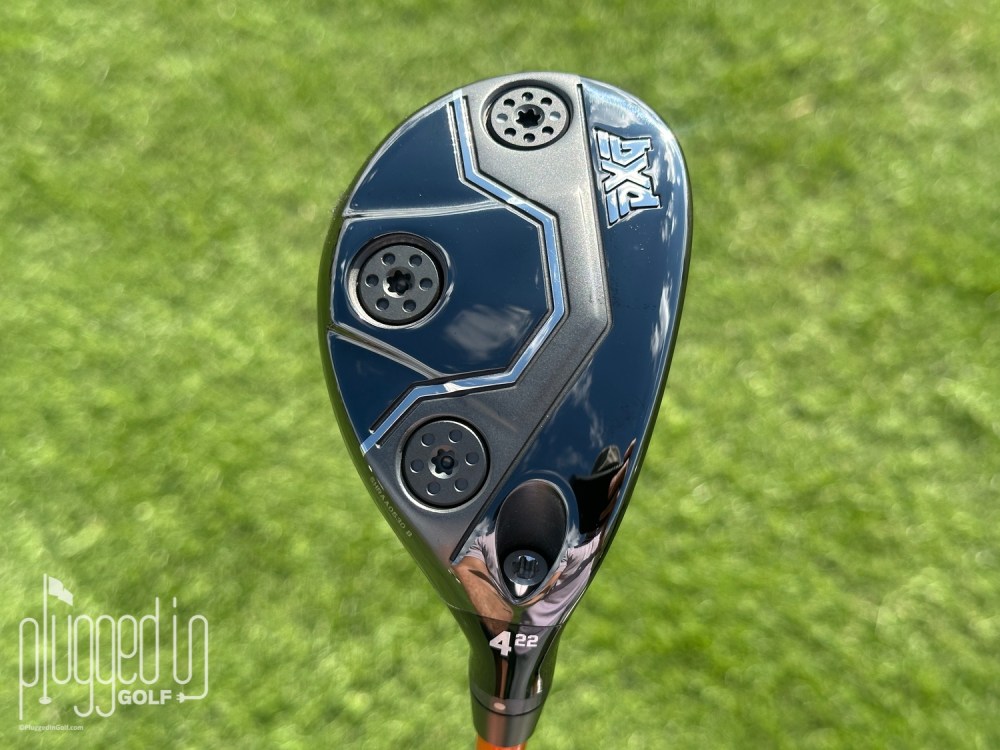
In the bag, the PXG Lightning hybrid sticks to PXG’s black, silver, and white color scheme. The three weight ports are the focus of the gloss black sole with the “PXG” branding near the toe and the “Lightning” appearing only on the vertical edge of the toe. The stock headcover is the first PXG cover I can recall that isn’t overwhelmingly black, and I like this brighter look as a change of pace.
Sound & Feel
There are times when being in the middle of the bell curve is boring, and there are times when it’s truly the best of both worlds. The feel of the PXG Lightning hybrid is the latter. Striking a premium golf ball with this club conveys a feeling that’s both fast and solid. The club feels powerful behind the ball, not thin, and the ball feels launched.
This feel complements the mid-low pitched impact sound. A concise “clack” with gentle metallic notes, the sound will tell you a lot about the quality of your strike. Mishits produce a sound that’s a little cranky and off-key. Centered shots are tighter, more harmonic, confirming that the ball was struck just right.
Performance
During my fitting at Scottsdale National, the PXG Lightning hybrid got short shrift. We spent a lot of time hitting all three drivers and some time negotiating between the two fairway woods, leaving little time for the hybrid. My fitter, Terry Trammel, did suggest a clever approach, pairing a 22 degree head with the longer shaft of a 19 degree model, but otherwise the hybrid fitting was pretty routine.
When I got back home, I put the Lightning hybrid up against my gamer, the PXG 0311 XF GEN6 [review HERE]. The GEN6 had fought off Black Ops, and I’ve been quite happy with it lately, so I wasn’t sure I’d be making a switch. I gathered some baseline data from my gamer, then swapped in the PXG Lightning hybrid.
My first few swings were pretty poor. So were the next few. But the ball flight and launch monitor numbers were quite good. Everything was flying straight, and the carry distances weren’t much more than a club behind the GEN6. Then I got in a groove and started pounding the ball. The trajectory was a touch stronger, but I was seeing the same straight, consistent flight. When I looked over at the launch monitor, I was expecting to see huge carry numbers. Instead, I saw that these premium shots had flown a few yards past GEN6 and about twenty yards past my worst swings. I was dispirited. “I nuked a few of those…what the heck?”
As I stood there wondering if it was me or the club that was defective, I came to the now-obvious realization: the good shots weren’t short; the bad shots were incredibly long. I started hitting again, rapid fire, almost trying to hit bad shots. It was nearly impossible to lose more than twenty yards compared to my best swing. All across the face, the ball launches high with excellent speed and robust spin. Put simply, the PXG Lightning hybrid is the most consistent hybrid I’ve hit in a long time, maybe ever.
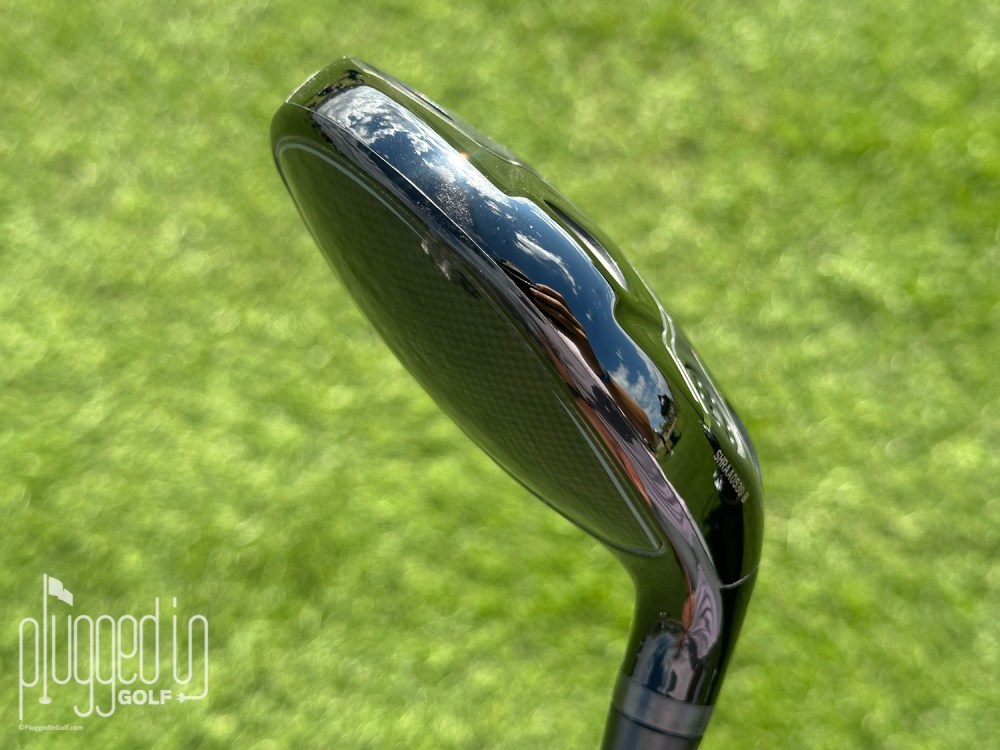
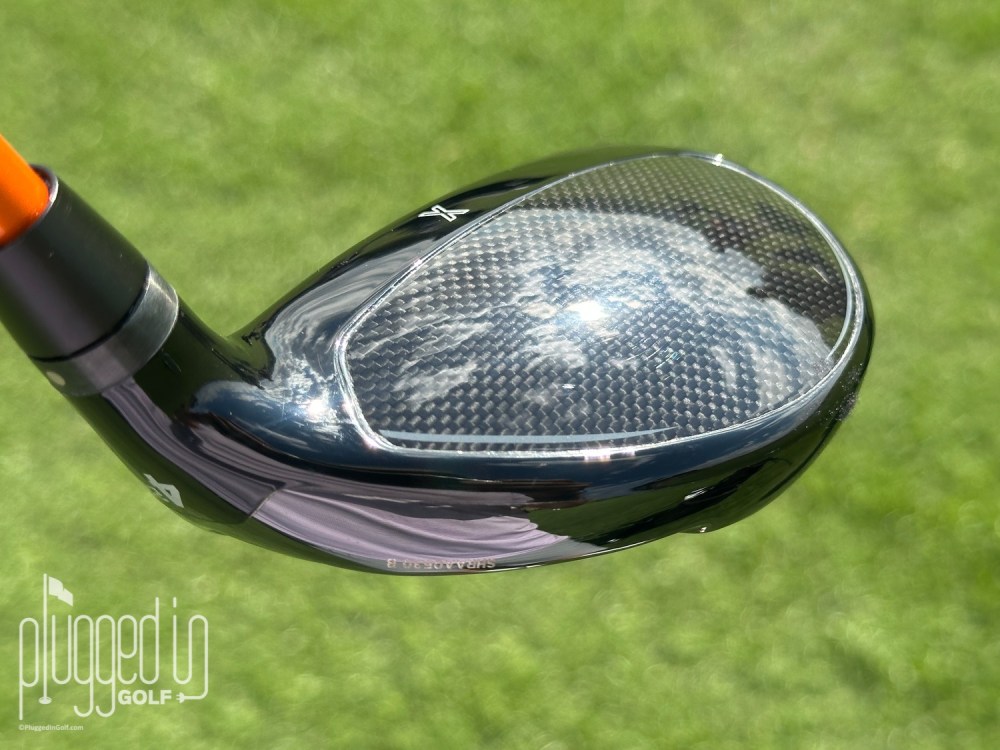
Getting into the tech side, the PXG Lightning hybrid has a face insert that’s 6% thinner than the Black Ops hybrid, leading to 3% more face deformation. Practically speaking, that means roughly an additional degree of launch and over 3 yards more carry. While that’s not an eye-popping number, this one is: the dispersion of the Lightning hybrid is as much as 40% better than Black Ops. This is thanks in part to Squared Face Design – something also seen on the Lightning fairway wood [review HERE] – which allows for high MOI and low CG to coexist.
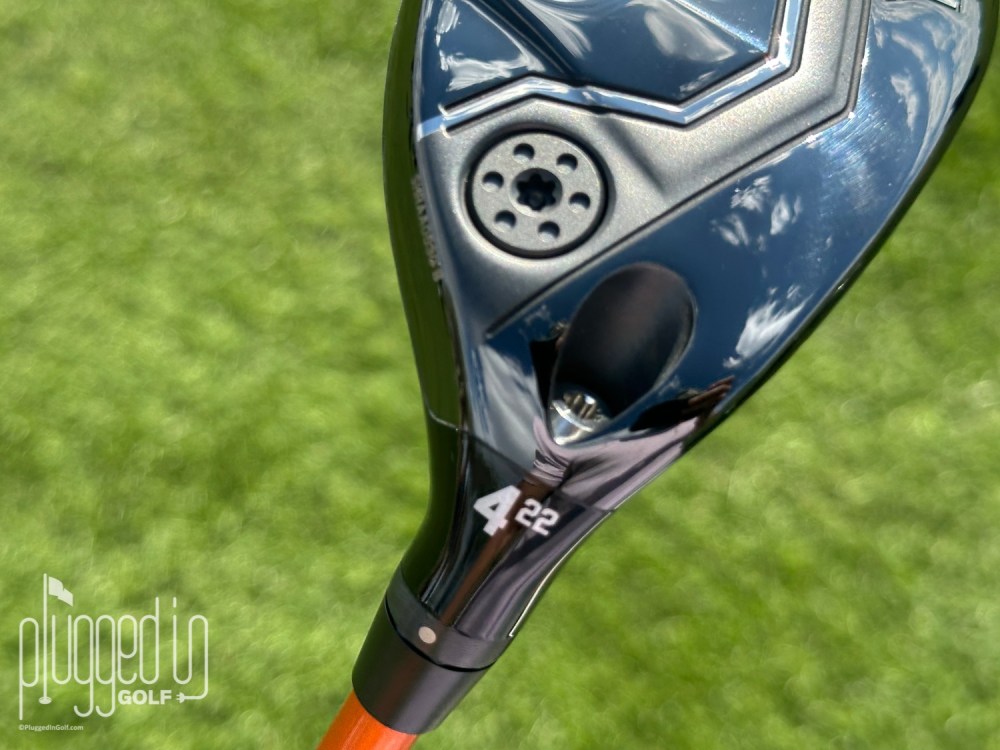
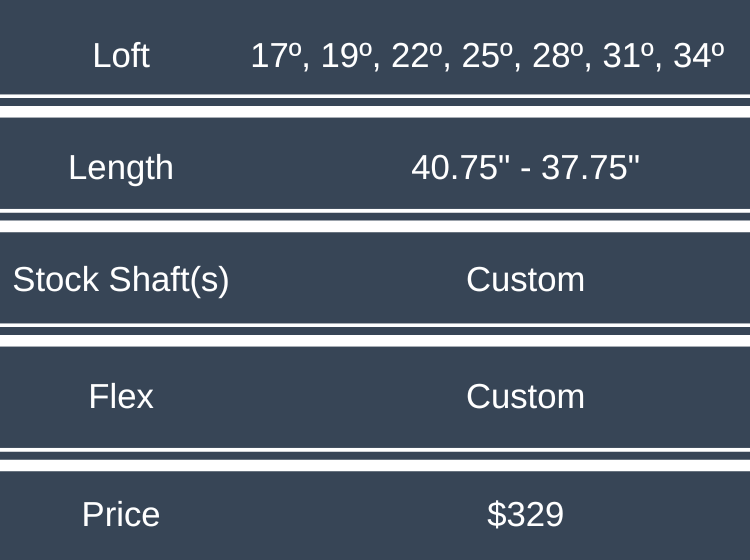
Finally, PXG continues to offer more adjustability than any other hybrid manufacturer. An adjustable hosel allows you to tune the face angle, lie, and loft to suit your visual and performance preferences. Just as impactful are the three weight ports. With weights ranging from 2.5 to 20 grams, you can create a club that’s draw or fade biased, light or heavy, higher or lower launching. Add to that seven loft options – going as high as 34 degrees – and you can design the perfect club for any situation or replace your long and mid irons.
Conclusion
It’s very easy to get caught up in trying to find another five yards off the tee. But how much better would your scores be if you could tame the long approach shots required by brawny par 3s and 4s? Keep that in mind as you head to your next fitting, and make sure to try the new PXG Lightning hybrid.
Buy the PXG Lightning Hybrid HERE
PXG Lightning Hybrid Price & Specs

He founded Plugged In Golf in 2013 with the goal of helping all golfers play better and enjoy the game more.
Matt lives in the northwest suburbs of Chicago with his wife and two daughters.
- VA Raijin 2.0 Shaft Review - April 3, 2026
- Prong Putting Aid Review - April 2, 2026
- 2026 Wilson Staff Model Blade Irons Review - March 31, 2026




7 Comments
Ive always felt pxg hybrids dont get the credit they deserve. Kind of the sleeper hits of their offerings each round of new products.
So Matt are you sticking with your Gen 6 gamer or switching to the Lightning?
Mike,
I won’t make a decision until the spring, but the Lightning will definitely be in the mix.
Best,
Matt
senior golfer 77 yo hit my Taylor made 22 degree about 145-150 thinking about this hybrid looking for a 150 plus club I play gen 6 with recoil dart shafts senior flex f2 my gapping at the top end is 130-135 7 iron 140 -145 6 iron. what is you opinion 22 degree maybe 1/2 in longer and ability to turn down the loft or 19 degree with ability to turn the loft up?
Keith,
It’s a possibility, but the only way to know for sure is a fitting. More length is a fine way to chase distance, but less loft may be a negative depending on your speed, launch, and spin.
Best,
Matt
At what loft do they begin to resemble fairway metals?
Andrew,
There’s a good bit of subjectivity in that answer. I think the 31 degree in the photo is pretty FW-like, and the 28 isn’t too far from that. Others may disagree.
Best,
Matt