
50 Words or Less
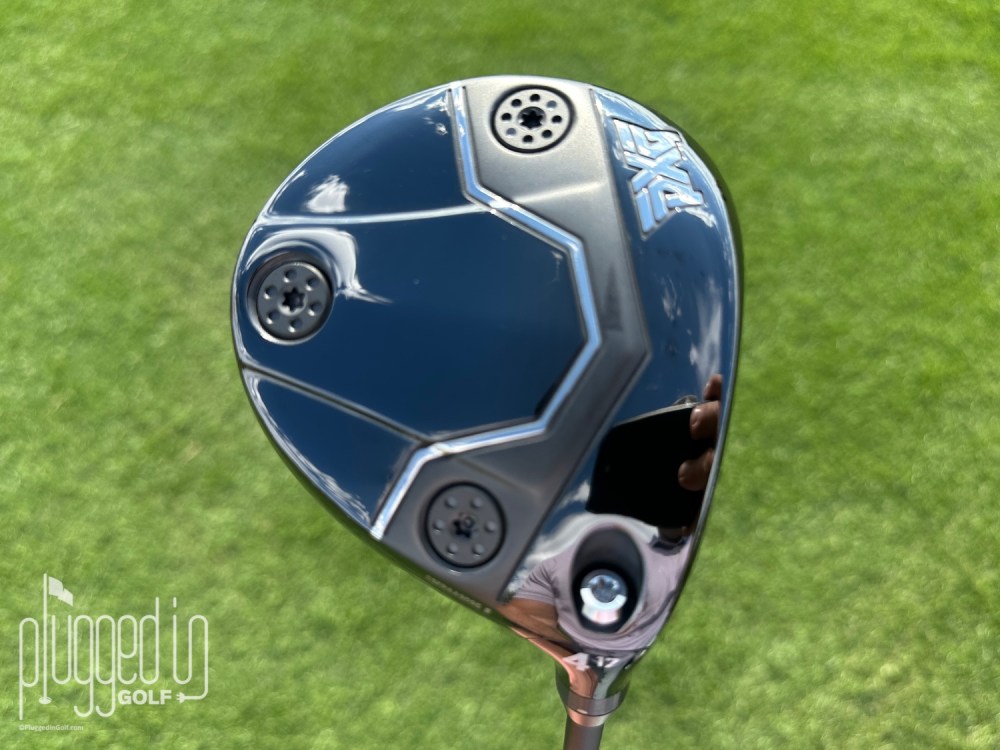
The PXG Lightning fairway wood is easy to hit and long. Excellent ball speed and tight dispersion. Square face design makes it easy to elevate.
Introduction
The PXG Black Ops was the first fairway wood in several years to achieve “in the bag” status for me. I can’t say that I used it, or even carried it, every round, but it’s been a reliable performer when I’ve needed to reach out for a long par 5 or hit an awkward tee shot. This set the bar very high for the new PXG Lightning fairway wood, but it managed to exceed my expectations.
Looks
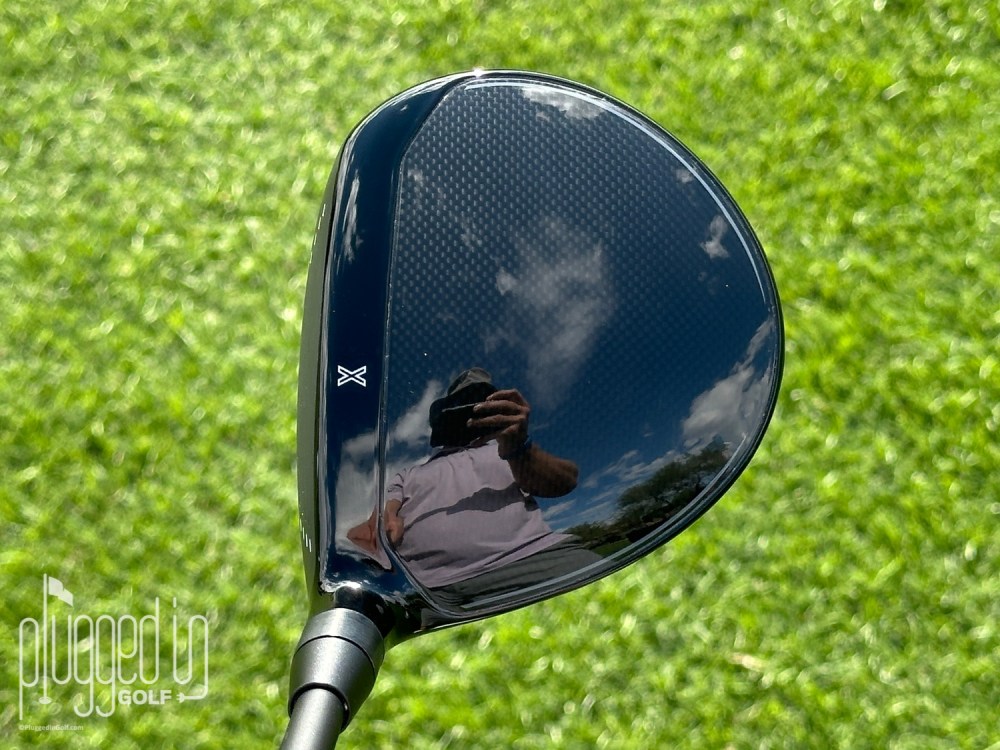
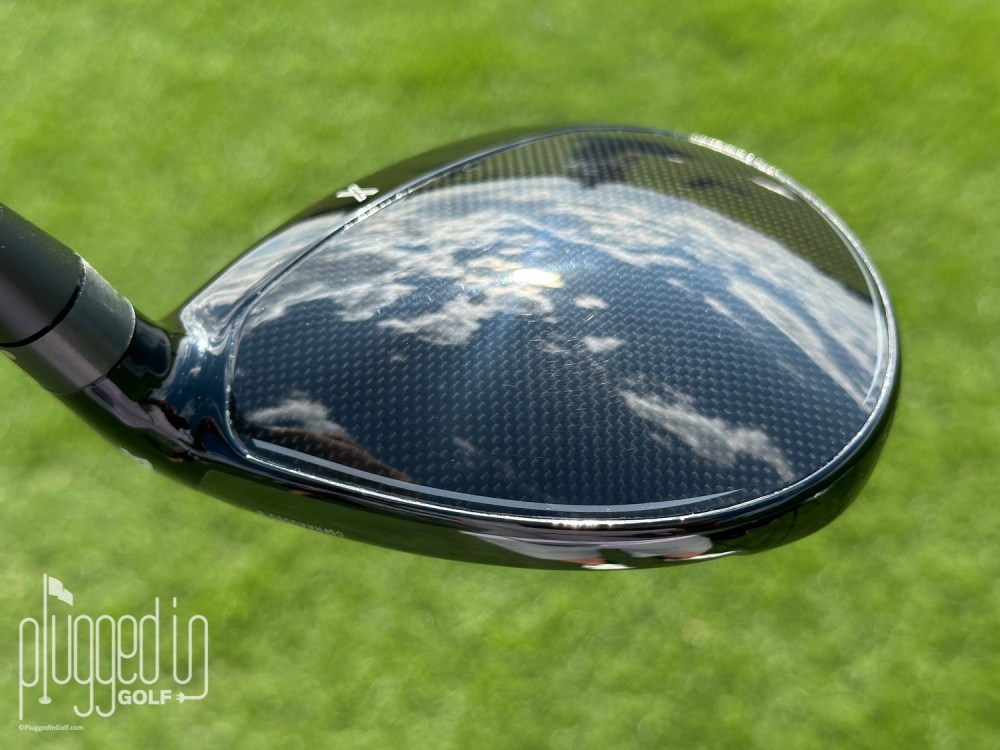
The address look of the PXG Lightning fairway wood is consistent with the Lightning drivers. Its crown is shiny, black carbon fiber with a white “X” alignment aid. In terms of size, this is about average for a modern FW. The shape isn’t quite symmetrical, but it’s balanced.
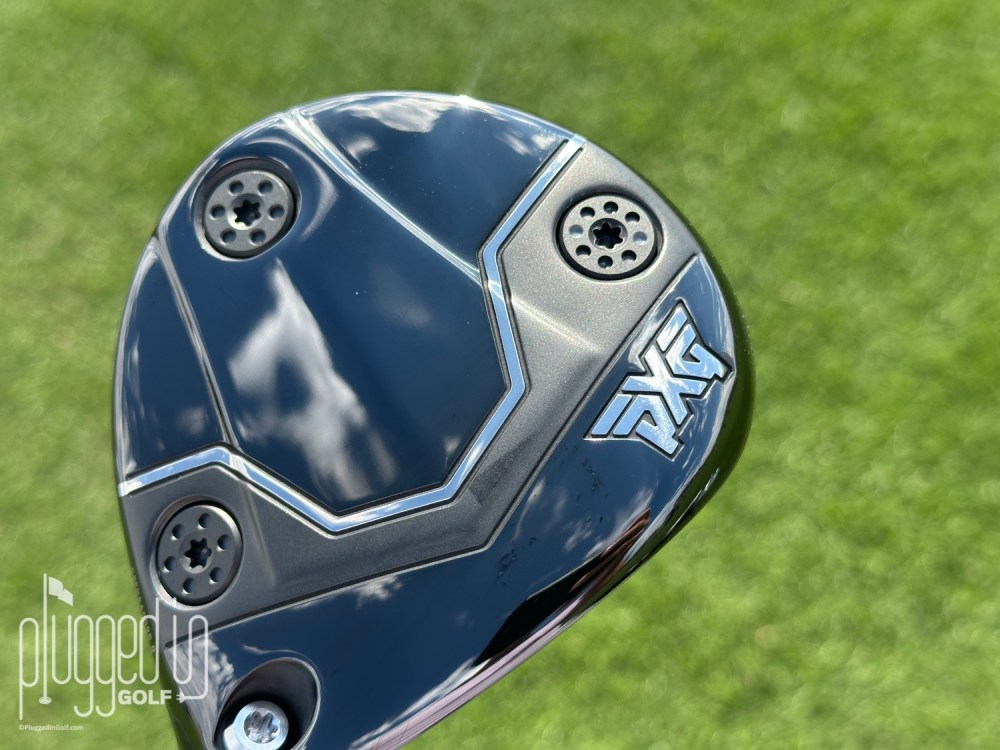
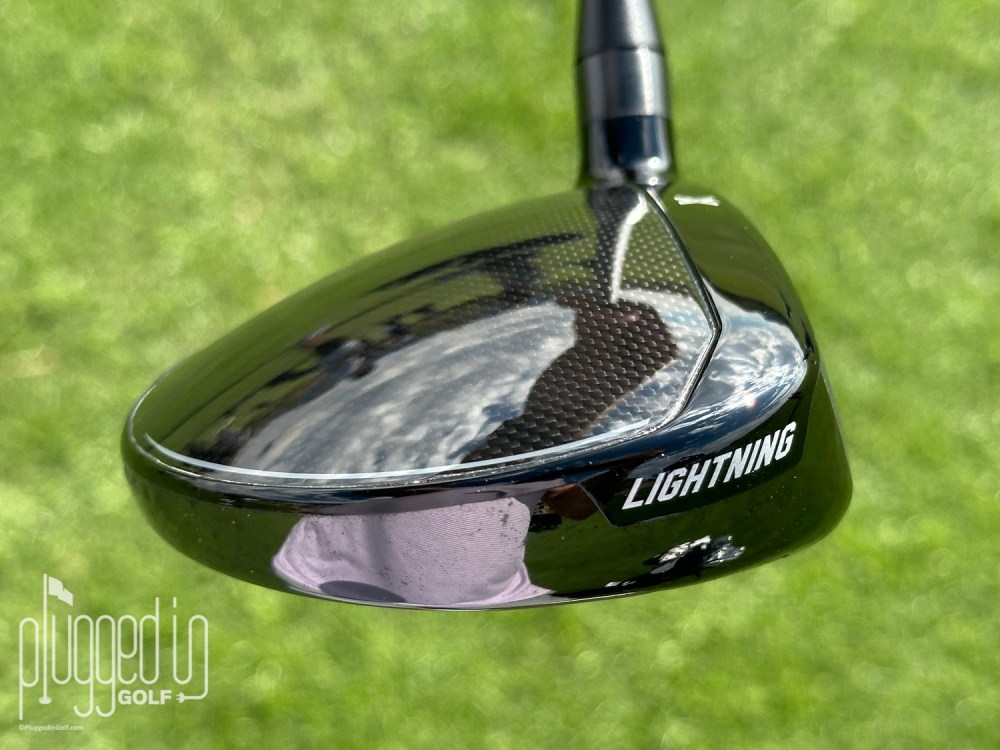
In the bag, the Lightning fairway wood has a very clean look. The gloss black sole’s only ornamentation are the three weight ports. Moderately sized “PXG” branding is tucked along the leading edge near the toe.
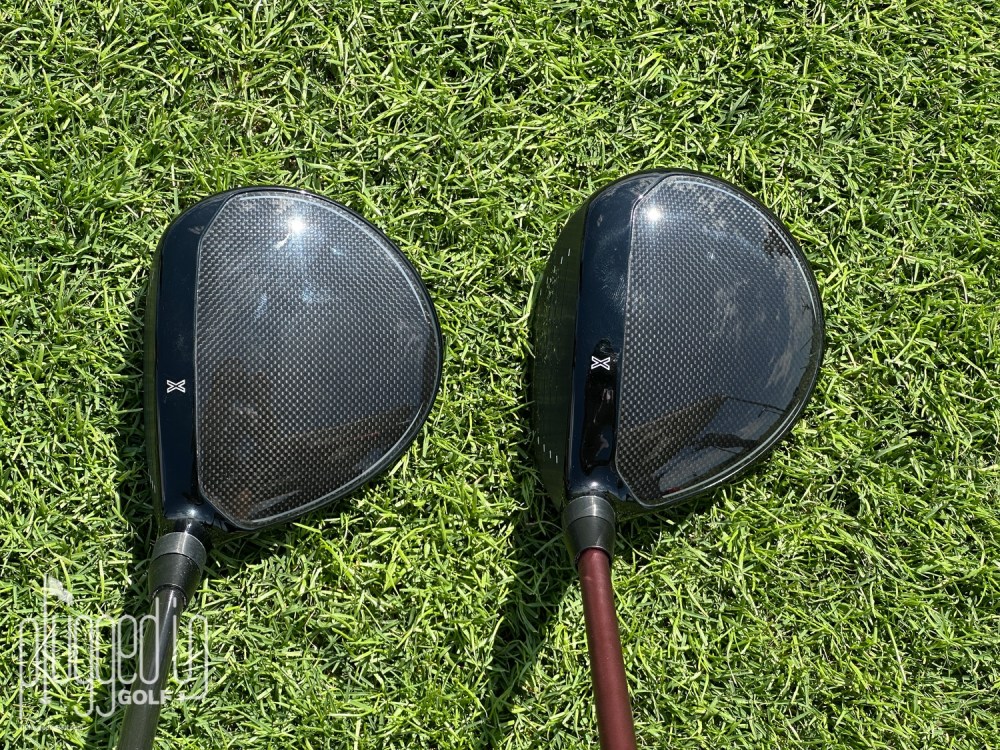
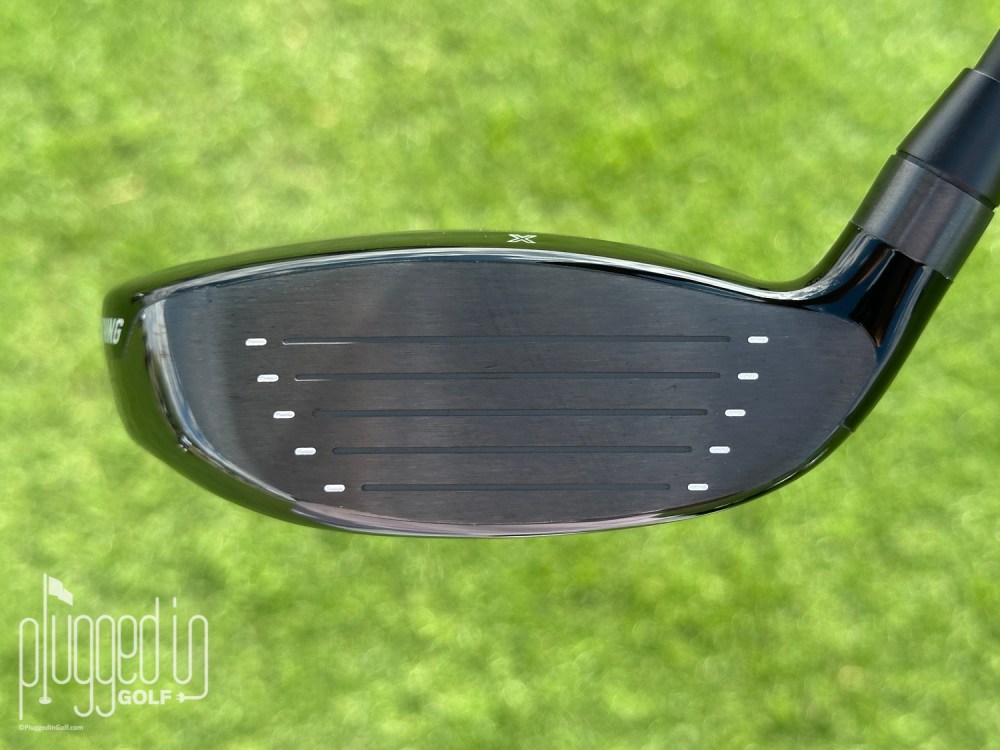
Above, you can see the PXG Lightning fairway wood on the left, the Lightning Tour on the right [review HERE]. Though somewhat minimized by the angle, the difference in size is still noticeable. The Lightning Tour is a compact, players fairway wood. To my eye, the bigger difference is the shape of the face (which is a bit hard to see in this picture). The standard Lightning fairway wood has a squared face, the Lightning Tour has a substantially rounded face.
Sound & Feel
Steering away from the light, metallic sound of many of its peers, the PXG Lightning fairway wood produces a mid-low pitched “pop” when struck well. The volume is below average, letting the performance speak for itself. There’s good feedback through the impact sound – flush strikes are punchy and powerful, mishits sound weaker as you move away from the center of the face.
The feel of the Lightning fairway wood leans more toward solid than explosive but isn’t extreme. Centered shots still feel very fast, but the overall impression is one of hitting the ball with a sledgehammer, not a paper thin club face. The feel pairs well with the sound to deliver excellent feedback on strike quality.
Performance
In the Black Ops family, PXG designed one do-it-all fairway wood. For Lightning, they’ve gone back to offering two models – the standard and the Tour. A reasonably close look reveals several differences: the PXG Lightning fairway wood has a larger footprint, square face, and a different combination of adjustable weights.
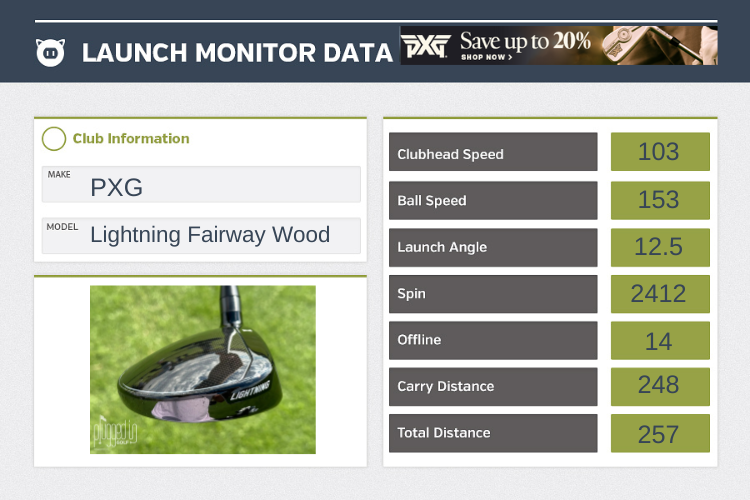
Note: For those that love the numbers, the ones above were produced with a 17* 4W, the club I was fit for.
For me, the most important performance feature on the PXG Lightning fairway wood is the square face. The benefit of the square face is that the CG can stay low while the MOI goes up from perimeter weighting. If the face is rounded, like on the Tour model, engineers can have a low CG or perimeter weighting but not both. PXG uses square face design in the Lightning Hybrid, too – review HERE.
In my testing, both the low CG and the high MOI were obvious. This club launched high and easily, even on my trademark thin strikes. Just as notable was how straight the ball flew. I haven’t had much course time with this club, but on the few par 5s I played, I didn’t have a second thought about going for eagle. Even if I didn’t make a perfect swing, I knew the ball would stay on the right line and fly most of my desired distance.
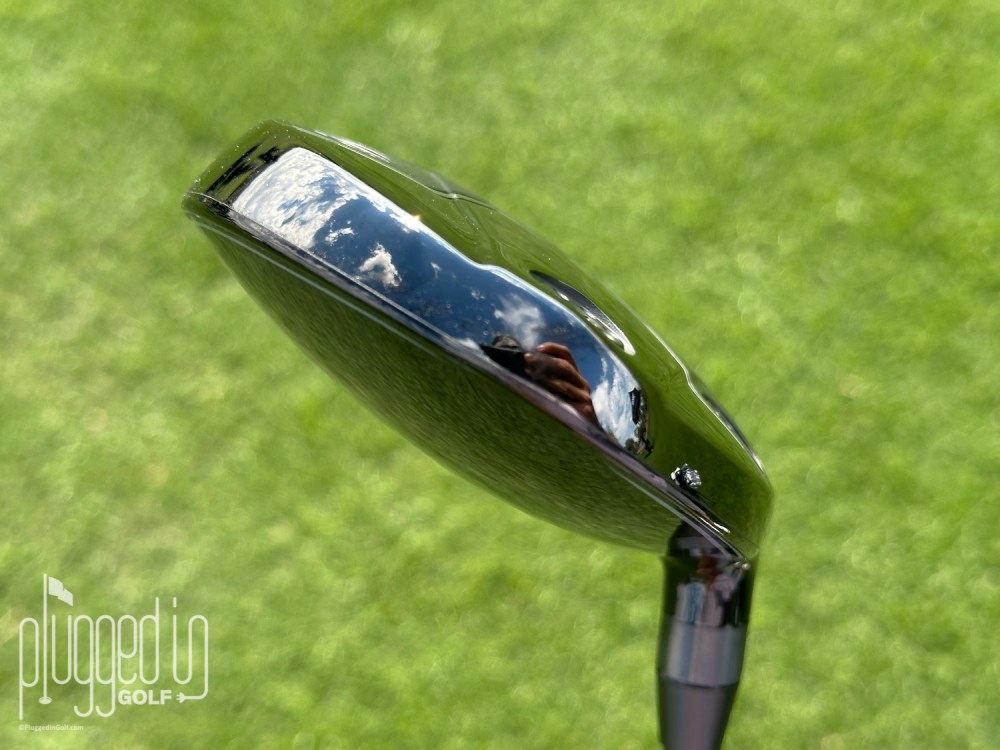
The upgrade that you can’t see with the naked eye is the Lightning’s thinner face. Compared to the Black Ops fairway wood [review HERE], the Lightning fairway wood has a 12.5% thinner face on the perimeter and 4% more face deformation. Translated to more practical terms, that’s about 1 MPH more ball speed and 1.5 yards more carry distance. While this isn’t game changing distance, the Lightning produces tighter dispersions than Black Ops, particularly in the higher lofted woods.
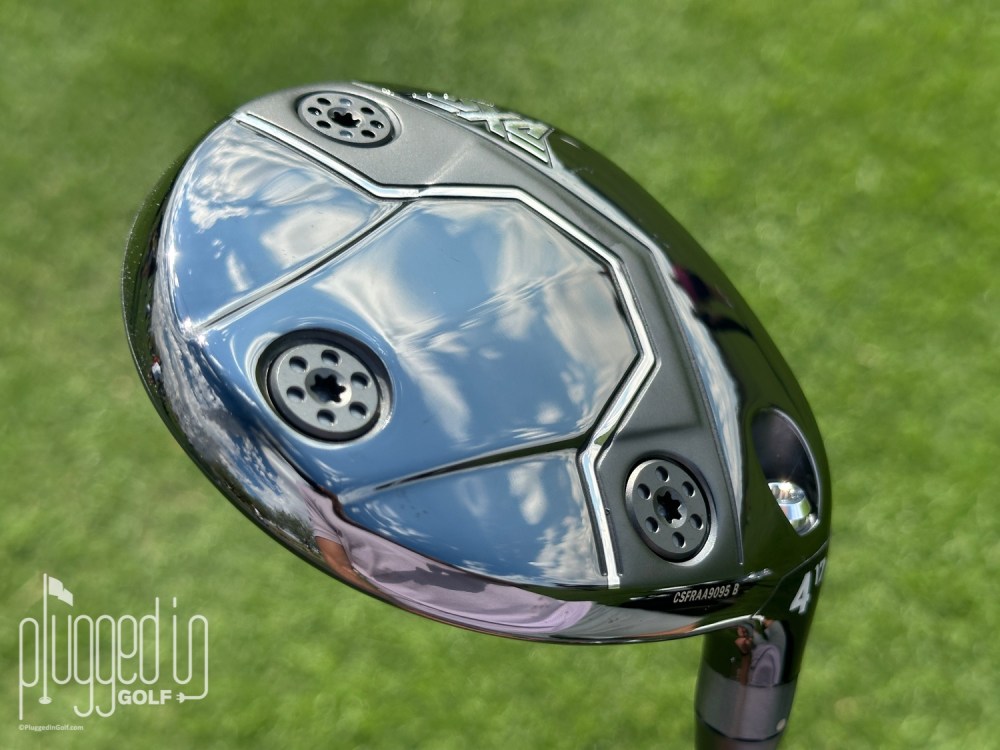
Longer and straighter don’t come at the cost of adjustability. The PXG Lightning fairway wood has an industry-leading amount of adjustability at its disposal, pairing an adjustable hosel with three weight ports. The hosel allows players to choose the loft, lie, and face angle they prefer. With weights ranging from 2.5 grams to 20 grams, players can work with their fitter to dial in the swing weight, forgiveness, and directional bias that they need. For me, having just a little extra weight in the toe gives me the confidence I need to swing away without fear of the hook.
Conclusion
Whether you’re looking for more distance or greater confidence in your long game – or both – the PXG Lightning fairway wood delivers. This club makes it easy to get the ball airborne and send it straight to your target. Dial in the right loft, shaft, and weight options, and you’ll be reaching for your fairway wood more often, just like me.
Buy the PXG Lightning Fairway Wood HERE
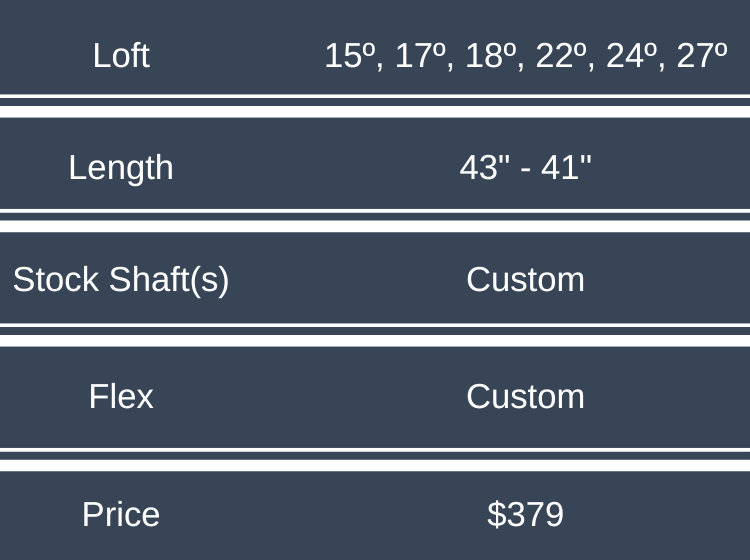
PXG Lightning Fairway Wood Price & Specs

He founded Plugged In Golf in 2013 with the goal of helping all golfers play better and enjoy the game more.
Matt lives in the northwest suburbs of Chicago with his wife and two daughters.
- VA Raijin Black Shaft Review - March 13, 2026
- 2026 FootJoy Premiere Series Golf Shoe Review - March 11, 2026
- Titleist Vokey SM11 Wedge Review - March 9, 2026



8 Comments
Great review. Keep them coming!
Nice review. I’m very interested in seeing how this club stacks up against my Callaway Ai Smoke which I have enjoyed for a while now. Haven’t tested my fairway woods in a while. I love actually going into my local PXG store and get fit properly. Guys are just wizards when it comes to fittings. Beautiful looking club and could be time for an upgrade. Curious to see how the hybrids are as well this go around. Have a Titleist GT hybrid in the bag which has served me well but again, this go around everything is on the table.
$379.00? Good grief. Doubt I’ll be seeing any of these on the courses I usually play.
Sorry, but welcome to 2026. Most fairway woods from the OEM’s are in the low $300’s range. And hybrids are not far behind.
Wondering just how much more distance I could get over a 4-year old Tour Edge fairway wood. They make excellent woods also, but I suspect in the hitting bay I couldn’t count on much more than just a few yards. Maybe dispersion would be superior. Too bad these aren’t stocked at a local Golf Galaxy of PGA Superstore.
Dean,
I agree: if the Tour Edge is well fit, I don’t think you should expect more than a few yards more distance. That said, I do think the Lightning’s combination of distance and tight dispersion/consistency/ease of use is very impressive.
Best,
Matt
Is this going to replace your black ops fairway?
Shawn,
It’s likely. I’ll decide in the spring.
Best,
Matt