
50 Words or Less
The Cobra OPTM MAX-D driver is engineered to be draw biased or, more accurately, slice correcting. Strong ball speeds and ample forgiveness. Complimentary sound and feel. Exemplary adjustability with FutureFit33.
Introduction
Like most OEMs these days, Cobra offers a variety of driver models to suit most every golfer’s needs. In their 2026 OPTM family, the low spin OPTM LS driver [review HERE] gave Zack even more consistency and forgiveness than previous models. Dylan stated that the core model OPTM X driver [review HERE], had an “(e)lite combination of length and accuracy.” Dylan also reported that the OPTM MAX-K [review HERE] had “incredible forgiveness.” In this review I put the draw biased Cobra OPTM MAX-D driver through the paces. Can it match the high bar set by its sibling drivers? Let’s find out.
Looks
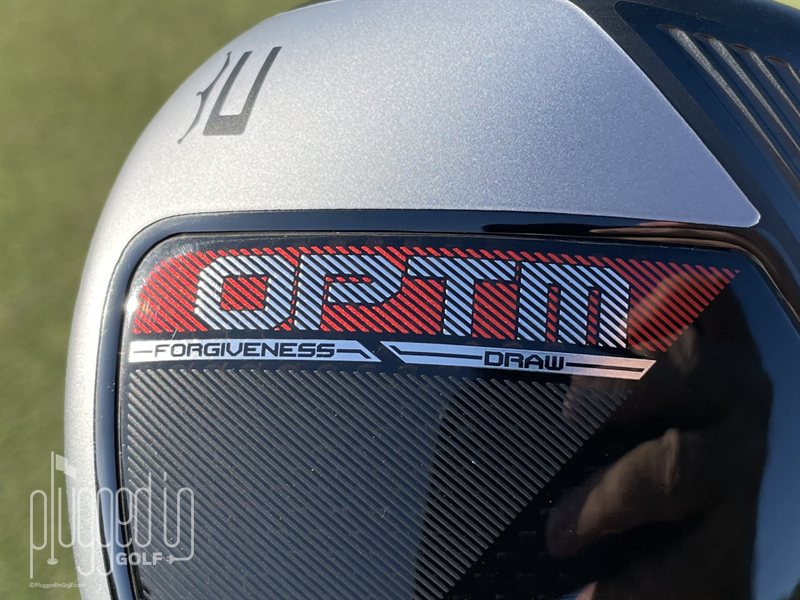
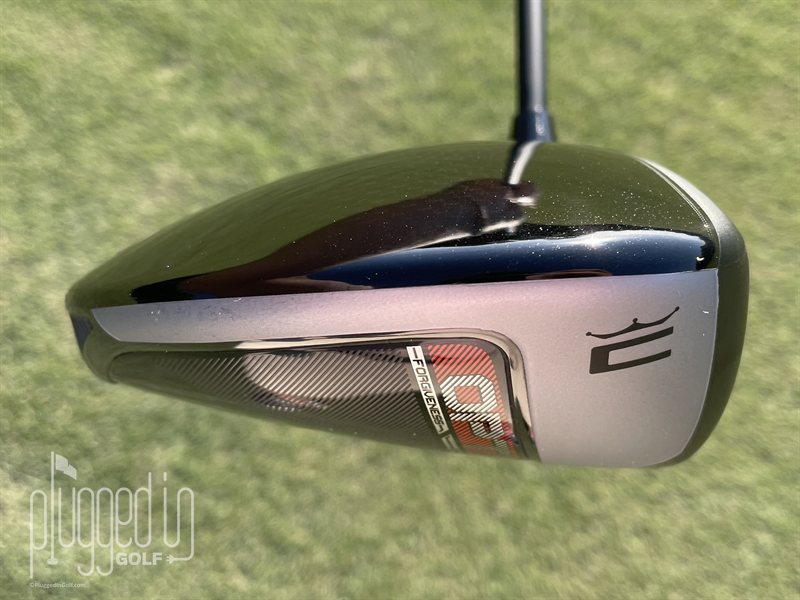
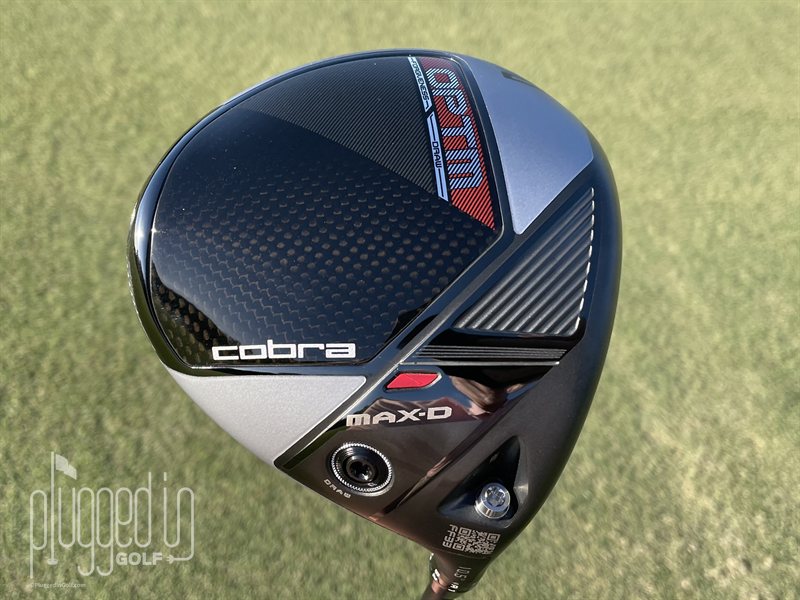
In the bag, the Cobra OPTM MAX-D driver shares the familial look of the other OPTMs. What instantly sets it apart is the use of red highlights. The other models have unique color markings, but the red really pops. I’d describe the soles as overly busy. That said, Cobra clubs have always had a more edgy, modern look than other brands.
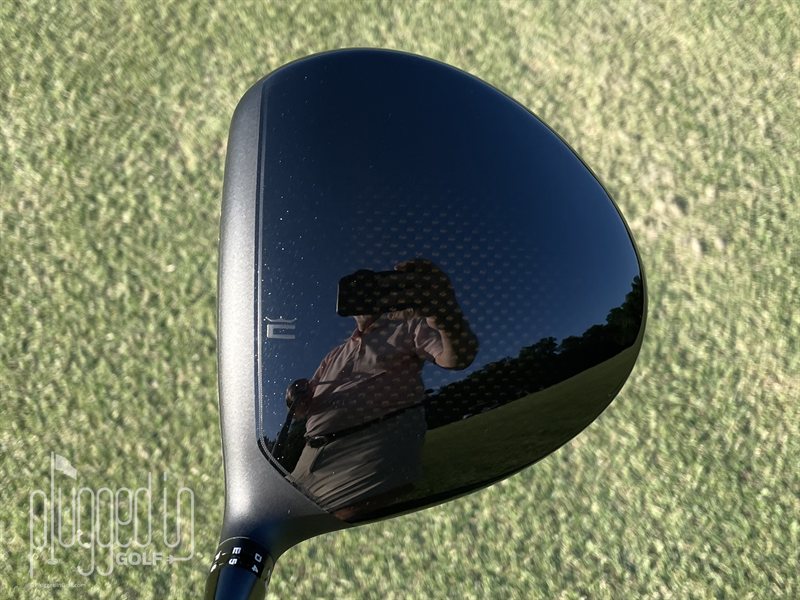
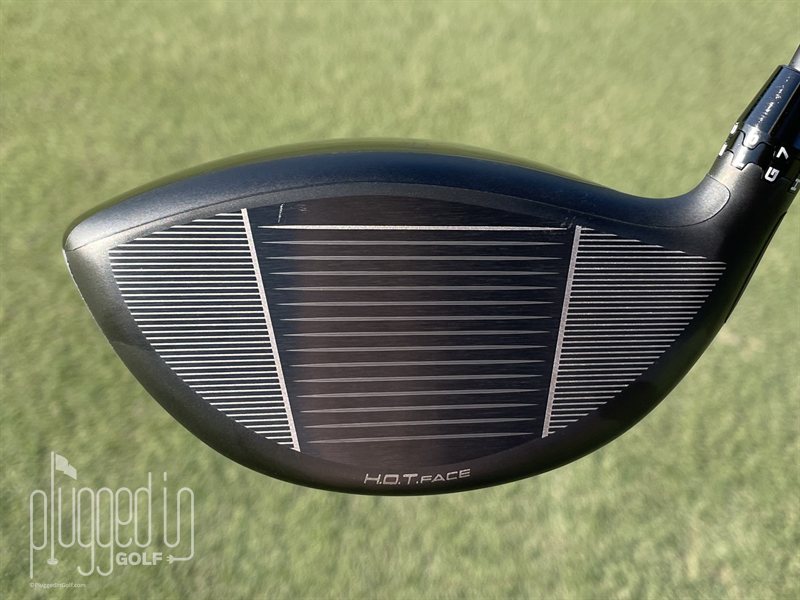
At address, the heel-centric, stretched footprint gives the Cobra OPTM MAX-D driver a substantial look. The head sits slightly closed, but it’s visually subtle. On the glossy black crown, the carbon weave fades in and out of view front to back. The framework for the face has a distinguished matte finish. And I really like the look of the pinstripe just behind the crown/frame connection. And as you would expect, the crowned C Cobra logo is used to note the optimum strike point. [See Price / Buy]
Sound & Feel
From my very first swing and on through testing with various golf balls, I really liked the sound and feel combination of the Cobra OPTM MAX-D driver. The adjective “solid” fit equally well for both categories. The mid-tone metallic “pop” reminded me of the strike of an anvil – metallic and solid. I’d place the volume at a befitting medium-plus. On true mishits, there was a slight dulling of the sound, which mirrored the subtle feedback my hands sensed.
Performance
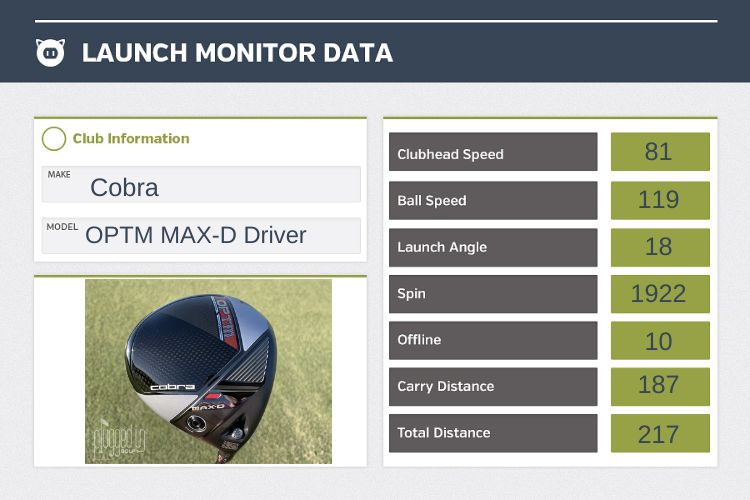
Before evaluating any data, the first notable result of my time at Club Champion was the number of shots straight down the middle. When I read “draw bias” on an OEM’s website I assume my typical straight to slight draw tee shots are going to turn into hooks. That’s not what I encountered with the Cobra OPTM MAX-D driver. My straight shots stayed straight – as in +/- 5 yards from the target line. The shots that turned into true draws finished 15 – 30 yards left (I’m right-handed).
More importantly to the target golfer who fights a slice, the Cobra OPTM MAX-D driver turned my every attempt to produce a meaningful slice into a playable fade. True to the design intent, this club does not want to go right. Great news for slicers, but also an intriguing way to take the right side of a golf course out of play for swings like mine.
Cobra accomplishes the slice correcting ball flight with two visible design features: head shape and weighting. Both attributes drive a design that emphasizes more weight in the heel and easier toe closure. I mentioned the heel-centric shape in the Looks section above, and there’s also the 11 gram fixed weight in the heel.
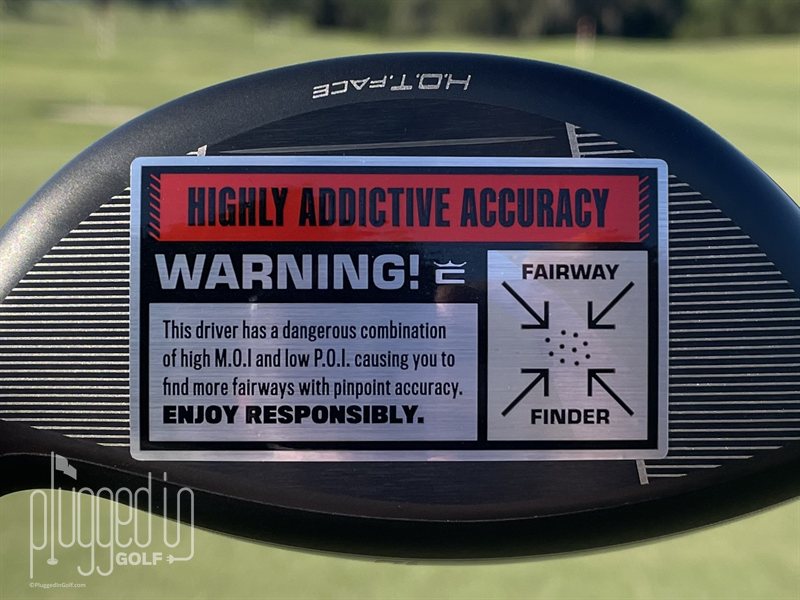
Those design features were the result of computer modeling intended to optimize (hence the OPTM name) the POI for the MAX-D to deliver the desired results. And that wasn’t a typo – POI stands for Products of Inertia. Think of POI as the cumulation of multiple MOI’s. While MOI measures the moment of inertia on one axis, POI measures the resistance to twisting on multiple axes.
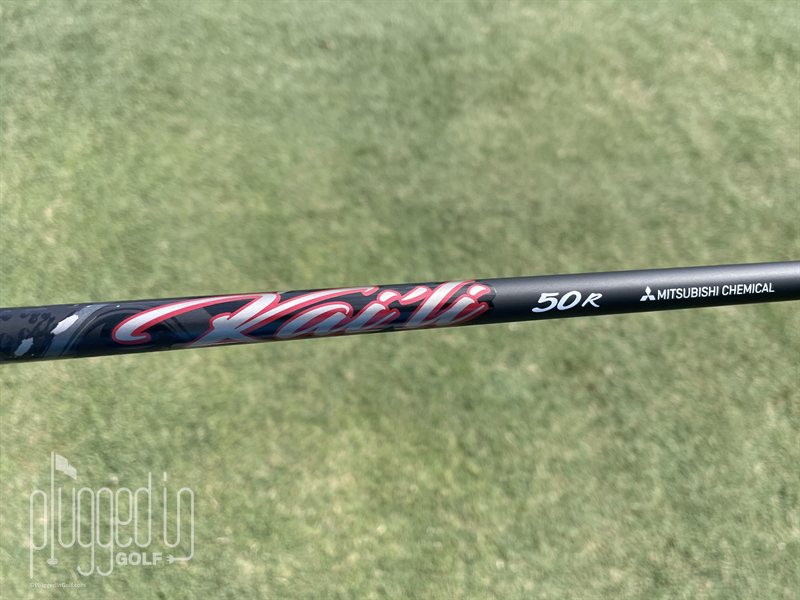
Two technologies that aren’t new to the Cobra OPTM family deserve mention: H.O.T. Face and FutureFit33. H.O.T. Face technology is all about designing the variable thickness forged face insert to maximize ball speeds across the face. With smash factors from 1.44 all the way to a 1.50, the Cobra OPTM MAX-D driver exhibited solid ball speeds during my testing. To me, that is a strong statement considering my contact was often less than desirable while trying to work the ball.
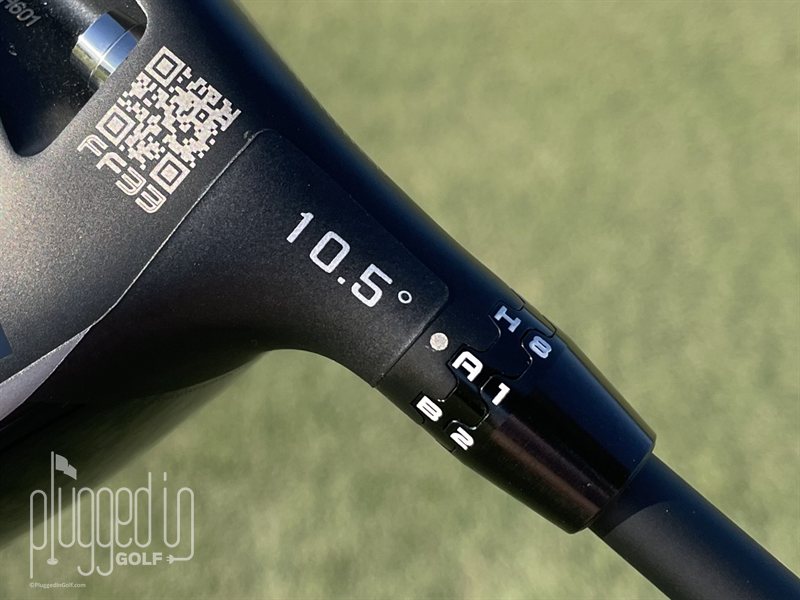
As for FutureFit33, if you’ve read any of our Cobra reviews on the DS-ADAPT or OPTM drivers, you know we at Plugged In Golf are huge fans of the meaningful adjustability it provides. While it’s common to see +/- 2° adjustability in both loft and lie with most OEM’s, Cobra offers increments of 0.3, 0.7, 1, 1.4, 1.7, and 2 degrees for a total of33 distinct combinations. That may seem overwhelming, but by scanning the QR Code on the hosel and following the prompts, the program recommends settings to dial in the performance. That said, there’s not a faster, or more re-assuring, way to get there than by working with a qualified fitter. [See Price / Buy]
Conclusion
Discussing Cobra with the fitters at my local Club Champion, I learned they are placing a lot of golfers into the OPTM drivers. Fast balls speeds, big forgiveness, and ability to dial in trajectories lead many players to choose Cobra OPTM. And for the golfer struggling with a slice, I can certainly see the Cobra OPTM MAX-D as an excellent choice. As stated on their website, the Cobra OPTM MAX-D driver is indeed a “fairway magnet.” [See Price / Buy]
Who’s It For: Golfers who struggle with a slice and want maximum draw bias for straighter shots, ideal for players seeking forgiveness, stability, and confidence off the tee.
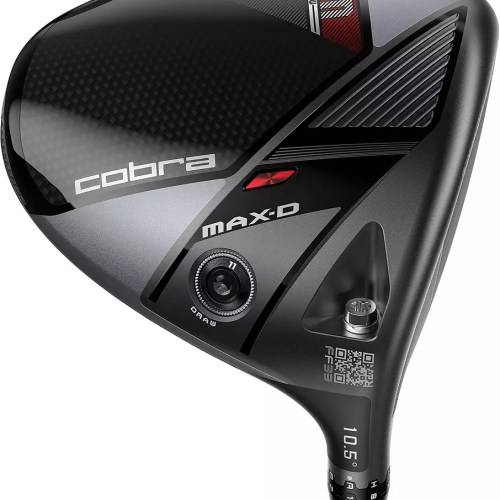
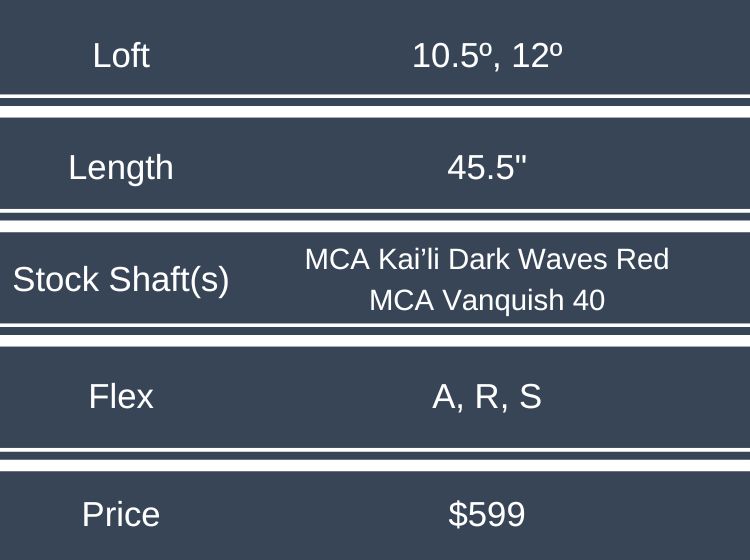
Cobra OPTM MAX-D Driver Price & Specs

- Garmin Approach Z10 Rangefinder Review - September 29, 2026
- Alma Mater Beta Derby Golf Shoe Review - September 25, 2026
- MGI Sureshot PINLOC 7000 Series Rangefinders Review - September 9, 2026



Join the Conversation | 4 Comments
Good morning Matt,
It looks like you struck the ball well and you liked your results. Were you happy with the spin? It seems like it’s a little on the lower side relative to your swing speed.
Not a criticism at all. I’m just wondering if you were leaving some distance on the table.
Great observation – the spin is a bit low. OEM’s tend to promote lower spin in their attempt to offer more distance. But often it’s too low for the average golfer. That’s where the importance of getting fit for the proper shaft can come into play.
– Meeks
Matt,
Very good review. How does this club rank for distance against other drivers you have reviewed in 2026?. I assume from your comments it’s one of the most accurate.
It’s right in the ballpark of the others I’ve tested Larry.
Thanks for reading.
– Meeks