
50 Words or Less
The TaylorMade Qi4D LS driver got a full overhaul for 2026. TM simplified the weighting system and redesigned the carbon face to focus on what the brand does best – distance. All of it comes packaged in a compact, matte finished head.
Introduction
It’s no secret that TaylorMade’s drivers are one of the most popular and talked-about releases every single year. Yes, it helps when the greatest player of all time and the current world number one are both on staff, but it’s not just because Tiger and Scottie play them that they’re successful. It is because they continually push the boundaries on distance for both the professionals and the regular guys like you and me.
For 2026, TaylorMade said they wanted to get back to those roots of chasing big time distance in their new Qi4D drivers and woods. I recently picked up the TaylorMade Qi4D LS Driver to test out the new changes and see what kind of distance this can generate for the regular golfer.
Looks
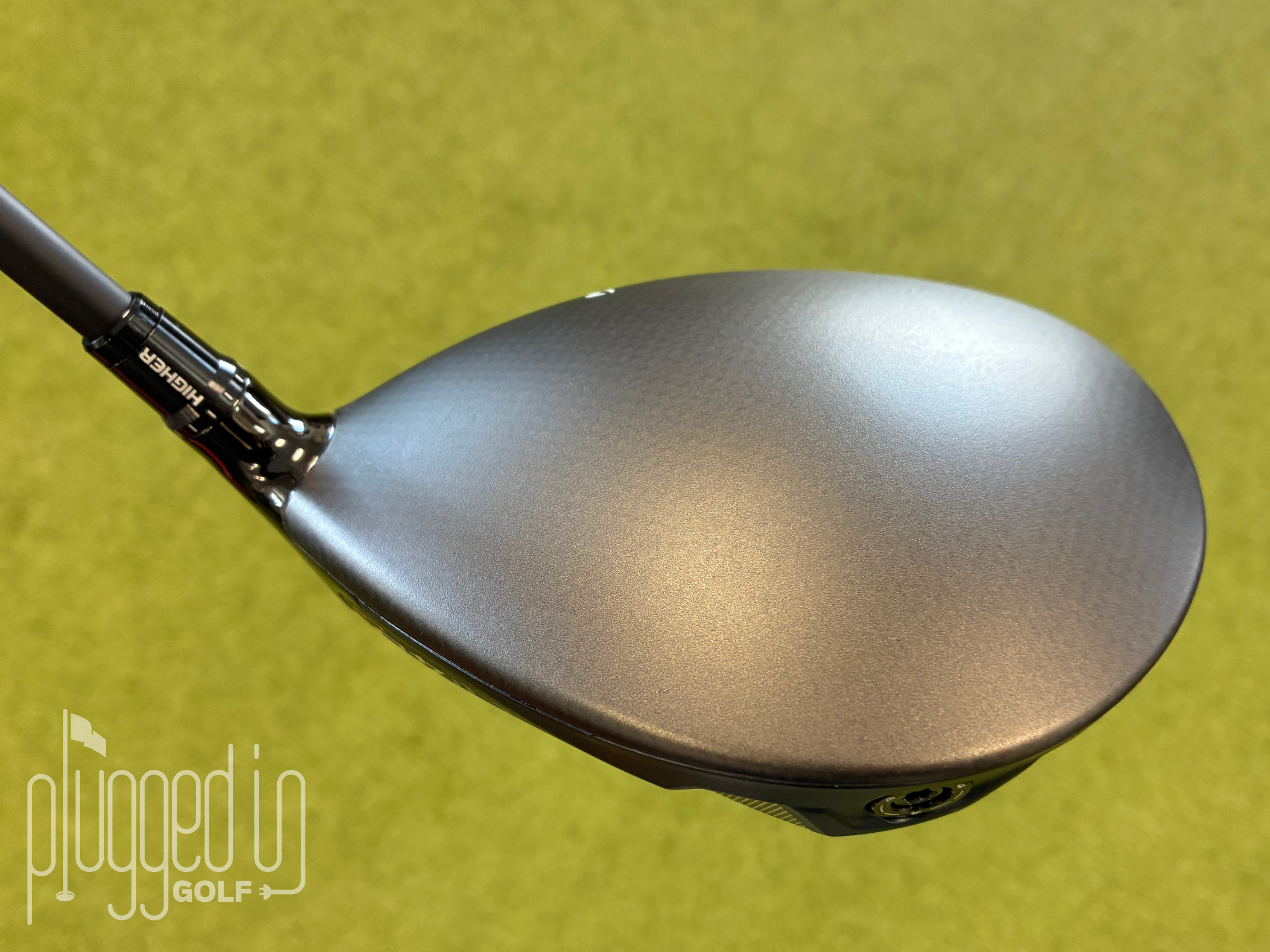
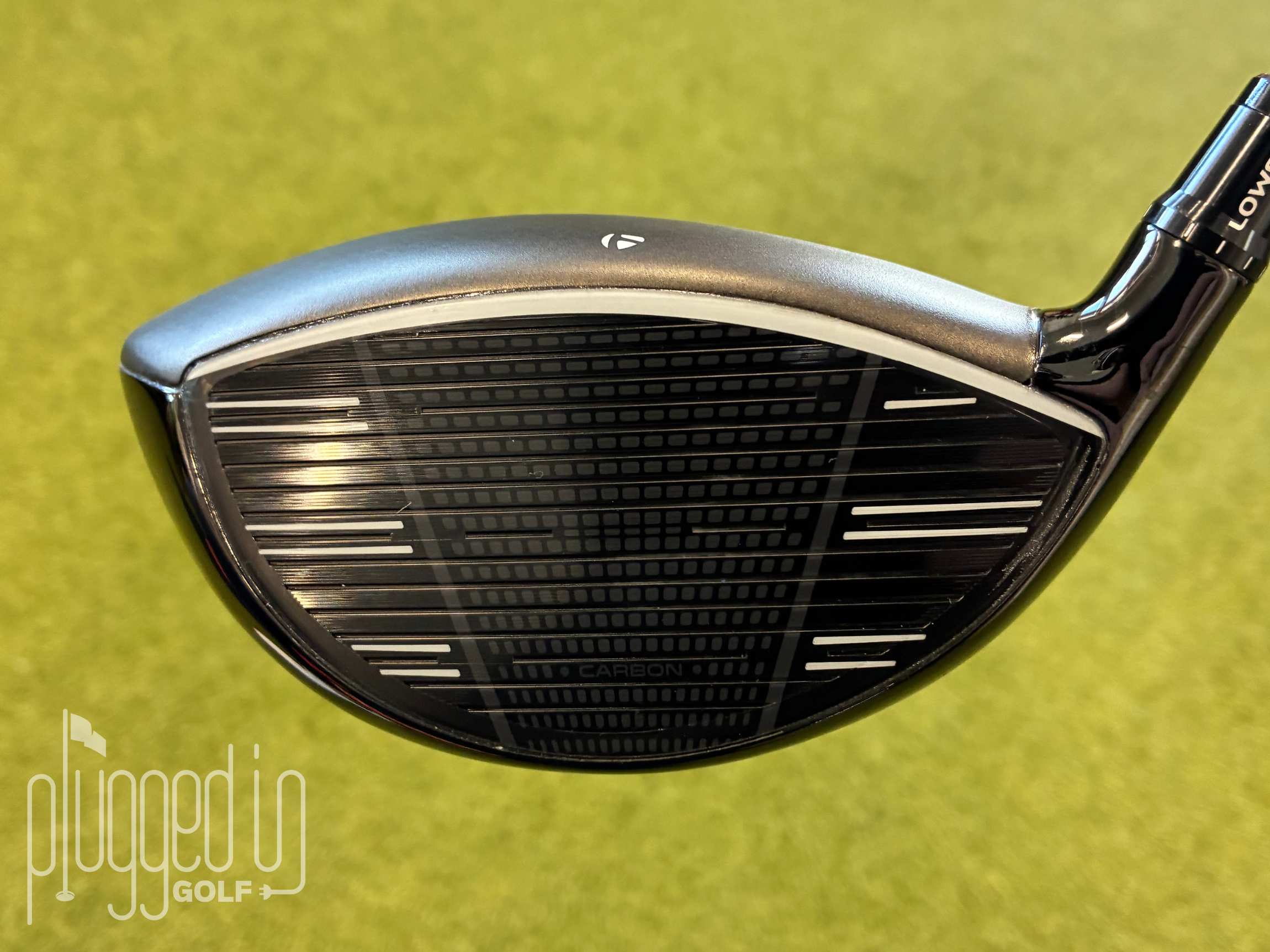
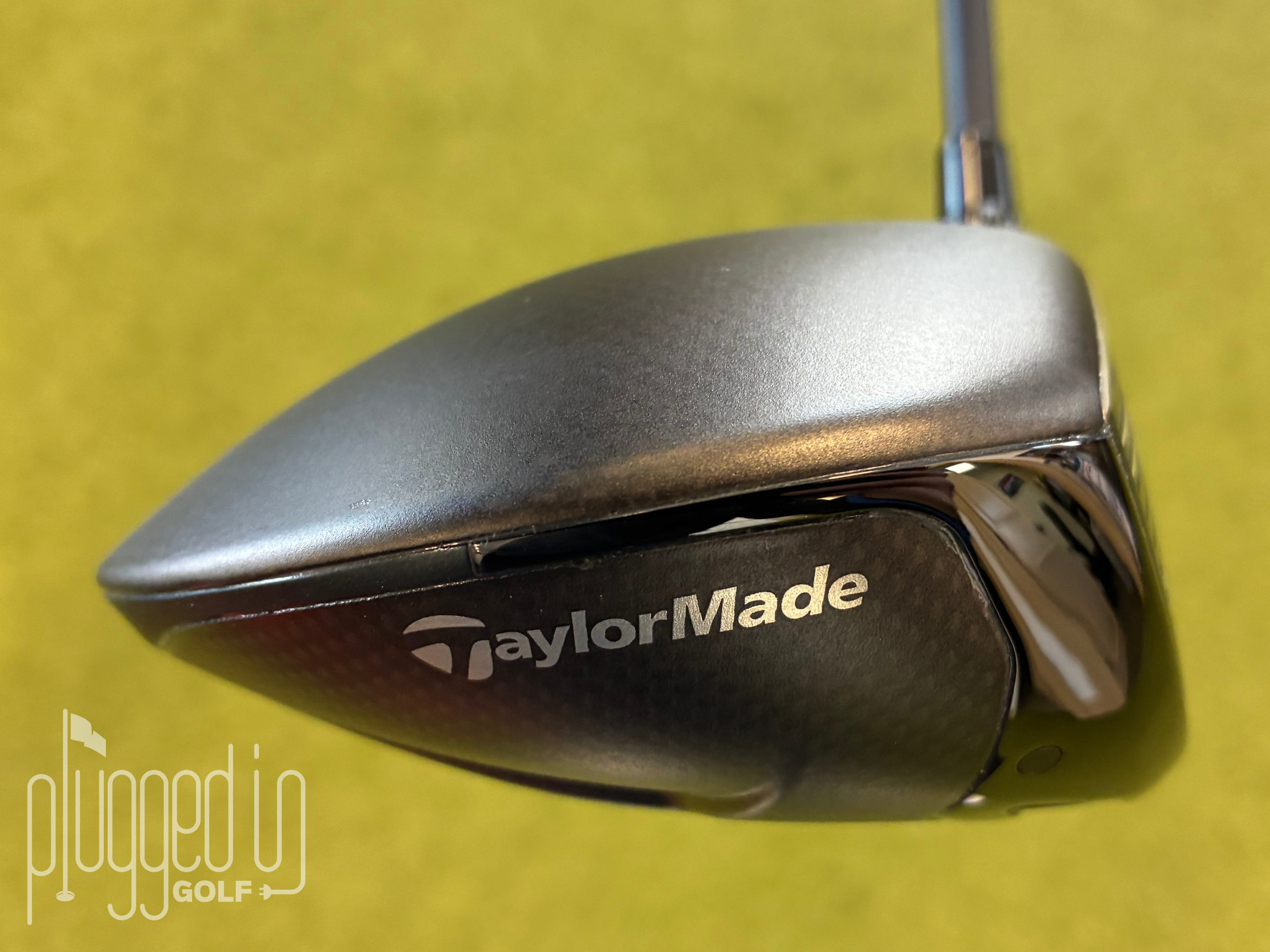
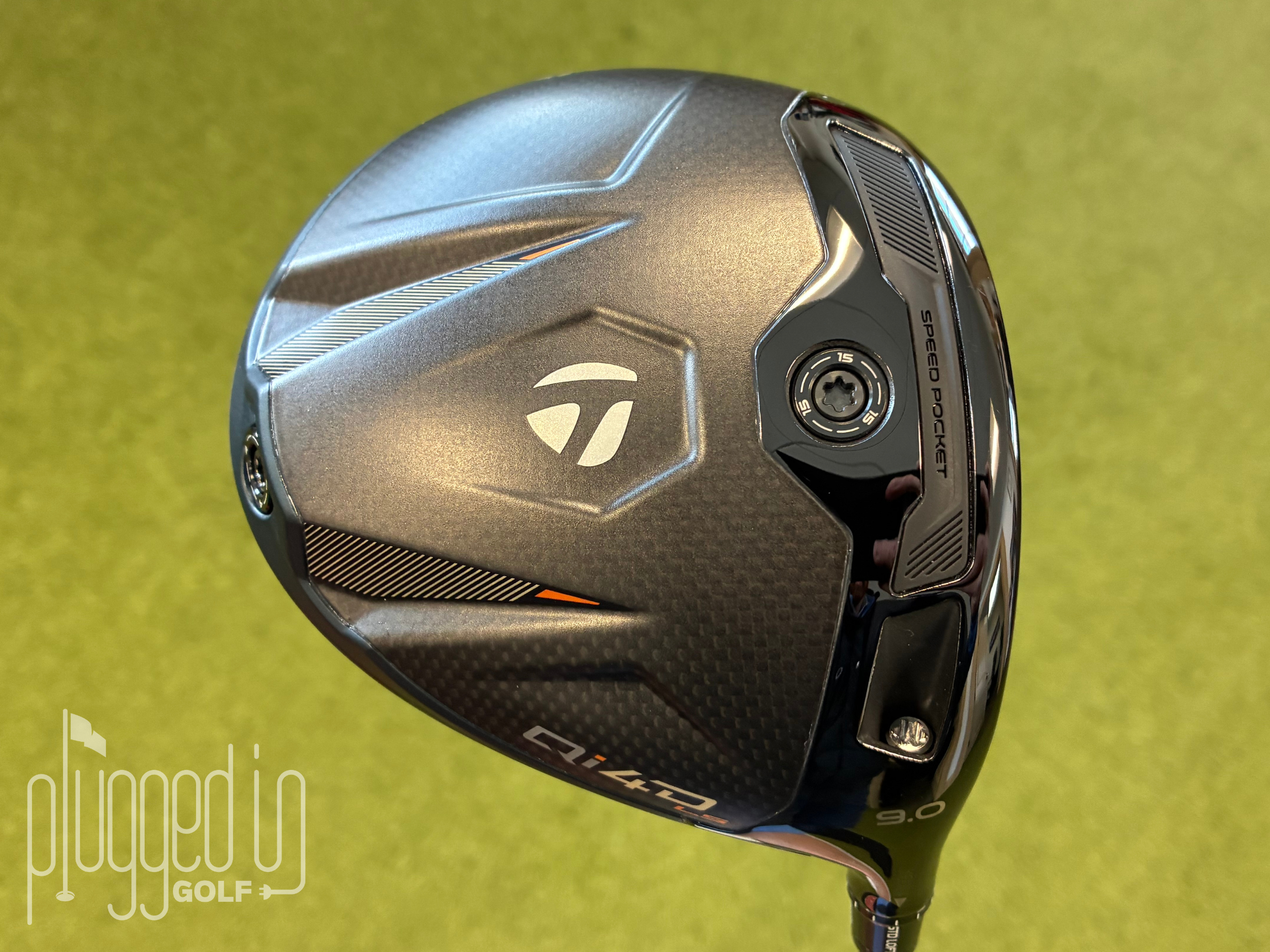
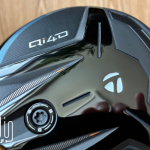
The first thing I noticed when I pulled the TaylorMade Qi4D LS driver out of its shrink wrap was the new shape. For 2026, TaylorMade engineers cleaned up the sole so it appears more flush and rounded along the bottom. This is quite a stark change from the past several iterations of TaylorMade drivers where the rear weight significantly protruded from the bottom of the club. Unchanged for this year and in line with previous low spin models is the compact, pear shaped head, which is typically preferred by the better player. [See Price / Buy]
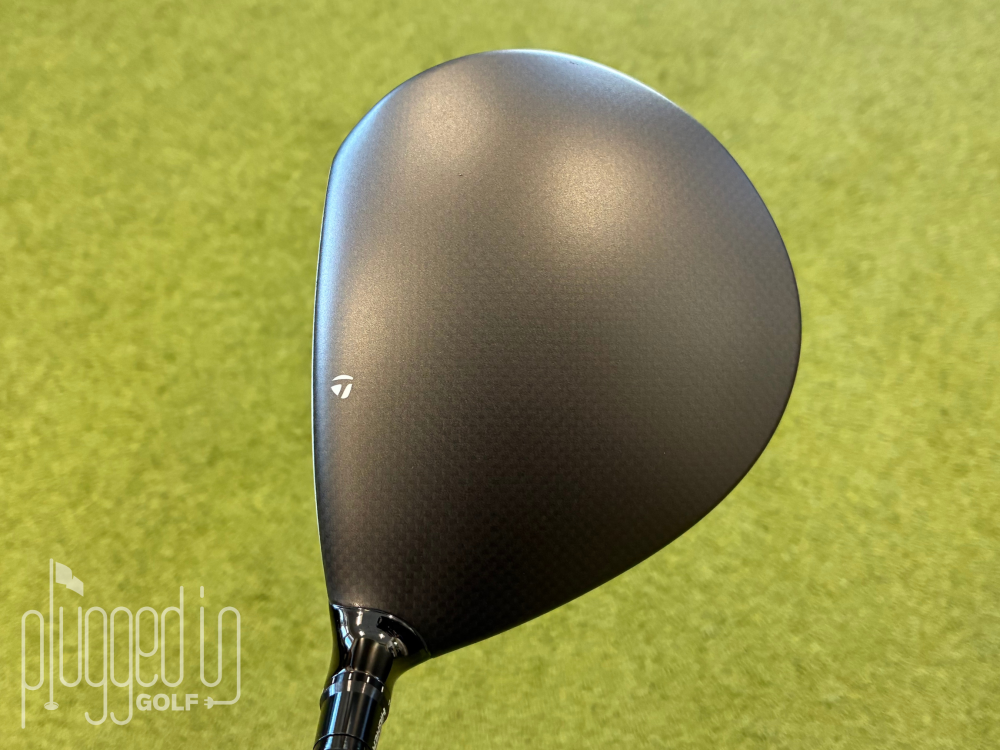
At address, the crown displays a uniform carbon fiber design in a matte black finish. The TaylorMade “T” logo sits along the leading edge and acts as the singular alignment aid.
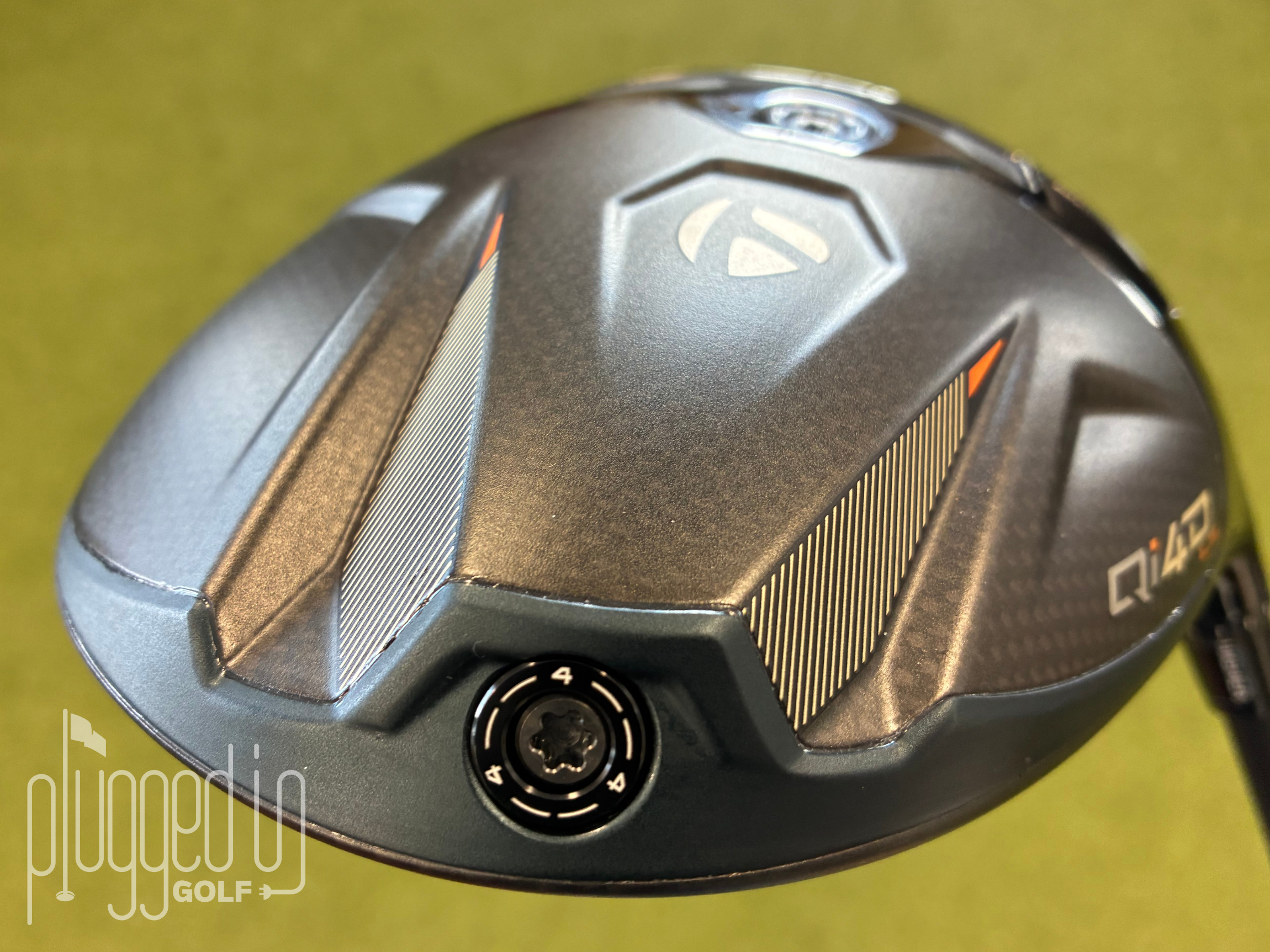
Overall, the sole is mostly wrapped in the same matte black that is seen on the crown with a few subtle accents of a dark blue-green color around the rear. These color accents frame the first of two weight ports – one in the rear and another centered on the front edge. This is a notable change from the TaylorMade Qi35 LS [review HERE] model which had weight ports in the heel, toe and rear of the club.
In short, I am impressed with the changes, and I think the TaylorMade Qi4D LS driver is one of their best looking in quite some time.
Sound & Feel
The sound the TaylorMade Qi4D LS driver generates is a deep, muted “tick,” synonymous with TaylorMade drivers of the past. If you’re a long time TaylorMade fan, you will love it. Any shot away from the center produces a noticeably higher pitched “click” which is helpful in identifying when you don’t strike it well.

The feel in the Qi4D LS matches well with its sound. Well struck shots feel solid and absent of any harsh oscillation through the grip and hands. Strikes on the heel or toe provide slightly more feedback and make it obvious when you don’t catch it just right. Ultimately, the theme I got here is that TaylorMade stuck with what works and didn’t try to change too much in this category. [See Price / Buy]
Performance
The TaylorMade Qi4D LS driver is the first low spin model in a while that demonstrates measurable improvements in performance year over year. Those improvements start with TaylorMade’s strong focus on speed. Just a few swings on the launch monitor showed an immediate increase in club head speed. I rotated between my gamer and several other low spin drivers, and the TaylorMade Qi4D consistently delivered speeds one to two miles per hour faster than the rest. This appears to have come from the refined shape and lighter head construction. Based on these results, the design changes are working.
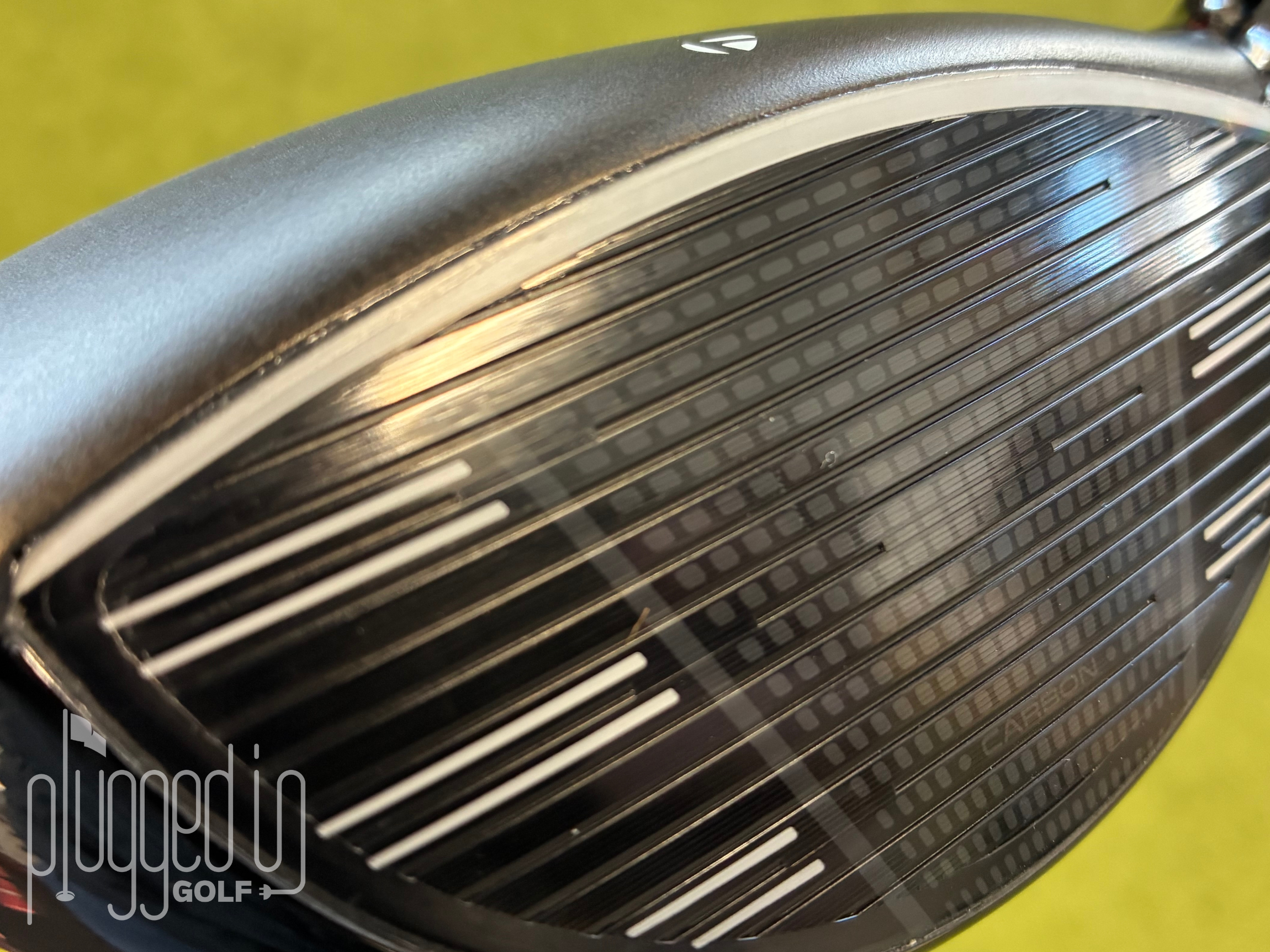
TaylorMade also made changes to its Carbon Twist Face and Speed Pocket. Engineers at TaylorMade made note that the carbon layer thickness distribution was adjusted to make the face lighter, thus increasing the COR across the face. Without getting too far into the technical weeds, COR means “coefficient of restitution” – a measurement of how bouncy the face is. A higher COR equals better ball speeds and the TaylorMade Qi4D LS driver expanded the high COR areas across the face.
As for my testing, my numbers backed up these claims. Center strikes were producing some impressive ball speeds and great distance numbers. On a handful of awful swings, the ball still flew much further than I expected. I even had one of the fitters at Club Champion take notice and confirm how hot the face was.
The other part of the equation in the Carbon Twist Face is the new “roll radius.” Roll radius is the vertical rounding of the face, largely influencing spin on shots high or low on the face. I think this is a new way to market the age old “bulge and roll” concept, but nonetheless it’s all real and can be effective when it comes to drivers.
The data showed that in all of my testing with the TaylorMade Qi4D LS driver, my worst shot produced 3605 rpms while the overall spin averaged just under 2500 rpms. This driver delivers on low spin – even when you miss the center of the face.
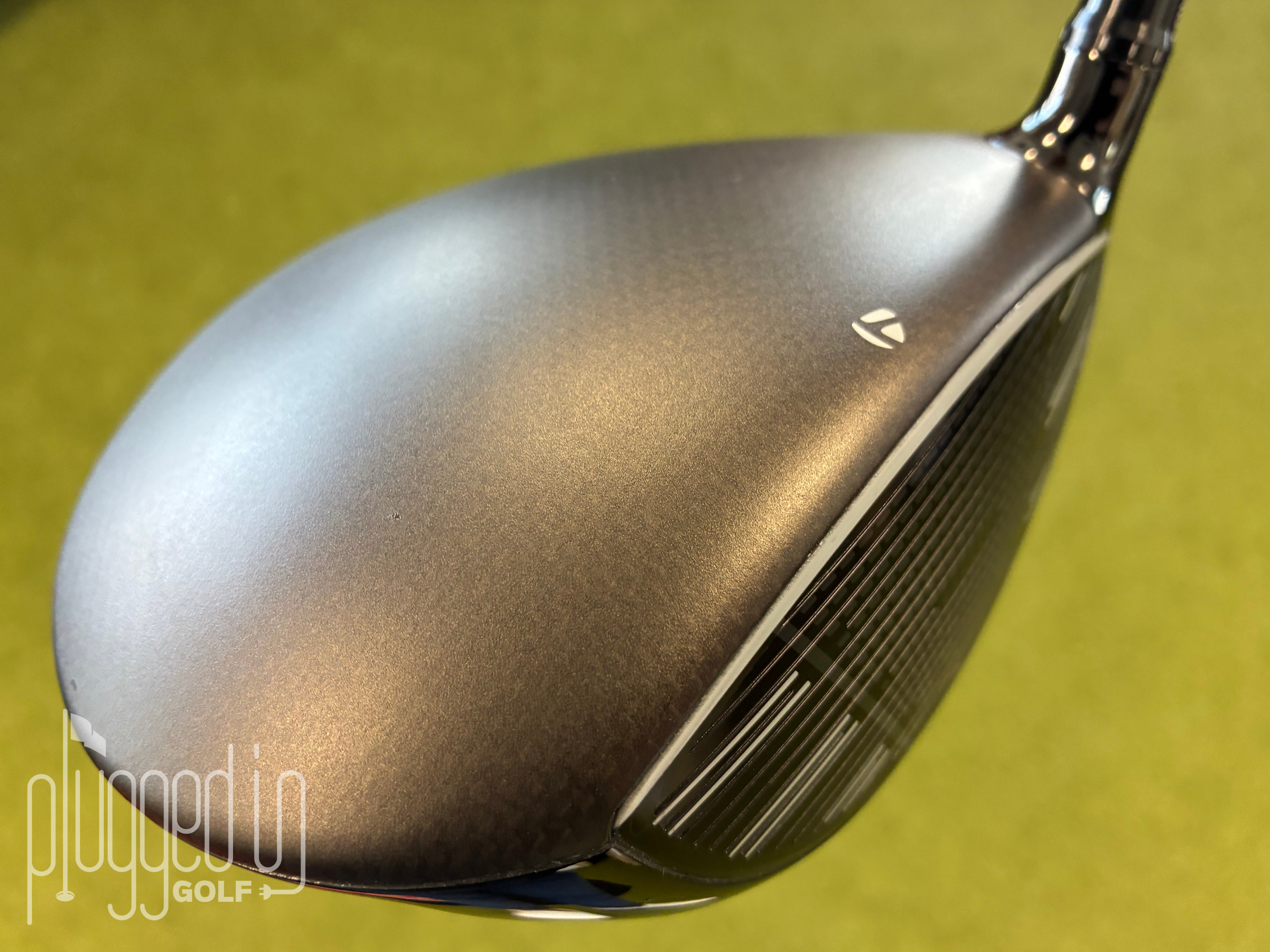
Also worth noting is the change in adjustability. The TaylorMade Qi4D LS driver features two adjustable weight ports instead of three like the 2025 Qi35 LS. The reasoning for this change is to better optimize mass placement for both aerodynamics and stability. [See Price / Buy]
For players who rely on weight adjustability to correct a strong left or right ball flight, their new TAS (Trajectory Adjustment System) does reduce the ability to fine tune shot shape. However, the tradeoff is performance driven. Removing a weight port helps push the center of gravity forward promoting lower spin and maximizing distance.
Find a balance of low spin and forgiveness in the core Qi4D driver HERE
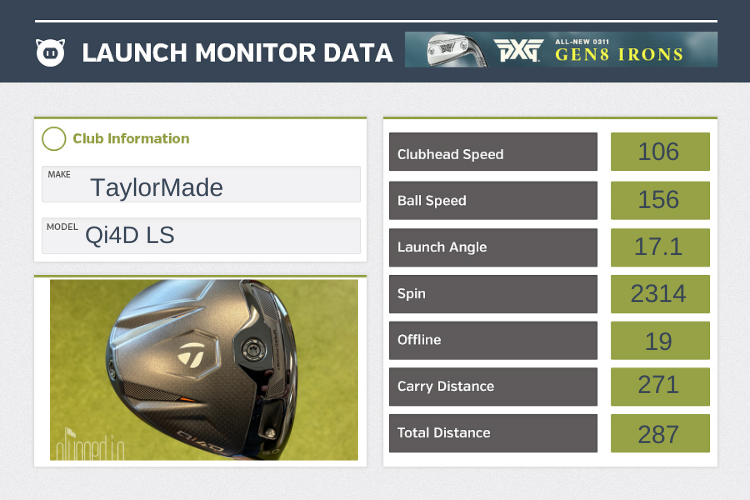
As you can see in my launch monitor data numbers, my upward angle of attack naturally produces a high launch and because of that, the heavier weight forward proved to be the best fit for my swing. Swapping the heavier weight to the back increases forgiveness but also bumps up launch and spin.
What really surprised me was how easy it was to consistently start the ball online with a controlled 10-15 yard fade. In the past, I struggled to keep the ball from leaking too far right with TM drivers. This head felt different. Flight was predictable and dispersion tightened up in a big way. It was genuinely a lot of fun to hit and for the first time since my 2016 M2, I am seriously considering putting a TaylorMade driver back in my bag. [See Price / Buy]
Find even more forgiveness in the TaylorMade Qi4D Max driver HERE
Conclusion
TM stretched themselves in 2026 to design the new TaylorMade Qi4D LS driver. They totally revised the head shape and changed the weighting system to optimize spin and distance which is evident. Combining these features with a redesigned Carbon Twist Face, this may be one of the best TaylorMade drivers we have seen in years. [See Price / Buy]
The TaylorMade Qi4D LS driver features a redesigned shape and performance-driven changes to the weighting.

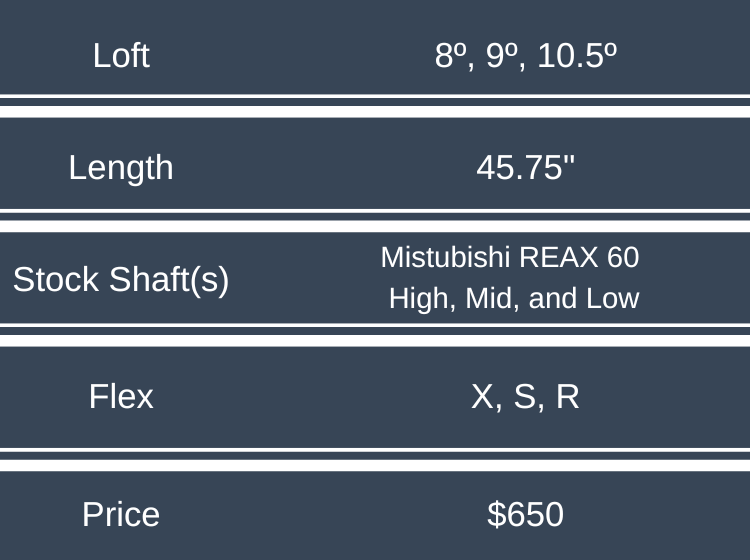
TaylorMade Qi4D LS Driver Price & Specs

- New Level SPN V3 Wedge Review - March 18, 2026
- The 2026 Arnold Palmer Invitational presented by Mastercard Recap - March 8, 2026
- TaylorMade Qi4D LS Driver Review - February 23, 2026






6 Comments
Nice writeup, Zack. I appreciate the work you all do to give us some real world writeups on these clubs.
I don’t know if there’s a universal definition of “low spin”, but in my mind, below 2000 seems to be the number that sticks out. I don’t know why, to be honest, but that’s what I think of. Do you think that even being a low spin driver, with your swing speed, you might be leaving distance on the table compared to a different club?
Yes I do actually think I am leaving some distance on the table. However, I don’t necessarily think its all club related. I have a really high launch angle because of how much I swing up on the ball. Part of that equation is user error as I have been working on bringing my LA down some which will help.
With that said, I am testing several other low spin drivers over the coming months which may prove your point so we will see if youre right!
Thanks for reading,
Zack
I am a below average golfer at best. This upped my game substantially and at least made me look good off the tee to my playing partners.
Connor,
Thats great to hear. What driver were you playing before the Qi4D LS?
Zack
Did you happen to notice if the heel or toe is hotter than one or the other? Or were your ball speeds staying consistent across the entire face?
Any playing around with the weight ports and on that note, did you notice a tendency to fly right or left easier than other models, brands, or years? I’ve had a few test this and turn it left pretty easy until we manipulated the weights and face angles with the loft sleeve – curious if that is consistent or just a rarity
Chase
As I would expect from any driver, ball speeds dropped away from the center, but I didn’t notice a particular difference between toe or heel misses. What stood out was that the face characteristics kept spin at or lower than the middle of the face so even though smash went down, distance was still really good.
I briefly swapped the weights and immediately noticed increase in spin and launch angle which was bad for me and my ball flight so I kept the heavier weight in front.
Thanks for the questions,
Zack