
50 Words or Less
The Newton Fast Motion shaft is a lighter, more stable follow up to the original Motion. Unique fitting system and stellar looks.

Introduction
In just over a year, Newton has established itself as a growing force in the shaft market. The company boasts that over 30 professionals on the PGA TOUR Champions and LPGA Tour are gaming a Newton Motion shaft, and I regularly see the eye-catching purple/blue finish of the Motion when I’m out playing.
New for 2025 is the Newton Fast Motion shaft. This is billed as a “lighter, Tour-proven shaft” meant to help golfers find more speed without sacrificing control. I tested it to see if it delivers.
Looks
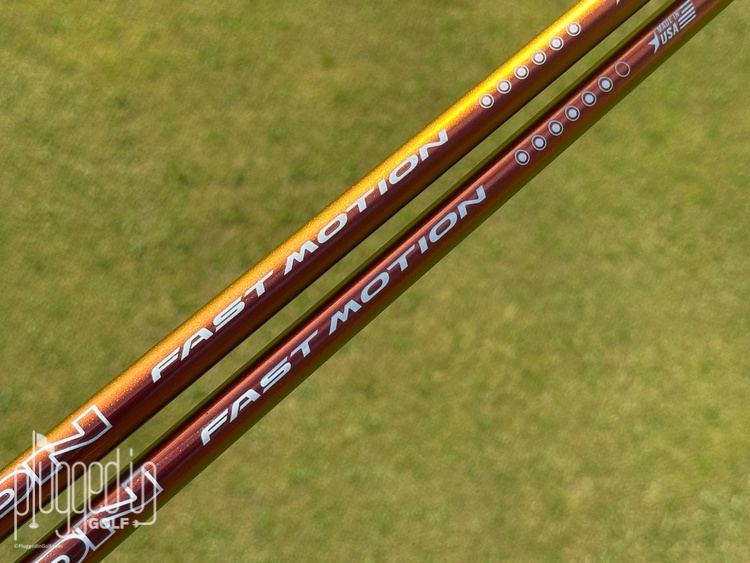
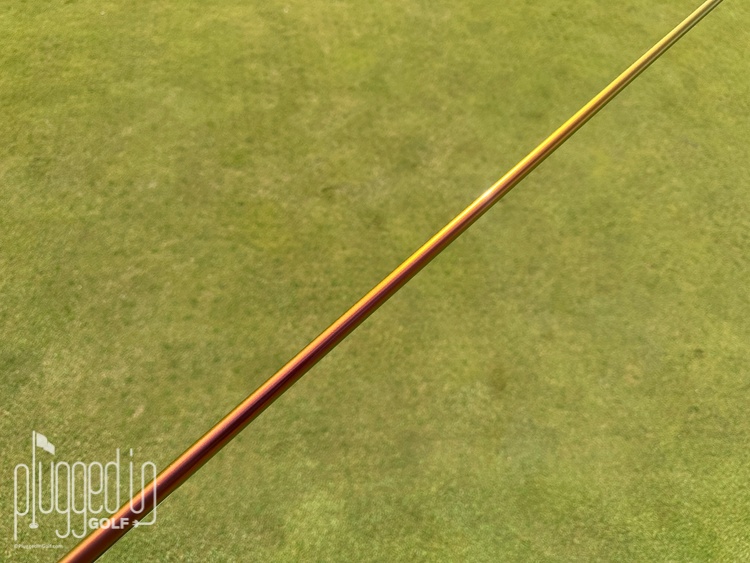
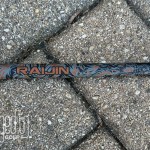
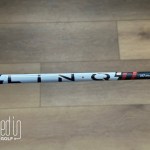
Newton knows that a shaft doesn’t have to look good to be successful, but it doesn’t hurt. The color shifting blue/purple/green of the Motion and Motion FW [review HERE] remains one of my favorite looks, but the orange/red/yellow of the Newton Fast Motion isn’t far behind. Take a look at the picture above to see just how much a small change in the light can shift the Fast Motion from light orange to nearly maroon.

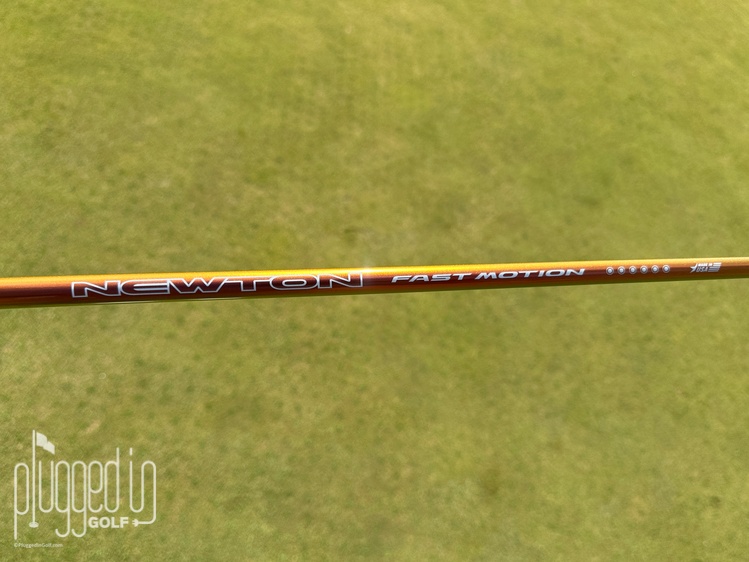
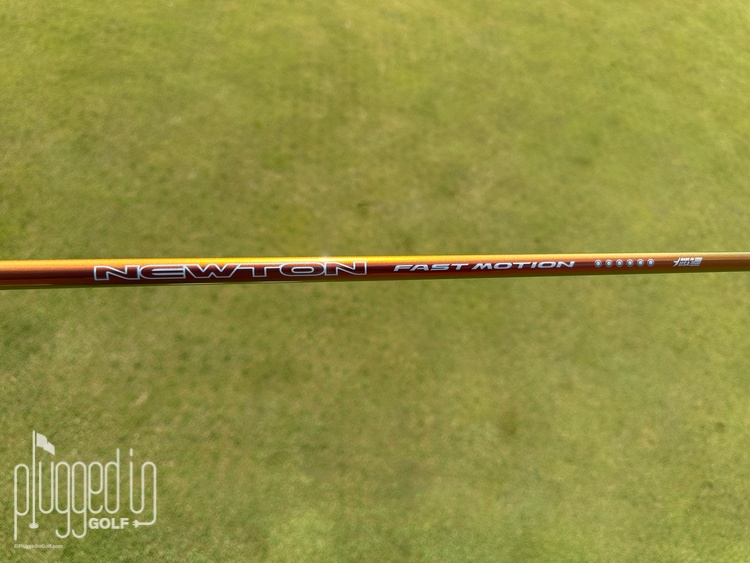
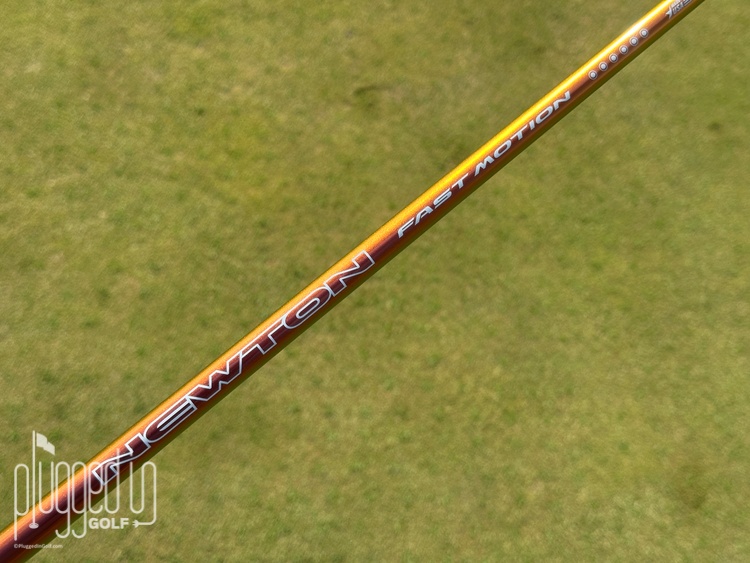
With such a stunning color, Newton was smart to keep the branding minimal. An airy “Newton” stretches across the middle of the shaft, followed by “Fast Motion” and the dots which represent the shaft’s flex. Golfers that prefer to see the colors uninterrupted can get a clean logo down installation.
Feel
My dominant memory of the Newton Motion was its smooth, languid feel. It only took a quick wiggle with the Newton Fast Motion to know that this was a different animal. My notes say as much: “Definitely not the original.”
I started my testing with the six dot version of the Fast Motion and found a fairly stout grip with a smooth flow from the midsection to the tip. When I swung with a good tempo, I could feel a pleasant kick through the ball. However, the Fast Motion wants some effort – it didn’t activate when I dialed my speed down too much.
Switching to the seven dot Newton Fast Motion yielded predictable changes to the feel. The character was similar, but everything was a little stiffer. There was less kick and more effort required to get it. The tip felt stronger at impact, which was more noticeable on mishits.
Performance
The biggest change from the original Motion shaft to the Newton Fast Motion is in weight. Across the board, Fast Motion is 10 grams lighter. Newton states that they were able to maintain stability through the use of high-modulus Toray carbon fibers which are known to have superior strength to weight ratios.

Aside from weight, Newton utilizes the same four technologies: Elongated Bend Profile, Kinetic Energy Storage, Symmetry 360 Construction, and Variable Bend Profile. For a full discussion of each of those, check out my review of the original Newton Motion HERE.

Starting again with the six dot Newton Fast Motion, the first thing I was impressed with was the dispersion. My recollection of the original was that it wanted to go left and that I had to really get in synch with it to find the best results. That wasn’t as much the case here. The Fast Motion dealt well with a variety of tempos and mishits, producing a very acceptable dispersion. Launch and spin stayed in the mid range on all but the worst swings.
Changing to the seven dot Newton Fast Motion*, I found some things I expected and one that I didn’t. Predictably, the spin ticked down a little bit, and the dispersion stayed respectable. I really liked how it was able to control the results of my intentional draw swing. What surprised me is that this shaft still wanted a measure of self-control in transition. I did not get the best results from swinging 100%. There was a level just below – call it a restrained 95% – where this shaft was absolute dynamite: higher speeds, high launch, low spin, laser straight. It wasn’t a swing I could call on every time, but the results were worth chasing.
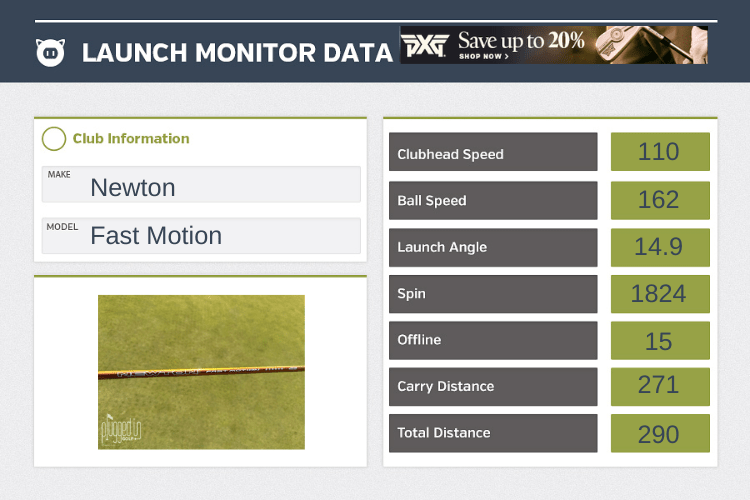
*My launch monitor numbers in the graphic above came with the seven dot Fast Motion.
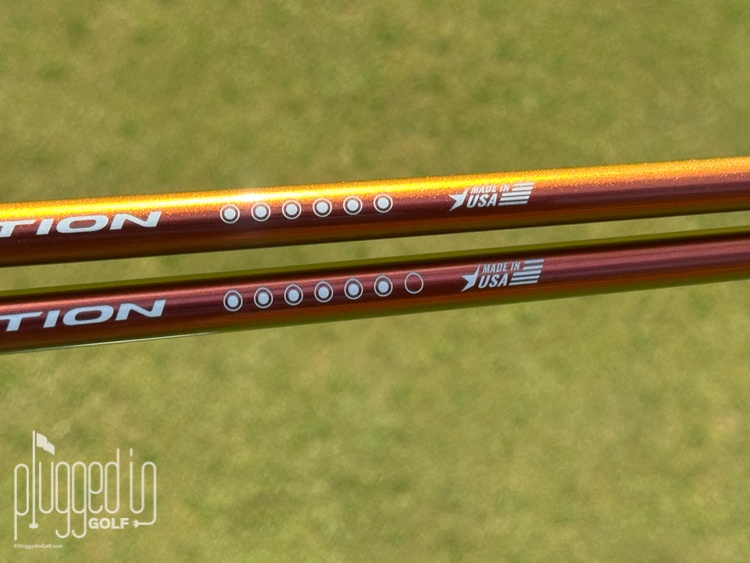
The Fast Motion shaft utilize’s Newton’s Dot System for fitting rather than conventional designations like “regular” or “stiff.” There are seven options, ranging from one dot to seven dots. Moving up in dots not only increases the shaft’s stiffness (ranging from 210 to 285 CPM) but also its weight (41 to 65 grams). Newton makes it simple to choose a shaft, tying each dot to a range of swing speeds and driving distances.
Conclusion
Priced at $325 with the adaptor of your choice and a grip, the Newton Fast Motion shaft hits a premium price but still offers good value. For those worried about choosing the wrong flex, Newton offers a 30 day window to replace your purchase with a different flex. If you were intrigued by the original Motion shaft but wanted something lighter, the Fast Motion is definitely worth a try.
Buy the Newton Fast Motion Shaft HERE

He founded Plugged In Golf in 2013 with the goal of helping all golfers play better and enjoy the game more.
Matt lives in the northwest suburbs of Chicago with his wife and two daughters.
- VA Raijin Black Shaft Review - March 13, 2026
- 2026 FootJoy Premiere Series Golf Shoe Review - March 11, 2026
- Titleist Vokey SM11 Wedge Review - March 9, 2026



17 Comments
Debating whether this is worth trying based on the profile described. How would you compare it in feel to the Graphite Design DI?
Hunt,
I don’t think the Fast Motion is particularly close to the feel of the AD DI.
-Matt
I just got a fast motion and it feels like a lighter more stout version of the regular motion shaft with better dispersion and less spin. Im definitely going to leave it in the bag.
Great to hear!
-Matt
T
wondering if this has any similarity to the Aretera EC1 shafts you recently reviewed? I only ask as I have some experience swinging those.
Brian,
That’s not a comparison that came to mind for me.
Best,
Matt
Would you say this holds up similar to a Ventus TR Red Velocore?
Marcus,
I think that’s in the right ballpark. Without head to head testing, I’m probably going to say the Ventus is stronger at the same flex, but they’re similar.
Best,
Matt
Matt
I’m 87 with a slow swing speed and my driver distance is around 170. Do you think the one dot would be benefit me for distance?
Carl,
If you want more distance, the only way to find it for certain is to be fit. But if you want to buy to try, please use the link in the review.
Best,
Matt
where can I get fitted for a Newton shaft i live in greenville,sc
David,
There are several Club Champion locations in South Carolina.
Best,
Matt
How would the fast motion two dot compare to the vanquish 40 R2.
Tom,
We have a full review of the Vanquish here: https://pluggedingolf.com/mitsubishi-vanquish-shaft-review/
-Matt
With your clubhead speed Newton recommends a 5 dot shaft yet you tested a 7 dot. I’m wondering why you went outside their recommendation. Did you hit a 5 dot as well?
Will,
I hit a 6 and a 7 dot shaft. Newton’s recommendations, like any flex/speed recommendations, are just guidelines. I prefer a less active feel and play stiffer flexes because of my aggressive transition.
-Matt