
Do You Really Need a Fitting?
Here are Plugged In Golf, we do a lot of shaft reviews. This leads to lots of questions like, “What shaft is best for me?” We always say that the best answer is to try the equipment for yourself and be fit, but is it necessary? Shaft manufacturers provide shaft specs about how each model launches and spins the ball, so why not just buy a shaft based on that?

The Myth
For this test, we’re addressing just one myth.
Myth – “Low spin” shafts are always lower spinning than “high spin” shafts

How We Tested
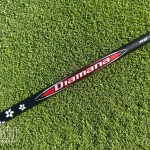
For this test, we used 7 series of shafts (ex. Mitsubishi’s Diamana series with the R, B, and W shafts, being high, medium, and low spin, respectively). Each series of shafts was tested by one of four different golfers. The golfer hit five good shots with each shaft, using the same driver head and ball for every shot they hit. All the data can be seen below.
All testing was done at and with the help of Club Champion.

The Results
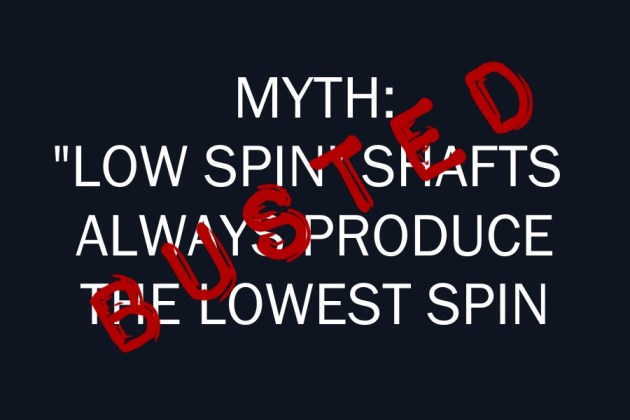
Our data shows unequivocally that so-called “low spin” shafts are not always the lowest spinning. In fact, they often produced substantially higher spin than their “high spin” brothers. In 3 of 7 tests, the shaft that produced the lowest spin was labeled high spin. In 2 of our tests, the difference between “low spin” and “high spin” shafts was less than 2% or 40 RPMs. On the other hand, 2 tests showed that the shafts labeled low spin actually did produce significantly lower spin.
While this may seem utterly wrong to many of you, it will not be surprisingly at all to the good club fitters. Why is this so? Humans are not robots. When Iron Byron swings two different shafts, the one with lower torque and a stiffer tip will be somewhat lower spin. However, when you put those two shafts in the hands of an actual human golfer, all bets are off. The shaft can impact the swing as much or more than any other piece of equipment. Give a decent player a shaft that’s too stiff, and he may turn into an over-the-top, swing-out-of-his-shoes disaster. Hand a good player a shaft that’s too soft, and she could spray it all over the zip code. Finding a shaft that produces good results – high ball speed, low spin, good accuracy – is not a matter of specs, it’s a matter of fit.
Other Findings
Some testers gained an average of 3 MPH of club head speed by finding the right shaft.
One tester gained 7 MPH of ball speed with the right shaft.
Testers saw carry distance gains of 23 yards and total distance improvements of 17 yards from finding their best-fit shaft.
Every tester saw significant accuracy differences by switching shafts – as much as 45 yards difference and as much as 23 yards closer to the center of the fairway.
Anybody interested in arguing that the shaft doesn’t matter?

The Takeaway
No matter what question we ask or how we approach the testing, we continue to arrive at the same point: if you want to have the best equipment for your game, you need to be fit. A spec sheet, while useful in the hands of a trained professional, cannot fit you. No torque rating or bend profile can tell you how your body and your swing will interact with a given shaft, and, on the course, that’s the only thing that matters.
The Data


He founded Plugged In Golf in 2013 with the goal of helping all golfers play better and enjoy the game more.
Matt lives in the northwest suburbs of Chicago with his wife and two daughters.
- Cobra 3DP Tour Irons Review - September 17, 2026
- Mitsubishi Diamana RB Hybrid Shaft Review - September 15, 2026
- Does PUREing Matter for Slow Swingers? – Golf Myths Unplugged - September 14, 2026




One Comment
Was blown away the differences, really eye opening and would def recommend getting together with a fitter. Lifelong mega-slicer off the tee and managed to straighten it out and add 20+ yards for the most part with a shaft change…