Understanding Zero Torque Putters
The hype around zero torque putters reached a fever pitch with Lucas Glover’s back-to-back FedEx Cup Playoff wins in 2023, and it won’t be cooling off now that JJ Spaun won the US Open with the L.A.B. DF3 [review HERE]. This year, we’ve seen dozens of new models introduced as OEMs rush to create their version of what might be the biggest putter innovation since the Anser.
But while zero torque putters have unlimited buzz, many golfers are still unclear about what they are, why they exist, and which golfers should use them. I’ll aim to answer all those questions and more in this lesson.
What is Torque?
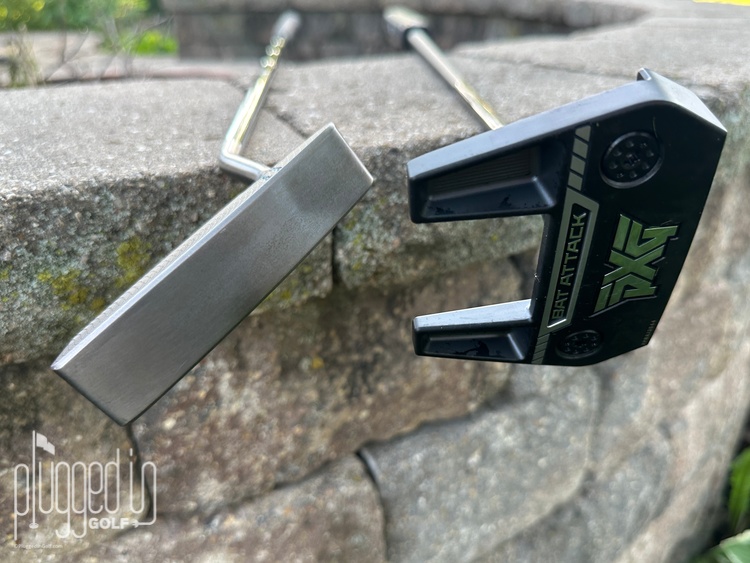
Torque is defined as “a twisting force that tends to cause rotation”. If you grab a club and turn your hands so that the club face opens and closes, you’re putting torque on the club. Traditional putter designs put torque on the putter shaft because the center of gravity of the putter head is not in line with the shaft.
What Is a Zero Torque Putter?
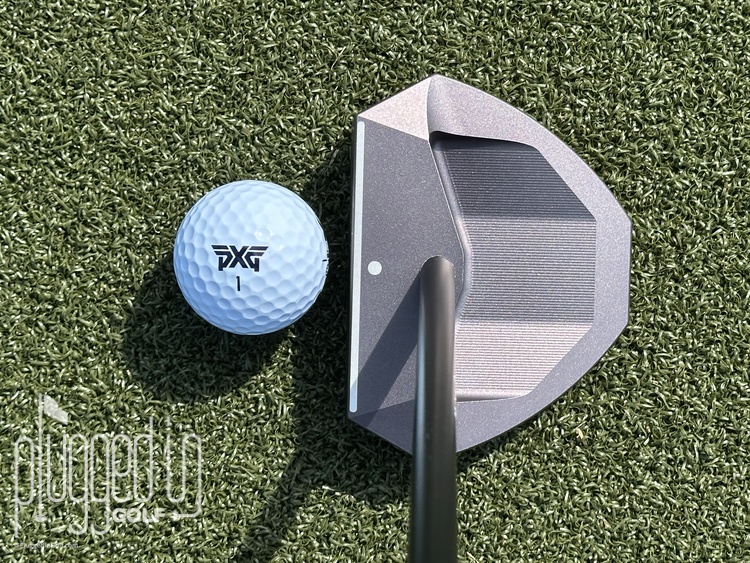
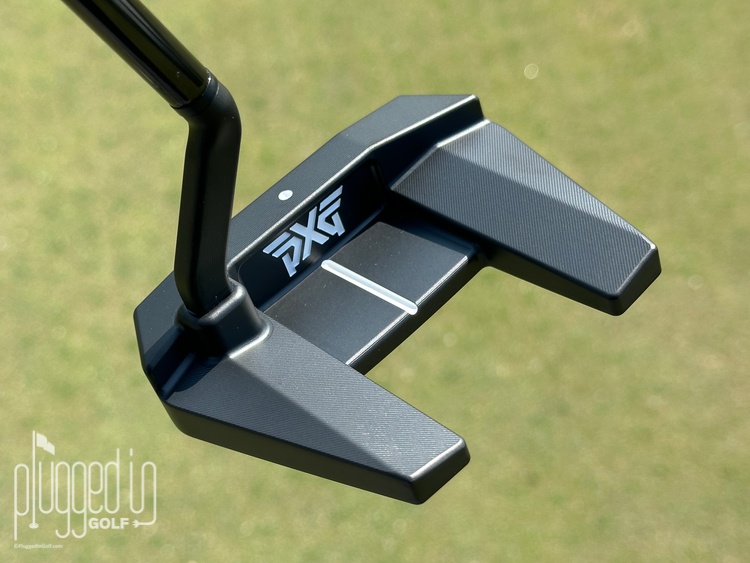
A zero torque putter aligns the putter head’s center of gravity with the shaft so that there is no torque. To achieve this alignment, zero torque putters use non-traditional hosels and/or hosel placements. Many OEMs have adopted L.A.B.’s approach of installing the shaft directly into the center of the putter head (above). Some OEMs have come up with unique necks or hosels, such as Axis One (below).
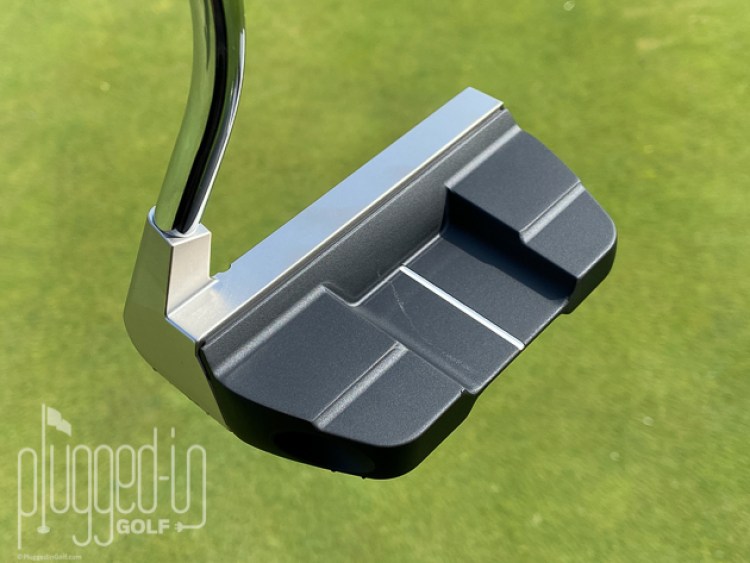
The primary benefit of a zero torque putter is that the putter head will remain square to your stroke path. Any putter with torque will want to rotate in some fashion during the swing. This is shown by L.A.B. Golf’s Revealer, which you can see HERE. It’s important to note here that just because the putter “wants to” stay square to the path, that does not guarantee you’ll make more putts.
Golf Myths Unplugged investigates the effects of zero torque HERE
How Does a Zero Torque Putter Feel?
Feel is subjective, so there’s no definitive answer to this question, but I will share my experience having tested numerous zero torque putters. In a single word, I find that zero torque putters feel light. They all tend to feel much lighter than their swing weight would indicate, and the lack of torque removes any stress in the hands during the stroke.
If you feel something different when you use a zero torque putter, share what that is in the comments section below.
Best Technique for Zero Torque Putting
As with feel, there’s no single best technique for everyone, but I will share what’s worked for me. I will note that I was taught this technique by Sam Hahn, the C.E.O. of L.A.B. Golf, who is as much an authority as anyone on zero torque putters.
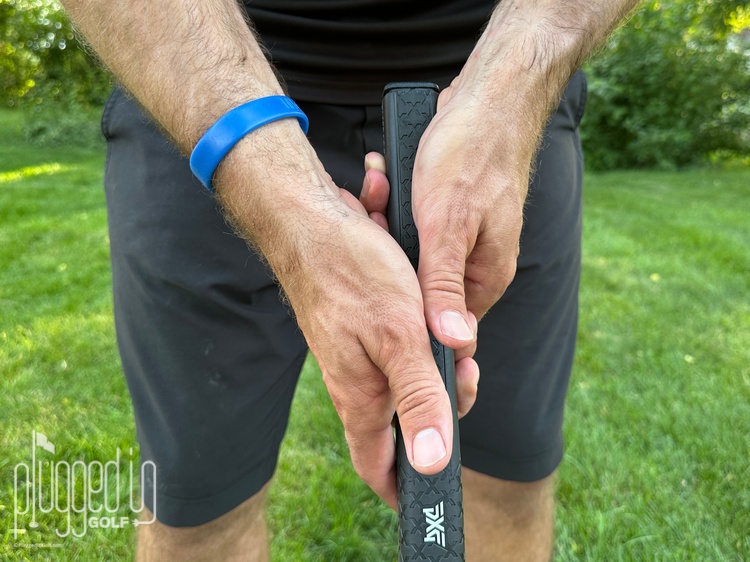
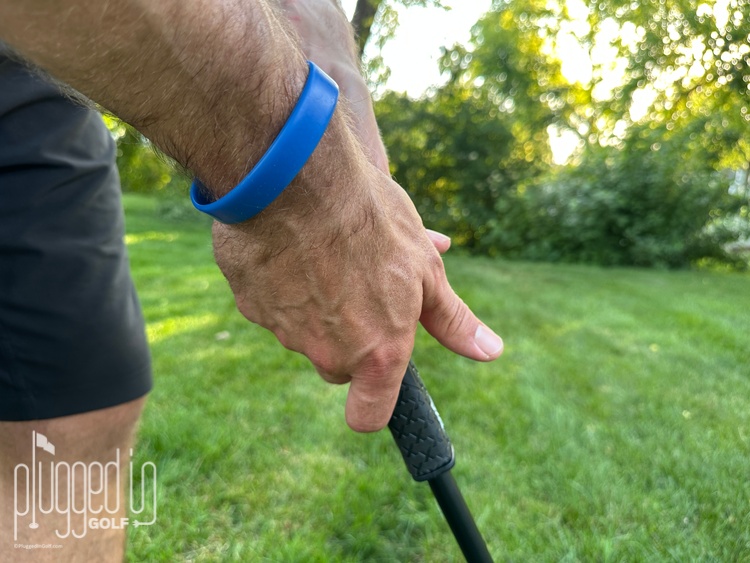
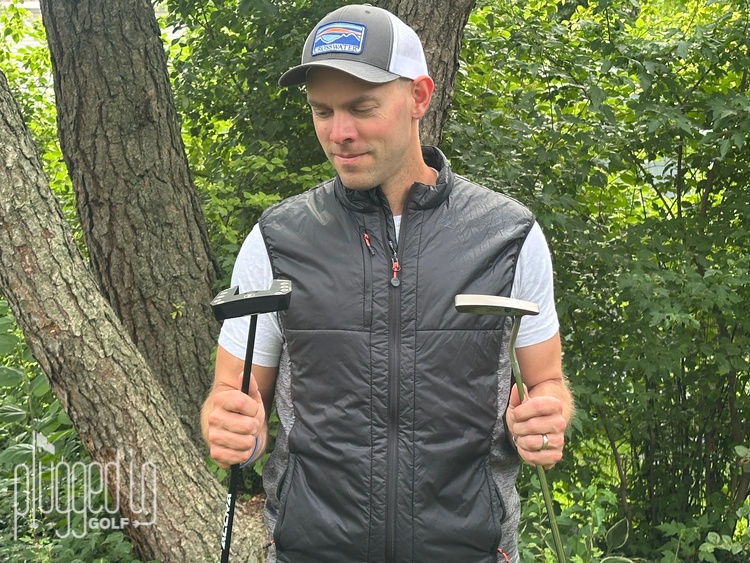
The “point” of zero torque putters is that they want to stay square to your path naturally. However, I’ve spent my entire golfing lives managing, manipulating, or controlling torque in putters that want to rotate. Thus, to putt well with a zero torque putter I have to “let go of the wheel” by taking my thumbs off the grip. The picture above show a small exaggeration of this for clarity, though I was nearly this extreme when I first started using this technique. Now, I can keep my thumbs gently on the grip to maintain stability without wanting to steer the club face.
One other thing to consider is the source of motion in your putting stroke. I have found it easier to have quieter hands if I’m using my chest or shoulders to initiate the stroke. When I make my hands the engine of my stroke, it’s harder to let the putter do what it wants to do.
Long Zero Torque Putters
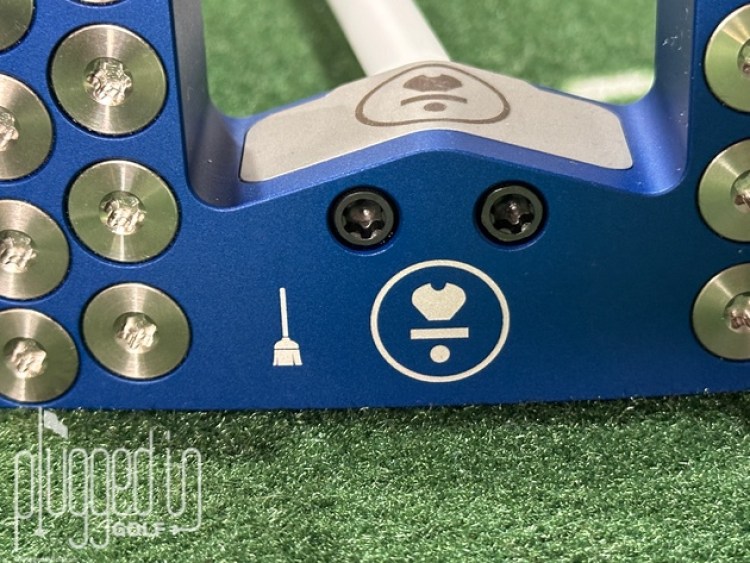
Two of the most successful, best known users of zero torque putters use long versions. Both Adam Scott and Lucas Glover are L.A.B. Golf loyalists whose putters are well over the conventional length. L.A.B. and other makers offer zero torque putters in slightly longer counterbalanced configurations as well as arm lock and broomstick styles.
There are certainly those who have found tremendous success with these unconventional styles, but they’re not inherently better or worse than standard putter lengths. Every length has it’s own strengths and weaknesses as well as it’s own technique to be mastered.
My review of the L.A.B. MEZZ.1 Max broomstick can be found HERE.
Who Should Play a Zero Torque Putter?
In my opinion, anyone who wants to try something new on the green is a good candidate for a zero torque putter.
My only word of warning is that – just like broomsticks, big grips, or spaceship-shaped mallets – zero torque is not a panacea. There are significant benefits to zero torque, but it’s not going to magically turn you into a Tour-caliber putter. You may experience a wonderful honeymoon period where you make everything you look at, but eventually you will need to put in the time and effort to perfect your technique, just as with any other putter.
Which OEMs Make Zero Torque Putters?
The OEM most associated with zero torque putters is L.A.B. Golf. They don’t actually use the term “zero torque,” preferring their namesake Lie Angle Balance technology. They have several models, including the newest, the OZ.1 [review HERE] and their signature shape, the DF3 [review HERE].
Another brand that was on the zero torque train very early is Axis1. They’re best known for their partnership with Justin Rose, whose signature model I reviewed HERE.
Many of the big OEMs and more traditional putter makers are getting onto the zero torque bandwagon, too. At the time of this writing, PXG has two zero torque models, the Allan ZT [review HERE] and the Bat Attack ZT [review HERE]. Odyssey has an entire line of zero torque putters that they call Square 2 Square [review HERE]. TaylorMade has just introduced their Spider ZT [review HERE]. Bettinardi is dabbling in zero torque with their Antidote putters [review HERE], and Evnroll has their ZERO putter line [review HERE].
The one maker that hasn’t yet gone zero torque is Scotty Cameron, but I’m sure that if the popularity of this style continues, you can expect to see a zero torque Phantom in the future.

He founded Plugged In Golf in 2013 with the goal of helping all golfers play better and enjoy the game more.
Matt lives in the northwest suburbs of Chicago with his wife and two daughters.
- TaylorMade Qi4D Max Rescue Review - April 29, 2026
- Wilson Infinite Zero Torque Putter Review - April 27, 2026
- The Biggest Trends in 2026 Drivers - April 27, 2026






15 Comments
One of my friends recently got the new Odyssey Sq2Sq and I was messing around with it a little on the practice green. It was a little jarring because it already promotes a forward press, only you have to forward press it more to hide the white insert face. So instead of feeling like I was swinging on an arc, it kind of felt like I was making a chipping motion. It’s probably not what it actually looked like, but the feel is definitely different. And similar to the myth test, I’m not sure I was starting putts on the right line. Definitely would be something I would need to put in a lot of time with.
I have been using an Odyyssey Jailbird sq2 sq for several weeks now and I think you nailed the basic difference in feel with a traditionally designed and shafted putter. The zero torque model does indeed feel lighter and requires a bit of practice to get the distance right on putts. I think the light feel tricks you initially into hitting the ball a bit harder than necessary. I think a major plus side of the putter is that the forward press lean encourages use of the shoulders to power the swing helping to quiet the hands .
A reason zero torque putters typically feel light when first using one is because torque is sensed as weight when a putter is put into motion. A toe or face balanced putter may balance at D-4 on a static swingweight scale, and it will likely have more head feel initially than a zero torque putter at D-7. It can take reps to become familiar with the lighter feel, but a zero torque putter at D-7 has plenty of feel once the player becomes familiar with the lighter grip pressure required. Lighter grip pressure can also lead to finer motor control skills in judging force application in controlling distance of a putt.
Players may favor a toe or face balanced putter to offset a pull or push bias in their stroke. A player can certainly putt well when using a torque putter, but often times the cure becomes the disease and results in a putter change to another style of torque putter. Putter changes, even among elite players, are not uncommon and can lead to the well recognized honeymoon effect. Zero torque putters can reveal stroke flaws, since they do not influence face opening or closing. It’s much easier to blame the putter than identifying and changing a setup or stroke flaw.
I do not think Ping has a zero torque putter either.
So, I may be wrong but I need your opinion so I can understand this, while the ZT putters are in the revealer they work the way they are designed . Once you put your hands on them you start to control them to some degree, so they are no longer zero torque , no matter how light you hold the grip you are effecting the torque , so there is no difference between these and any other putter.
Ray,
That’s incorrect. The putter is zero torque because of it’s design. How the player interacts with the putter doesn’t change what the putter is. Hopefully that’s helpful.
Best,
Matt
Aren’t all of the old center shafted putters that have been around for years also zero torque putters?
Andrew,
No. To see why, just look at where the shaft is inserted into the head. On a traditional center shafted putter, the shaft is installed along the leading edge. With a zero torque putter, the shaft goes into the middle of the head, or at least some distance back from the leading edge.
Best,
Matt
Thanks, I appreciate the tip!
Matt –
Thanks as always for your clear and concise explanation of ZT technology and technique.
To add my own experience with ZT putters, my perception is that they literally feel like they pull your stroke back along a path, like a magnet is pulling the putter back. I find it’s crucial to be hyper aware that the face stays square and not manipulate the putter in any way.
I’ll certainly try the thumbs off approach.
Best,
Mike D.
I have the Odyssey S2S broomstick. I have always felt a big benefit of a broomstick is that the zero shaft lean promotes a much “sooner” roll. I feel a need to play the ball more forward in my stance with my Jailbird to promote this smoother roll I am used to. Any thoughts
James,
Are the Odyssey S2S Broomstick and the Jailbird the same putter or two different putters? If they’re different, are they both broomsticks or is one conventional length?
-Matt
The Jailbird square to square broomstick I have has 3 degrees forward “static” shaft lean. Should I play the ball forward in my stance to establish the more vertical shaft I have become used to with my other broomstick putters.? Shaft lean in a broomstick seems contrary to an important factor in the broomstick concept. Thanks. sorry I confused you.
James,
Got it.
If you move the ball forward and negate the forward lean, you’re going to be adding a lot of loft which could create distance control issues.
My answer is going to be an unsatisfying “You should experiment.” My inclination is to play the ball in your normal position, but I wouldn’t rule anything out.
Best,
Matt
Matt, thanks for both the explanation of ZT putters along with the tips. I just purchased a Wilson Lakeside but read your tips before heading out for 2 rounds. Lightening of the thumb pressure helps. The putter definitely feels lighter in motion than my Odyssey O Work blade and as a result I was leaving putts short. So like any new club or technology a bit of practice is required.