
50 Words or Less
The TaylorMade M1 Rescue is TaylorMade’s most recent hybrid with adjustable weights, but the forgiveness is not impressive. High quality ball striking is a must to make this club go.
Introduction
What makes a player replace one of their current clubs with a hybrid? I find that it’s often the promise of greater distance, accuracy, and consistency, a story that’s told to golfers by everyone from TV commentators to golf instructors. We examined these promises in our most recent edition of Golf Myths Unplugged, and today we’re also reviewing a hybrid that seeks to find a spot in the bags of better players, the TaylorMade M1 Rescue. Does it deliver on the promises of hybrids? Will it appeal to better players? Our testing uncovered the answers.

Looks
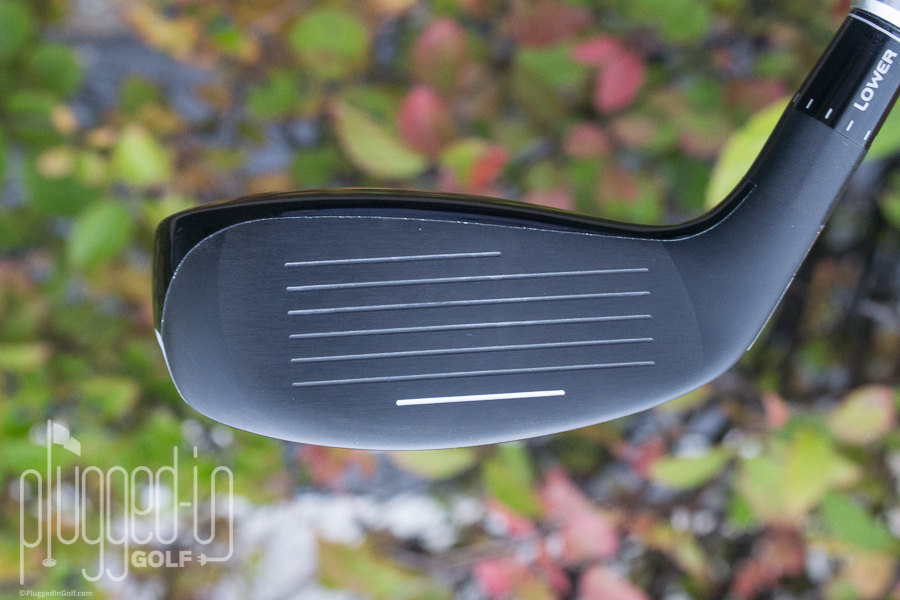
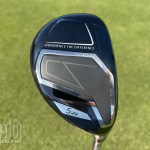
While the rest of the M1 line looks miles from the status quo, the TaylorMade M1 Rescue is a beautiful, traditional-looking hybrid. The gloss black crown is a welcome departure from white R15, and it makes the M1 look even smaller than it is. TaylorMade refers to the shape as “Tour inspired,” and it will certainly appeal to better players because it’s compact from front to back, has a high toe, and lacks an alignment aid.
Sound & Feel
The impact sound of the TaylorMade M1 Rescue is crisp and beautiful…when you strike the ball perfectly. Anything less than a pure strike, however, results in a dull, ugly noise. This auditory feedback, combined with above-average feedback through the hands, allows players to know exactly how they struck the ball.
During the swing, the feel of the M1 Rescue is very balanced. Many new hybrids tend to be more head heavy, but the M1 has a lower swing weight with more heft in the hands and middle of the shaft.

Performance
Most players swap out long irons for hybrids to get more forgiveness. If that’s your goal, the M1 Rescue is not the club you’re looking for. When you miss the sweet spot, the ball speed and distance drop off dramatically. One thing that’s interesting, however, is that the M1 Rescue does an above average job of keeping the ball in play. Where many hybrids put excessive curve on the ball, the M1 Rescue primarily wants to go straight. In terms of trajectory, the M1 Rescue doesn’t launch the ball high, but it is fairly consistent even on thin shots.
When it comes to adjustability, the TaylorMade M1 Rescue does bring something new to the table: movable weights. The sole features two weights – one 3 grams and one 25 grams – which can change the club from neutral to fade biased. With the combination of weights and the hosel adjustability – plus or minus 1.5 degrees of loft – players should be able to dial in the shot shape they prefer.
EDIT: The M1 is not the first Rescue with adjustable weights; the Rescue Dual had adjustable weights first.

Conclusion
Despite the lack of “Tour” or “Pro” designation, the TaylorMade M1 Rescue is decidedly a club that is better suited to above-average players. The looks will draw in many players, but the lack of forgiveness makes this club scarcely more friendly than a long iron.
Buy the TaylorMade M1 Rescue HERE
[carousel]

He founded Plugged In Golf in 2013 with the goal of helping all golfers play better and enjoy the game more.
Matt lives in the northwest suburbs of Chicago with his wife and two daughters.
- 2026 FootJoy Premiere Series Golf Shoe Review - March 11, 2026
- Titleist Vokey SM11 Wedge Review - March 9, 2026
- UST Mamiya LIN-Q PowerCore Red Shaft Review - March 6, 2026



2 Comments
Taylor M vs. Ping G Hybrid? I have the M2 but the draw bias is too much. Looking at M1 or Ping G. I play off about 12, 90 mph speed, and am not looking for too high of ball flight. Any recommendations?
Steve,
G over M all day, in my opinion. No draw bias plus big forgiveness.
Best,
Matt