

Is PURE For Tour Use Only?
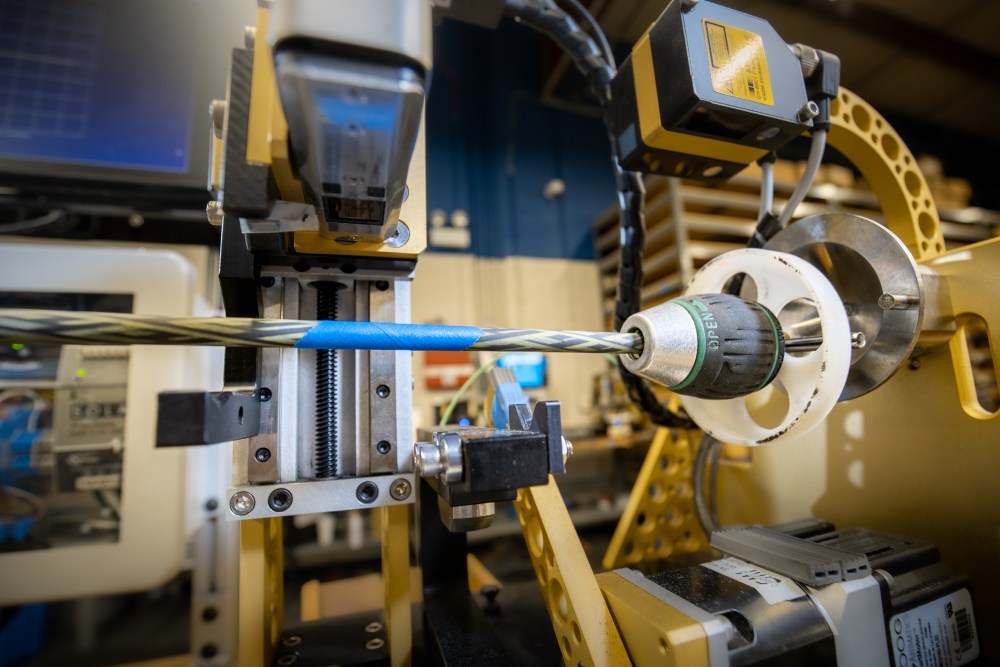
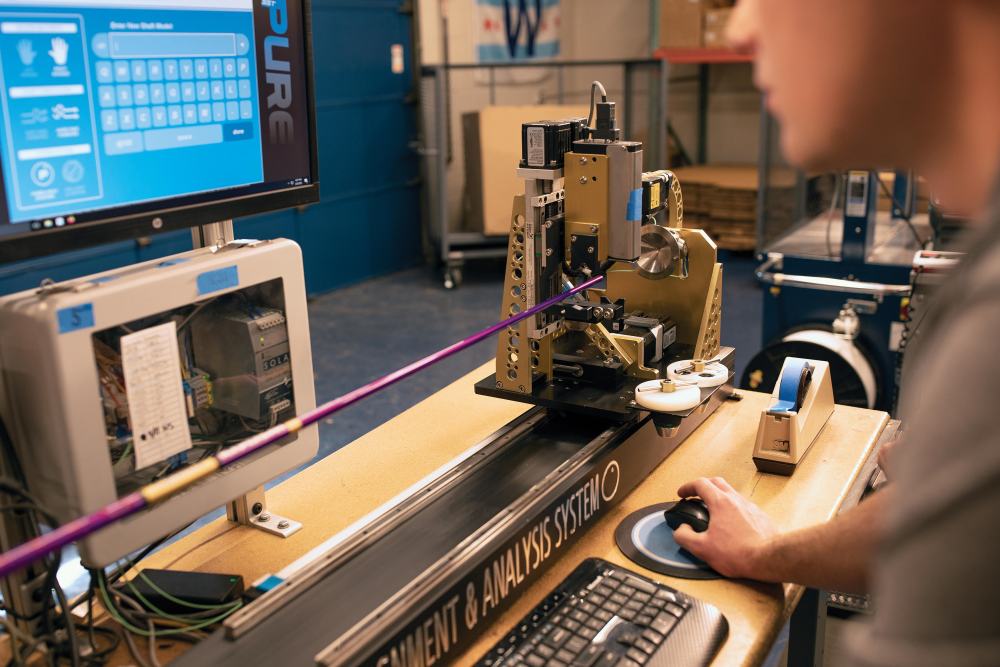
The impact of PUREing remains one of the most controversial topics in golf equipment [not sure what PUREing is? Read THIS].
For a full decade, Plugged In Golf has been the one golf outlet willing to actually test PUREing and bring you the data rather than just peeling off hot takes and clickbait. From our original test in 2016 [find it HERE] to our driver test from earlier this year [read more HERE], we continue to bring you data to support your golf equipment decisions.
Today’s Golf Myths Unplugged approaches the PUREing question from a new angle: does it matter for every swing speed? We unveil the answers below.
The Myths
Myth #1 – PUREing Improves Accuracy for All Swing Speeds
Myth #2 – PUREing Improves Distance for All Swing Speeds
Myth #3 – PUREing Improves Feel for All Swing Speeds

How We Tested
For this test, we built four pairs of identical irons – same model, same loft and lie, same shaft, same flex, same grip, same length, same swing weight. One pair used stiff shafts, one used regular flex, one was senior flex, one was a ladies flex shaft. The only difference between the paired clubs is that one shaft was PURE’d and installed correctly, one was PURE’d and installed against the recommendation.
Next, we assembled sixteen golfers with handicaps ranging from +1 to 36. Four golfers had swing speeds appropriate for the stiff flex, four for regular, etc. Each player hit seven shots with the PURE’d iron and seven shots with the non-PURE’d iron. Half hit the PURE’d club first, half hit the non-PURE’d club first. No tester knew which club was which; many weren’t even aware of what we were testing. All shots were measured by Trackman.
All testing was done at, and with the help of, Club Champion.
PUREing helped players at all swings hit more accurate iron shots. However, within our data, there’s also a reality check.
Looking at the average offline distance for each tester and each swing speed group, PUREing made a positive impact. In our stiff flex group, all four testers had better average offline numbers with the PURE’d shaft – an average of 2.5 yards closer to the centerline. Our female testers were a little over 1 yard closer to center on average – a similar improvement if we think in terms of degrees offline. The senior and regular flex test groups also saw improvement, but the numbers weren’t quite as gaudy.
The reality check came when we looked at left-right dispersion – the distance between the shots hit farthest left and farthest right. By this metric, the PURE and un-PURE shaft were much closer, and there were several golfers for whom the un-PURE shaft was better. I weight this stat less heavily because it can be inordinately influenced by one bad shot. I include it, however, because it’s a good reminder that, even when playing well-fit, high quality equipment, it’s possible to hit a poor shot.
We can stamp a solid “Confirmed” on the idea that PUREing a shaft improves the distance for golfers of all swing speeds.
For our regular, senior, and ladies flex, the test groups produced roughly 7% more carry distance, on average. It is worth noting that those gains were almost equally distributed in the senior and ladies groups. The regular flex group average was boosted by one outlier, but PUREing helped this group even with that player removed.
With our stiff flex players – our lowest handicap group – the distance gains were not nearly as large. On average, this group carried the PURE’d club about three yards farther – less than 2%. However, they did see an improvement in their distance dispersion – the gap between their longest and shortest shots. For a low handicap player, a tighter shot pattern is arguably more valuable than simply hitting the ball farther.
Across all four test groups, the distance gains were the result of improved ball speeds and smash factors. No tester saw their average swing speed go up more than 1 MPH with the PURE’d club (one was 2 MPH slower) but fourteen of sixteen testers improved their average ball speed with the PURE’d club.
Our testers preferred the feel of the PURE’d iron shaft, but the results were not as overwhelming as they have been in previous tests.
In each swing speed group, half or more of the testers expressed a preference for the PURE’d shaft. The reasons varied: some said it felt smoother, some said it felt more consistent, some simply said, “This one feels better.” There were also three players who correctly identified the PURE’d shaft, noted that it felt “more rigid” or “stiffer,” but were neutral about whether or not they preferred that feel.
In our regular flex group, two players stated that they preferred the non-PURE’d shaft. One said it felt “more consistent” and another said the PURE’d shaft felt “warbled.” Interestingly, no one else in our test expressed a preference for the non-PURE’d shaft. This makes me wonder if there was something about that specific shaft which felt great to those players.
Does PUREing Matter for All Handicaps?
Something that we unintentionally tested was the effect of PUREing across a wide range of handicaps. We typically test with above average players because their swings are better, making the data cleaner. In this test, we used several players with handicaps over twenty.
With higher handicap players, there was the expected improvement in consistency, but the bigger boost was in their peak performance. One tester’s longest shot with a PURE’d club was 30 yards longer than their best with the non-PURE’d club. That’s even more remarkable when you learn that was an improvement of nearly 40%. They also hit four of their seven shots with the PURE’d club beyond their best with the non-PURE’d club. To be clear, no one is suggesting that PUREing a club will make it 40% longer. However, for the novice golfer, being able to hit their best shot longer and a little more often makes the game a lot more fun.
The Takeaway
Across all swing speeds, PUREing the golf shaft can lead to improved accuracy, better and more consistent distance, and superior feel. You don’t need to be a high speed player or a low handicapper to feel the benefits and to see the improvements in your performance. Whether these gains are worth the cost is a question that every golfer has to answer for themselves, but there is little question that PUREing is a valuable piece of creating the best possible golf clubs.

He founded Plugged In Golf in 2013 with the goal of helping all golfers play better and enjoy the game more.
Matt lives in the northwest suburbs of Chicago with his wife and two daughters.
- Dixie Red Hills Golf Course Review - October 23, 2026
- Foresight GC2 Launch Monitor Review - October 20, 2026
- Aldila Rogue ∞ CB Shaft Review - October 20, 2026









Join the Conversation | 8 Comments
Thanks Matt,
What if you pure an adjustable club (driver, fairway, hybrid) in certain settings and later change the adjustments. Is it now pured against you?
Jim,
Yes, which is why you should get fit – including the settings – and then have the club PURE’d and built.
Best,
Matt
Where to go to get shafts “pured”?
Gary,
Club Champion is the easiest option, insofar as they have the most locations.
Best,
Matt
I bought a PURE’d fairway wood from Club Champion and was fitted at the stock loft. I later lofted the club up 1 degree to prevent slicing. Does that negate positive effect of having the club PURE’d?
Larry,
Yes. PUREing does not change anything about the shaft, it simply tells the fitter/builder the best orientation for installation. If you move away from that orientation, you’ve lost the benefit.
Best,
Matt
Matt
PUREing has gotten quite expensive nowadays – used to be 12 then 25 per club. Now it’s 45. Comment on this?
Also, has the procedure gotten more sophisticated over the years? Meaning are current machines better than previous versions?
I also see the term SST PURE – is this an upgrade or different technique of PUREing a shaft?
Thanks
Mike D
Mike,
The last part is straightforward: SST PURE, PURE, PUREing, etc are all the same thing.
I don’t have a graph of the cost of PUREing over time, but I do know the cost has increased. This isn’t different than anything else – the cost of everything goes up with the cost of labor, utilities, etc.
Regarding the middle questions, this is direct from SST PURE: “We’ve continued to invest heavily in improving the process and the technology behind it. We’ve refined the machines and the process to make PUREing faster, more precise, and more efficient, while building a system that can sustainably support our growth well into the future.”
Best,
Matt