
Lower Scores Start Now
If you’re in a place where the weather is starting to turn cold, you might think it’s time to hang up your clubs. While a little absence can make the heart grow fonder, getting in some work during the offseason is the best way to make sure you play your best in 2027.
In this lesson, I’m going to lay out three ways to use an affordable launch monitor like the Shot Scope LM1 [review HERE] to get longer and go lower next season.
Get Faster
One of the best things you can do during the offseason is work on your speed. Adding swing speed gives you the capacity to hit longer shots, and longer hitters shoot lower scores.
There are numerous ways to approach the project of adding swing speed. The most direct path is with a golf-specific speed trainer like SuperSpeed [review HERE] or SpeedTrac [review HERE]. You can also take a more holistic approach, working on your overall fitness in the gym.
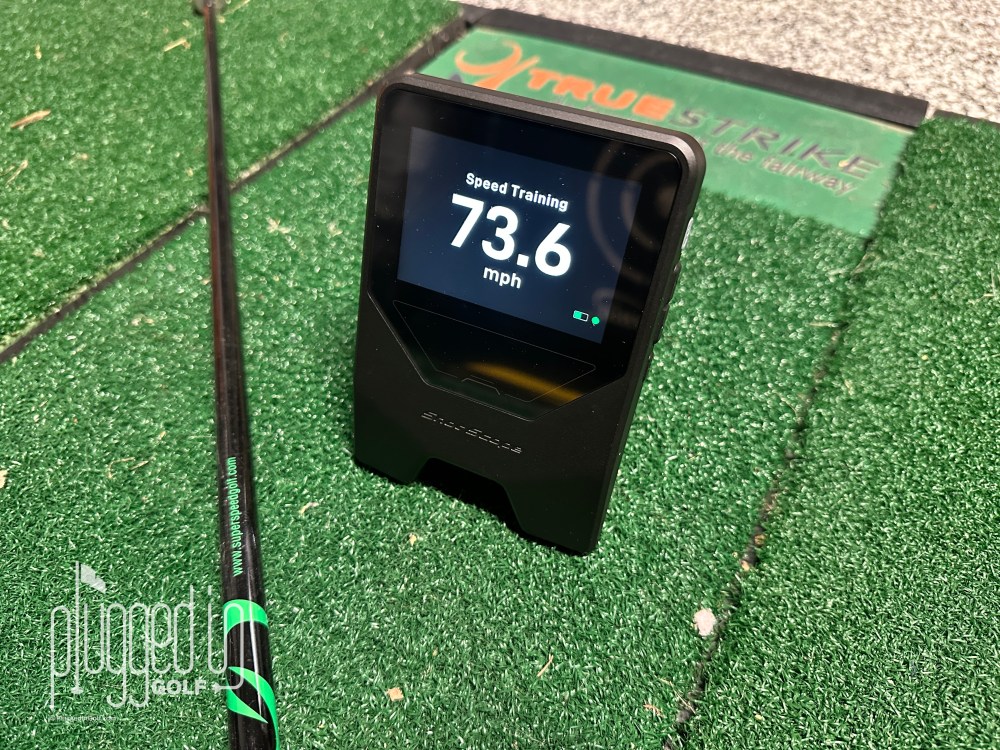
Regardless of how you try to gain speed, the one thing you need to do is measure your results. That’s where the LM1 comes in. At least once a week, put your LM1 in speed training mode and – after a warm up – see how fast you can go. Keep in mind that progress is not linear, and try not to get discouraged if you’re not making big leaps every week. At the same time, if you aren’t seeing your top and average speed tick up over the course of a month of training, it might be time to reevaluate your approach.
Hit It Better
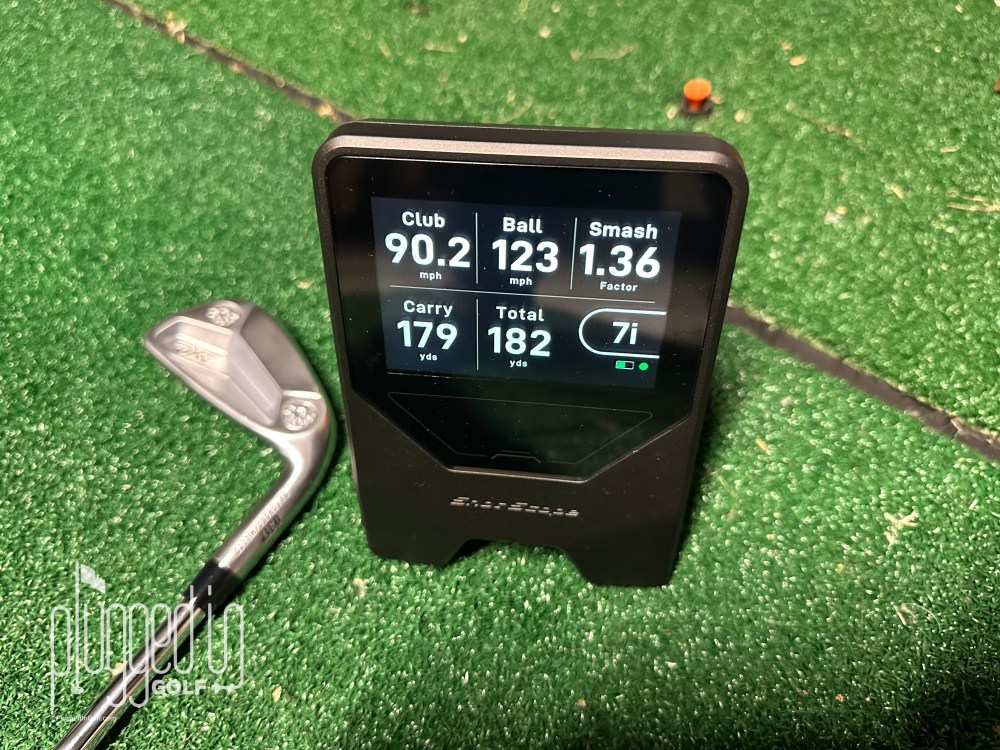
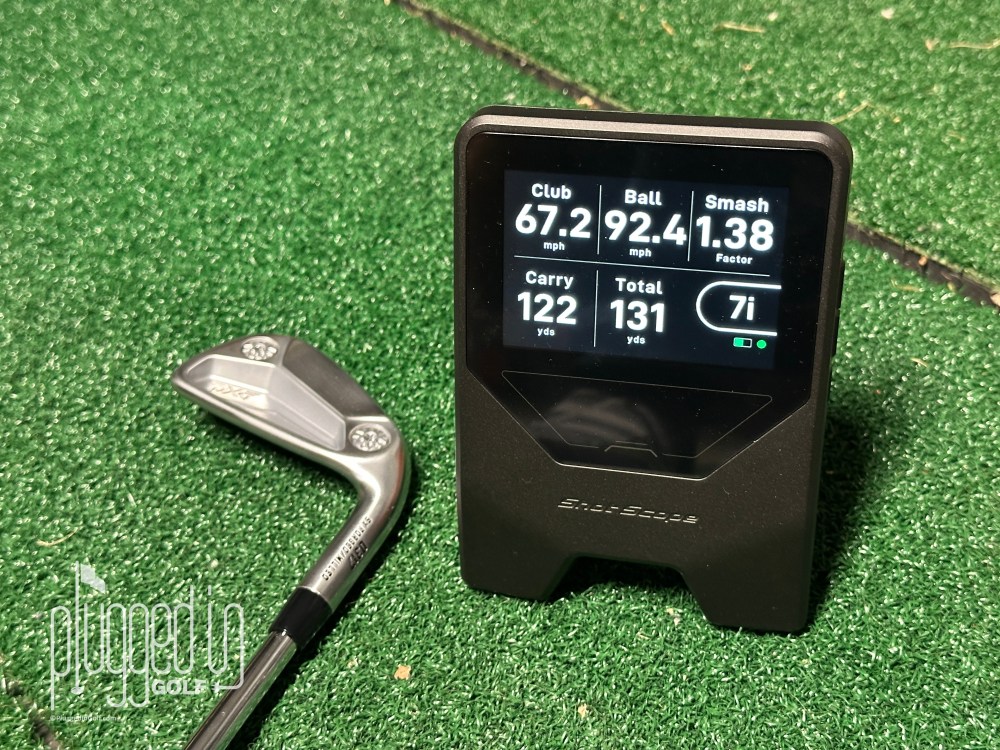
Having a world of swing speed only matters if you’re able to translate it into ball speed. That’s where smash factor comes into play. Smash factor is ball speed divided by club speed. A higher smash factor means a more efficient, higher quality strike.
When you’re hitting balls, don’t just mindlessly pound away. Use your Shot Scope LM1 to track the quality of every strike by monitoring your smash factor. With a driver, peak smash factor is 1.5, but it’s not realistic to expect every swing to be at 1.5. You might aim for five consecutive swings above 1.45. Whatever goal you set for yourself, put your full focus into each shot and try to achieve it.
For reference, the PGA Tour average smash factor with a 5I is 1.41. With a pitching wedge, it’s 1.24. Those might not be attainable numbers for you, but they give you a sense of where the upper limit is. Set goals that are attainable for you, and try to improve the consistency of your strikes.
Learn Your (Real) Yardages
One of the hardest – but most important – lessons for golfers to learn is how far their clubs really go. If you’re already shot tracking with Shot Scope, you should know this. If you don’t, the offseason is a great time to learn.
You don’t need to map your whole bag in one session. Dedicate a practice block to one or two clubs. Get warmed up, then hit ten shots with full concentration. Track the carry distance of each shot – no exceptions. In reality, this process is going to overestimate your proficiency – you’re never going to hit ten 7I shots in a row, from a perfect flat, level lie during a round.
Look at the data and see what it tells you about your game. It’s likely that the gap between your best and worst shot is bigger than you expected. Your longest shot may have gone past the number you expected, but most probably came up short. Resist the urge to make excuses. Instead, think about how this information is going to help your course management. Given the ten shots you hit, what yardage should you play for that club to put the largest number of shots on the green?
Bonus: Put More Shots In Your Bag
If you’re hitting your stock shots consistently, use the Shot Scope LM1 to dial in a second shot for each club. There are lots of ways to take something off of a shot – gripping down, making a smaller swing, feeling less effort – so you should do some experimenting to find a method that works for you.
Once you’ve picked your preferred technique, apply it to your favorite club and see what distance that shot goes. Progress through the bag so that every club has two reliable shots. Now you’ll be able to attack more yardages with confidence, and you’ll have some varied trajectories to play with on the course.
How are you gearing up for next season?
Share your ideas in the comments section.

He founded Plugged In Golf in 2013 with the goal of helping all golfers play better and enjoy the game more.
Matt lives in the northwest suburbs of Chicago with his wife and two daughters.
- Three Steps to Own the Offseason - November 4, 2026
- 2027 PXG Secret Weapon Mini Driver Review - November 3, 2026
- Rapsodo MLM2XPRO Launch Monitor Review - November 2, 2026