

50 Words or Less
The Incred Golf RFB SK1 putter has outstanding forgiveness. Reverse face balancing makes hitting start lines easy. Unconventional look. Loads of customization options.
Introduction
If you watch much professional golf, you’ve no doubt seen a Tour pro use a club in an unconventional way: intentionally blading a wedge or swinging a club from the wrong side of the ball. It was a shot like that – rolling a ball with the toe of a traditional blade putter [see it HERE] – which inspired Incred Golf and their Reverse Face Balanced (RFB) designs. Claiming to be “500% more forgiving” than traditional putters, I knew I had to try them. I put the Incred Golf RFB SK1 putter through the paces on the course and in my putting lab to see if it could deliver on its substantial promises.
Looks
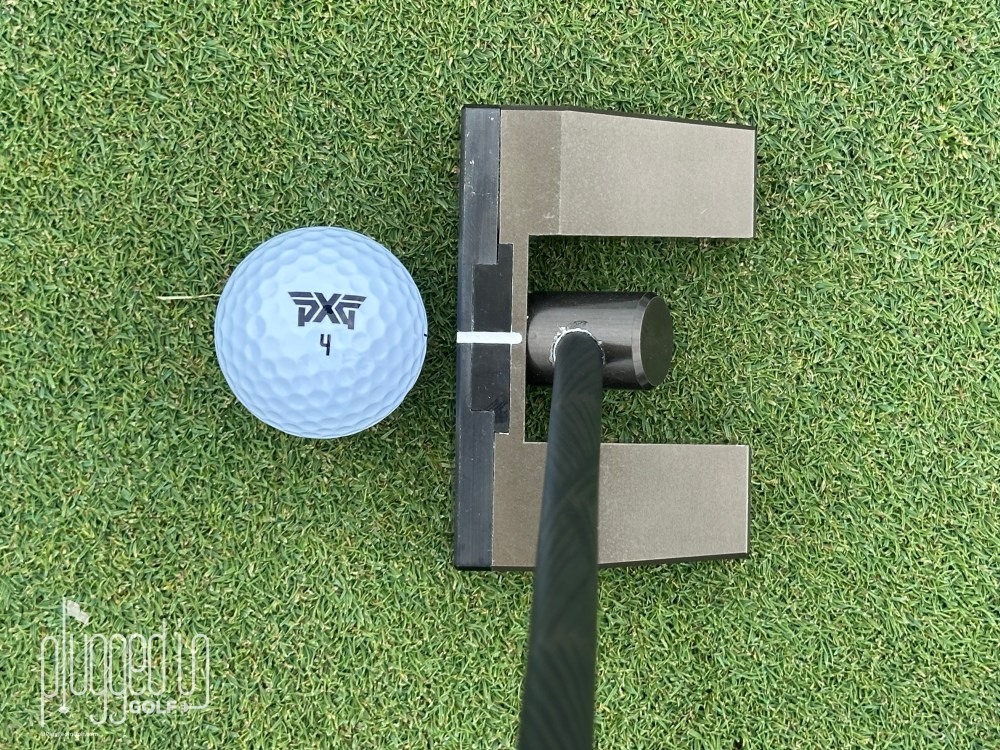
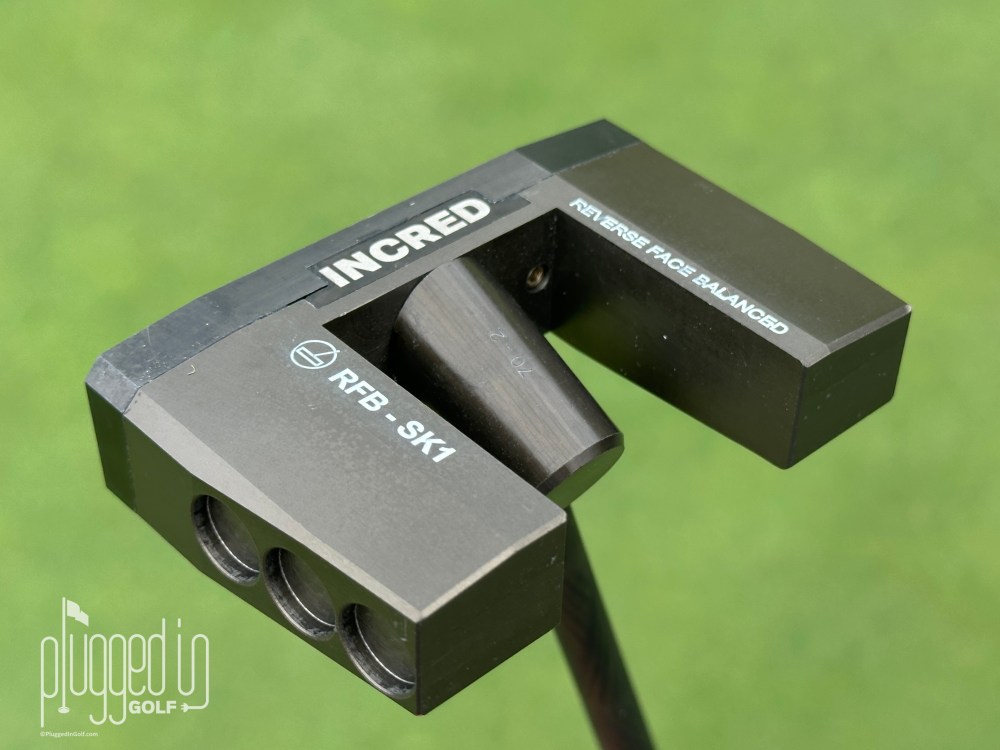
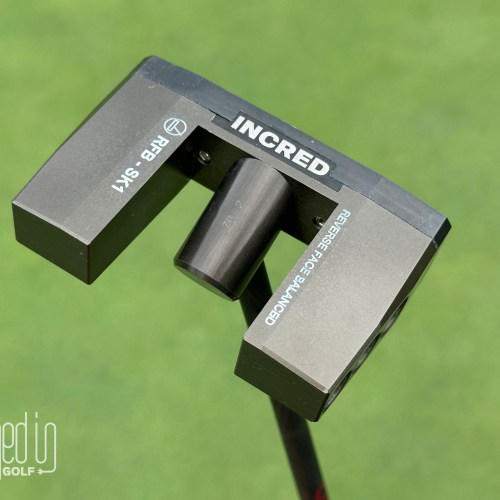
While there are echos of the popular Fang shape in the Incred Golf RFB SK1 putter, no one could credibly call this a clone or even an homage – the RFB SK1 is its own thing. At address, my attention gets pulled back and forth between the “U” shape of the head and the unique shaft insertion point. The cylinder that extends out of the back of the face is, to my eye, unusual but not unpleasant. It’s not a refined, traditional design, but it visually emphasizes the technology at the heart of Incred’s putters.
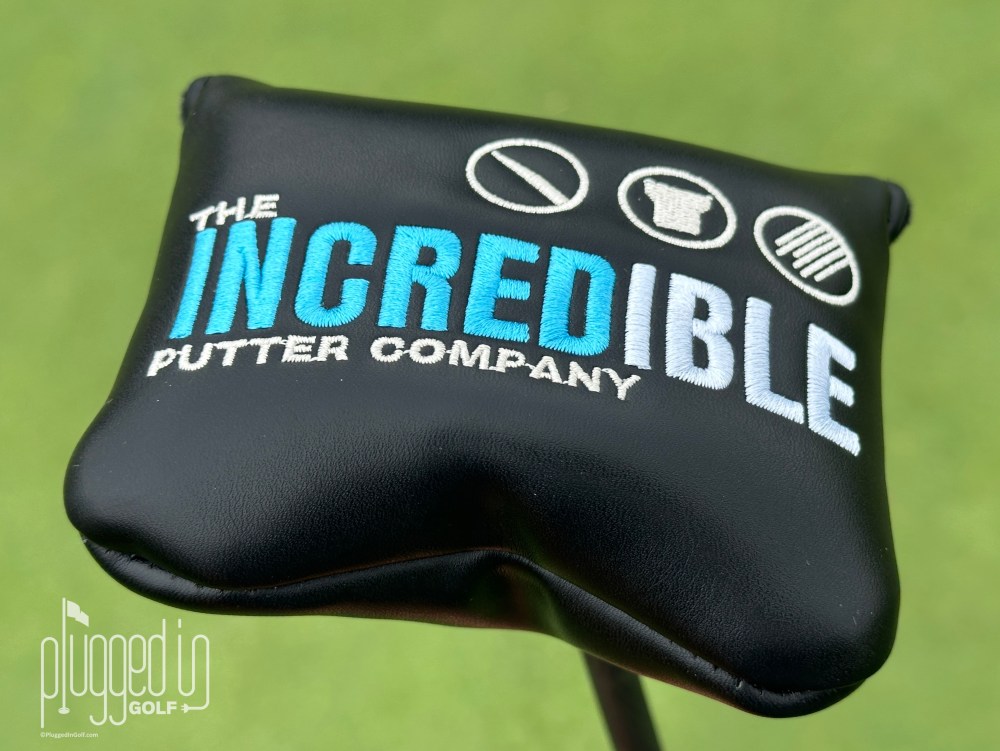
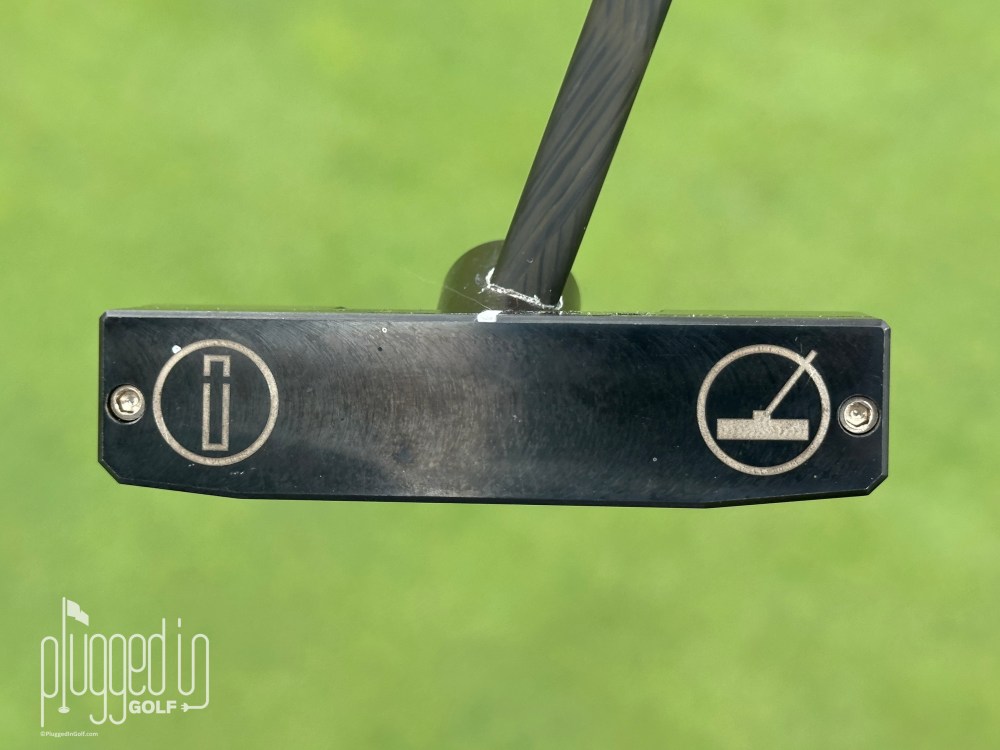
In the bag, you can see several pieces of straightforward branding on the Incred Golf RFB SK1 putter. The sole has the brand and model name, as well as “Reverse Face Balanced” engraved in it. On the face, there are etching of the Incred “I” logo and an image of a putter face on.
For players who opt for the Bespoke level of putter, Incred Golf offers a lot of visual customization. The putter shown here has a stainless steel face, and a copper face is offered at the Premium level. Bespoke opens up “exotic face materials” as well as laser engraving, sight line options, paint colors, and face grooves. [See Price / Buy, $200 Discount Code = “PLUGGEDINGOLF”]
Sound & Feel
I got to test the Incred Golf RFB SK1 putter with two different face materials: copper and steel. To my surprise, the copper was much louder. I’ve owned a couple copper putters in the past, and I loved them for their soft feel and sound. The copper faced RFB SK1 does feel very soft, but the sound is a metal “tonk.” What makes this even more unusual is that it’s very quiet. The sound is rather hard-edged, but it’s hushed unless you’re hitting a very long putt.
The steel faced RFB SK1 has a slightly firmer feel than the copper, but I would rate it as medium overall. Despite feeling firmer, the sound is duller, more of a conventional “thud.”
What both putters have in common is moderate feedback through the hands. I could distinguish pure strikes from mishits, but I had to pay careful attention to discern exactly where the ball struck the face. The audio feedback is rather muddled. I had a hard time connecting the quality of the strike with a specific sound.
Performance
In over fifteen years of reviewing golf equipment, I’ve tested a lot putters. The Incred Golf RFB SK1 putter is one of a very small group – maybe the only one – that explicitly tells you to use it differently than every other putter. Incred Golf calls it the “5-Putt Adjustment.” They ask you to put the ball in the center of your stance, “take the putter back on the lean of the shaft and let it swing through naturally.” You’re meant to hit the ball at the bottom of your arc or with a descending blow. They say that after three to five putts, “the natural pendulum motion clicks.”
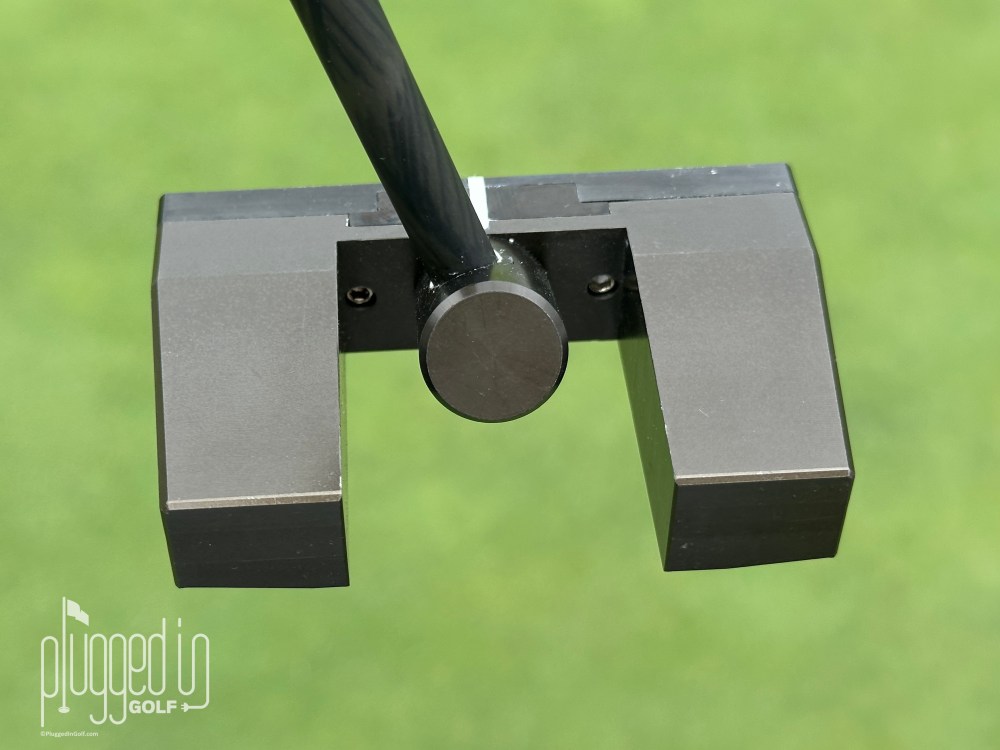
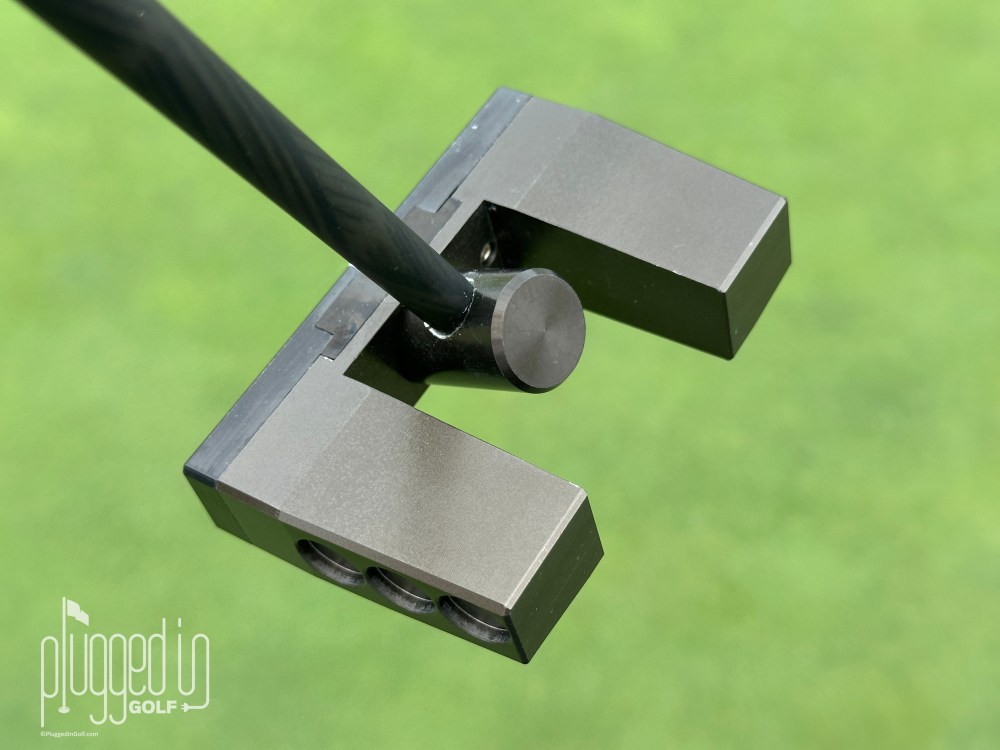
Why does the Incred Golf RFB SK1 putter ask for a different technique? Let’s go back to the moment of inspiration – the blade putter being swung to hit the ball off the toe. This technique puts the putter’s center of gravity in front of the shaft. Most putters have their CG behind (sometimes well behind) the shaft. Zero torque putters put the CG in line with the shaft. Incred Golf puts the CG of their putters in front of the shaft – a technology that has earned them four patents. That unique CG placement – according to the maker – necessitates a different technique.
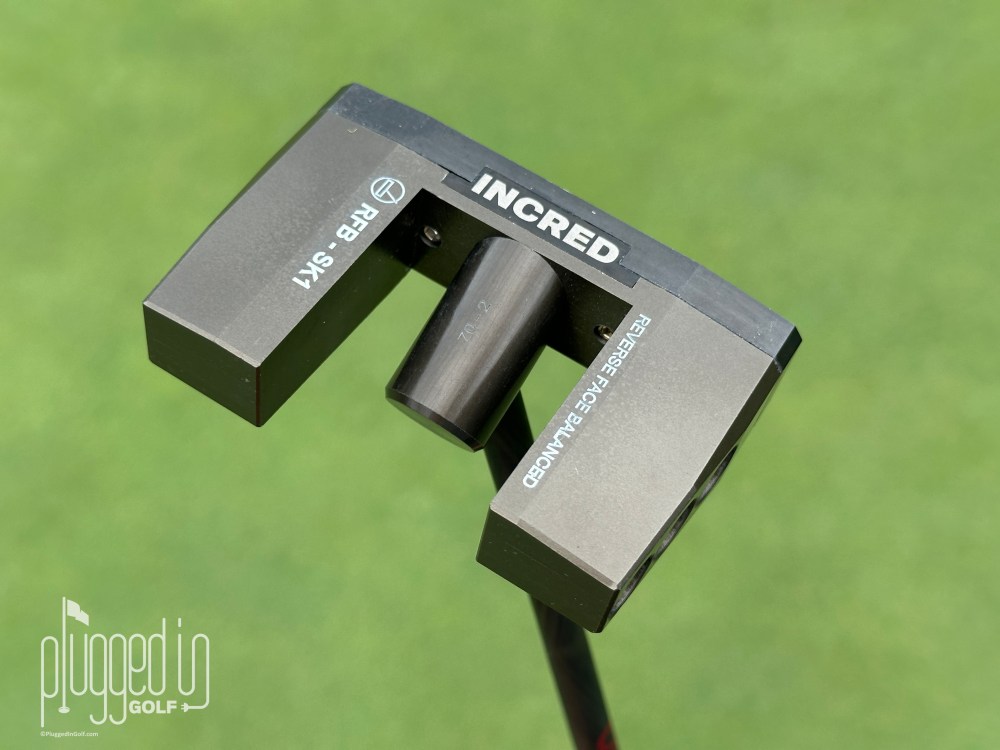
Those of you who have been reading my work for a while know that I frequently start my testing without “reading the instructions.” I’d like to say that’s because I’m testing in a way that’s authentic to most golfers, but really it’s because I get excited and and impatient. Regardless, I took the Incred Golf RFB SK1 putter to the putting green without knowing about their recommended technique and starting putting like normal.
The initial results were outstanding. Not since my first experience with LAB Golf putters have I made so many 15-20 footers. Every putt seemed like it had a chance to go in, plenty looked over the edge, and way more than normal ended up in the bottom of the cup. Swinging the RFB SK1 felt natural and easy.
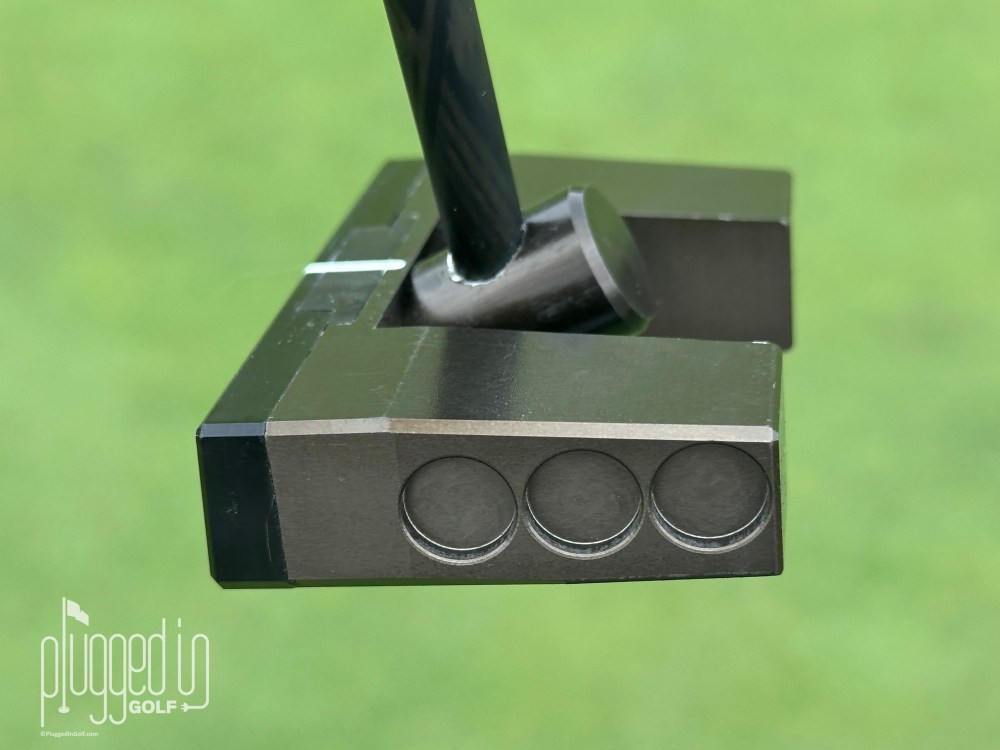
The next step in my testing was getting the Incred Golf RFB SK1 putter on my launch monitor. There, I tested it in two different ways: with my normal stroke (ball positioned forward, neutral to slightly ascending strike) and with Incred Golf’s suggested technique. Comparing it to my library of putting data, the RFB SK1 was impressive. With regard to ball speed consistency, the RFB SK1 was on par with the best mallets in the game [we tested the best zero torque mallet HERE].
Turning to skid and true roll, the Incred Golf RFB SK1 putter was in the top half of putters I’ve tested for skid distance (meaning less skidding), and it produced some of the best “top spin at launch” numbers I’ve seen. Interestingly, on those two metrics, the numbers were better with my normal technique, though that could be solely related to my comfort. Generally speaking, I don’t subscribe to there being a single, universal “best” technique.
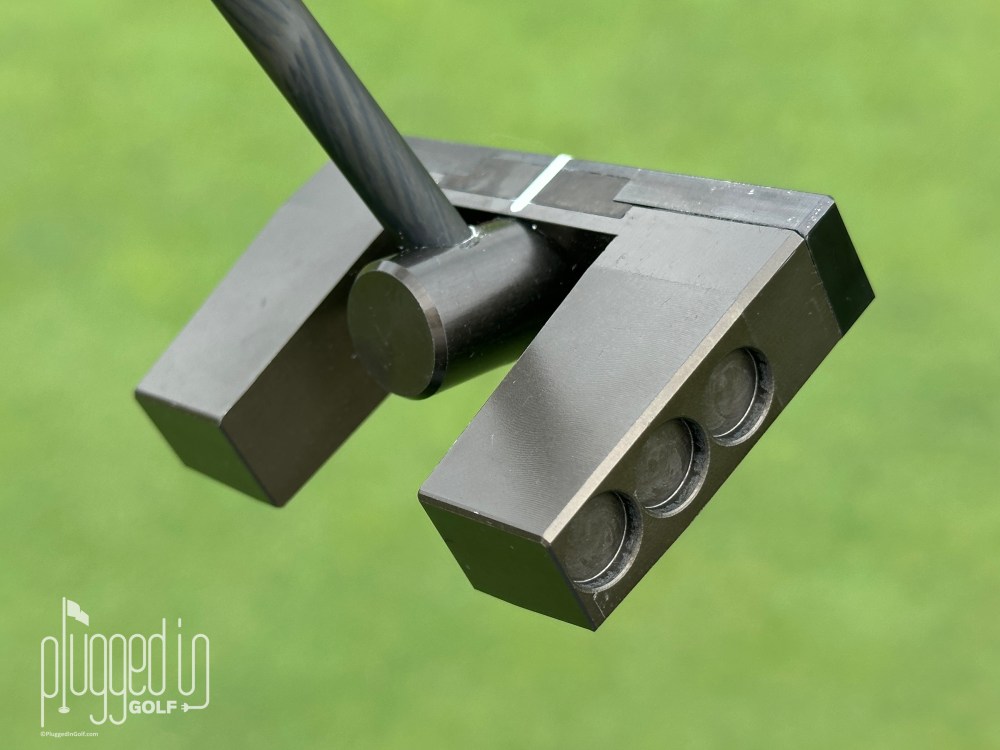
Finally, I took the Incred Golf RFB SK1 putter to the course. Starting with the bad news, I didn’t feel a good sense of connection with the putter, and that led to very poor distance control. This can all be reasonably explained away – trying to use a new technique without much practice time – but that didn’t make it any more fun to have eight feet left for par.
On the other hand, the start lines and forgiveness were tremendous. Despite not feeling fully in control of the Incred Golf RFB SK1 putter, virtually every putt went where I was looking…regardless of how I struck it. During each round, I had at least one made putt what was hit substantially off center. This left me thinking, “If I can get these results without much practice, how good could this be if I put in some work?”
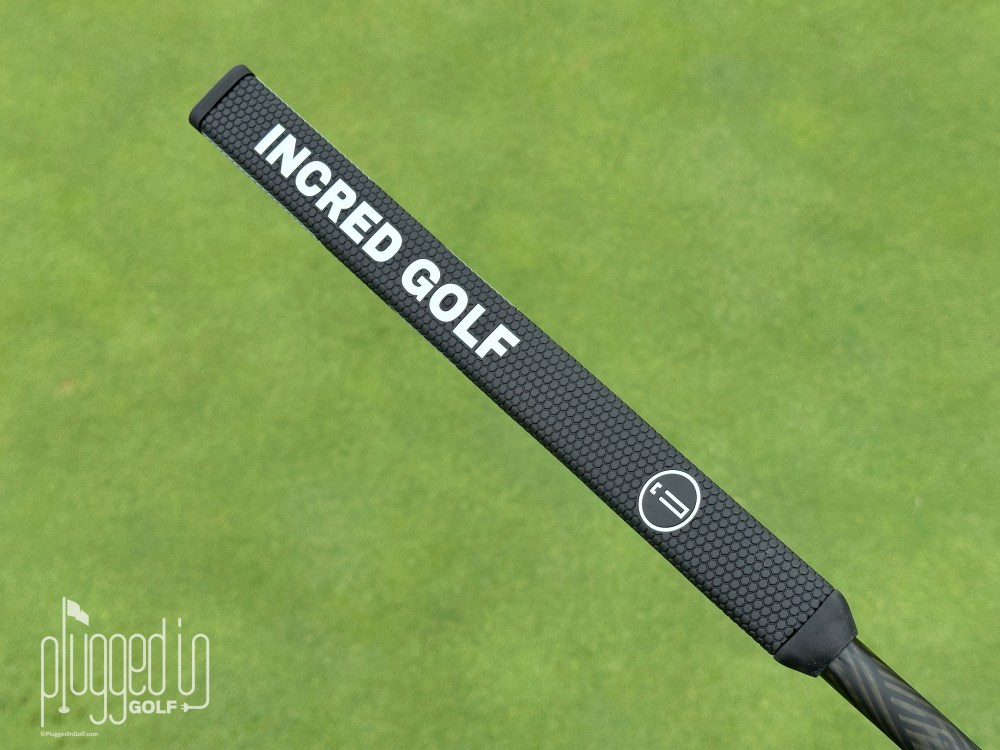
If you’re interested in gaming an Incred Golf RFB SK1 putter, there are a huge array of options. In addition to the different face materials, it can be built at lengths from 27 to 52 inches. They offer standard, counter balanced, arm lock, and broomstick configurations with lie angles ranging from 67 to 80 degrees. There are also several shaft and grip options. [See Price / Buy, $200 Discount Code = “PLUGGEDINGOLF”]
Conclusion
Is reverse face balanced the next great evolution in putting? At a bare minimum, it’s an interesting approach that has the potential for real performance gains. The Incred Golf RFB SK1 putter – the true originator in this space – has outstanding forgiveness and the ability to start every putt on its intended line. If you want to try something totally new on the green, it’s worth a look. [See Price / Buy, $200 Discount Code = “PLUGGEDINGOLF”] $200 discount code for our readers = “PLUGGEDINGOLF”
The world's first Face Down Putter®. 500% more forgiving than traditional putters in independent robotic testing.

He founded Plugged In Golf in 2013 with the goal of helping all golfers play better and enjoy the game more.
Matt lives in the northwest suburbs of Chicago with his wife and two daughters.
- Dixie Red Hills Golf Course Review - October 23, 2026
- Foresight GC2 Launch Monitor Review - October 20, 2026
- Aldila Rogue ∞ CB Shaft Review - October 20, 2026





Join the Conversation | 9 Comments
This is a very interesting concept and something I want to look into more. Based on how you describe your technique would you say this is more suited to someone with less of an arc to their stroke? Also, I hate bringing it up, but that price point is a huge barrier to entry.
Corey,
Nothing wrong with discussing price – it’s an expensive putter. As ever, it’s up to the individual whether or not this is worth a shot.
As for stroke arc, I think the key with zero torque and RFB is getting the lie angle properly fit. If you have the right lie, I think they work for any amount of arc.
Best,
Matt
Hi Matt – Many, many thanks for doing this review; Incred Golf is well off the beaten path of OEMs and assessing the SK1 is a great complement to your look at Performance Golf’s RS1+/RS1 so good on you for doing this one! All things considered, did you perceive the SK1 or RS1+ to perform better for you? The price point of the SK1 – $799 for “custom” or $999 for “premium” (which includes upgraded graphite shafts) are on my radar – is appreciably higher than the $399 for Performance Golf’s RS1 (I favor the RS1 over the RS1+, personally, given my desire for a firmer – less soft? – feel); is there anything about the SK1’s performance that would prompt you to invest twice as much in it or do you feel that the RS1 represents a better value?
Ian,
That’s a good question. A lot of the value of the SK1 comes from the ability to order it to your spec. The RS1 is available in one length, one lie, period. The Incred Putters can be built in dozens of different ways. That’s the only truly objective difference I can point to – anything beyond that is personal preference.
From that personal side, I like the look of the SK1 more, and I like the feel of the shaft and face better.
Best,
Matt
Many thanks, Matt. In your experience with the steel-faced SK1 and the RS1+, which face felt more firm to you? Different shafts may complicate assessing only the face, of course, but whatever relative perception of these two faces that you were able to gather would be incredibly helpful.
Ian,
I think the SK1 has a firmer feel off the face.
Best,
Matt
Thanks a lot, Matt!
Very interesting. Reminds me of the ONTIC M-Pulse, Mentor and new CLM-3 Hot Copper Mallet. All of those had/ have cylinder weighting out the back.
There is absolutely no way in hell I’d pay $700+ for a putter. Putting is all about feel which breeds confidence and if you’re comfortable with a bullseye putter from years ago — then stick with it. When you get my age, having shaky hands is part of the normal and there’s no $700+ putter gonna totally fix that. #BushnellGiveaway