
What Does Club Fitting Mean?
Sometimes a single word or term covers so much ground that it’s almost unhelpful. “Car” can describe everything from a Ferrari to a moving van. “Watch” can describe a $10 quartz, a $50,000 Patek Phillipe, or even an Apple Watch, which is really a computer that happens to tell time.
Such is the case with the term “club fitting.” There are now so many options and so many different price points, that one term seems inadequate. But fear not, because I’m going to bring some clarity by breaking this down into five levels of club fitting, explaining what you can expect at each tier and how much each will cost.
Level 1: Basic Specs
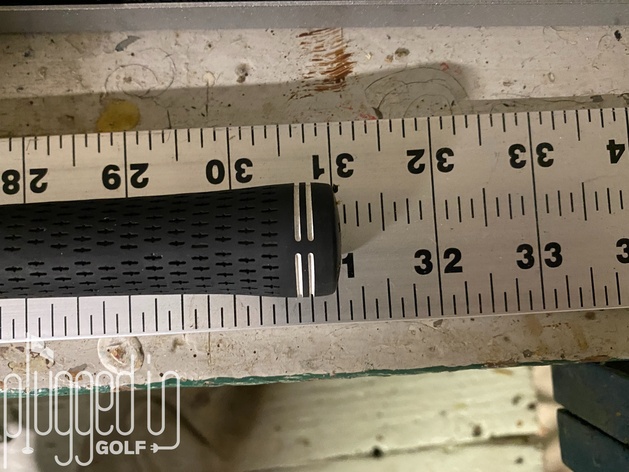
At its most basic, club fitting should mean getting a golfer into clubs with the right specs. This should include length, lie angle, shaft flex, and grip size.
Every golfer should be fit to at least this level. No player should feel they need to stand taller, crouch down, or adjust their swing to fit their clubs, regardless of their ability level. You don’t need to be a world class runner to wear shoes that fit. The same is true of your golf clubs. Getting the right specs is just a basic thing that every player should expect. Continuing the shoe analogy: wearing the right size won’t make you faster than you are, but it will keep you from getting hurt and allow you to perform your best.
This level of fitting can be provided by any store that sells golf clubs and should be offered at no cost. Something many golfers don’t realize is that your clubs can be ordered to your spec without additional cost. You may pay a little more if you want a specific grip, but you can get any grip size, any loft, lie, length, and any shaft flex for no upcharge.
Pros: Free. A huge step toward better golf.
Cons: None.
Level 2: Trying Stuff
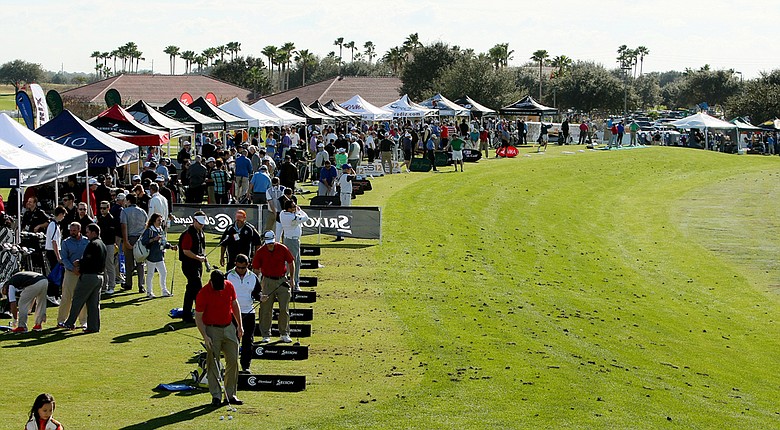
The next tier of club fitting – which should include getting the basic specs right – is simply trying lots of stuff. This can be done on a launch monitor, on a range, or both. It can be done in one go or over a stretch of days or weeks. There’s no systematic approach, no expert advice, and you’re likely hitting everything in the stock configuration.
Reading that last sentence, you might think I’m opposed to Level 2. I’m not. I think that trying a lot of stuff is a critical step in the journey toward finding the best clubs and growing your knowledge of golf equipment. Also, I think that it’s important to trust your own opinions…to a point.
This approach has clear strengths and weaknesses. To the good, it’s free and fun.
On the other side of the ledger, you might be leaving a lot of performance on the table. You don’t know what you don’t know, so you may skip a potentially excellent brand or model. Additionally, you won’t be able to tweak specs the way a fitter would. This is also a very time consuming method. You’re doing all the math by hand rather than letting a fitter hand you a calculator.
Ultimately, Level 2 is worlds better than walking into the store and saying, “I’ll take the latest from (insert brand name here),” but it’s still well short of the best solution.
Pros: Free. Fun.
Cons: Missing out on improved performance. Time consuming.
Level 3: Big Box Fitting
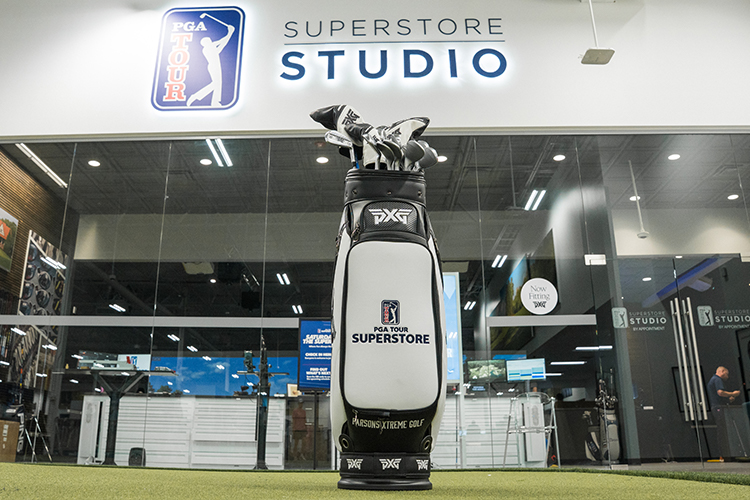
Let’s start with two points of clarification: First, despite the name, Level 3 does not have to occur in a big box store like Dick’s, Golf Galaxy, or PGA Tour Superstore. You can get a Level 3 fitting at a green grass pro shop or an independent golf store. Two, while the term “big box” is often used disparagingly, I don’t think there’s anything wrong with a big box fitting.
The reason that I don’t disparage big box fitting is that I was a big box fitter. It’s possible that you can get a great fitting in a big box store for little or no money. The problem is that you can also get exactly what you pay for.
Big box stores – or any non-fitting focused retail environment – has huge variability because of the employees and the tools they have available. You might get to work with someone who really knows their stuff and cares about delivering a great fit to every customer. It’s at least equally possible that your fitter just clicked through the slides to get their fitting certificates and is only interested in getting to the end of their shift.
While high quality launch monitors are more common – you can find Trackman and Foresight devices in most shops – that doesn’t guarantee a good fit. Retail stores don’t have the wealth of heads and shafts that specialized fitters do. What’s worse, they lose components to breakage and theft, and it’s very rare for those components to be replaced. Even if you’re lucky enough to work with a good fitter, they can only fit as well as their tools allow.
Pros: Often cheap or free. Potentially good fitting.
Cons: Potentially bad fitting. Not as many options as a specialized fitter.
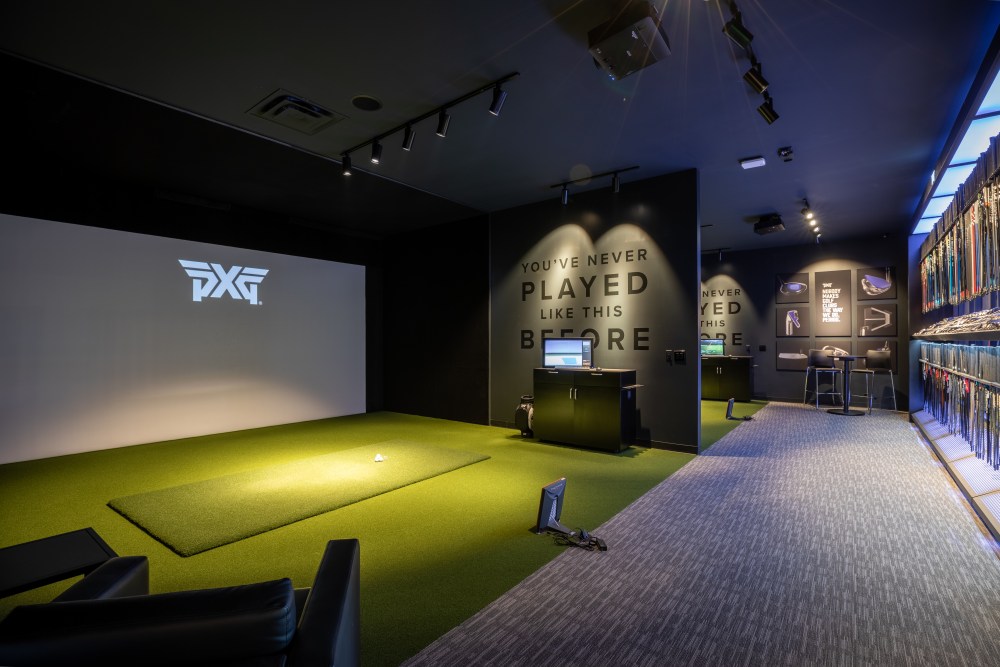
Level 4: OEM Fitting
At Level 4, we’re starting to get to the really good stuff. This is a single OEM fitting at either a fitting studio, such as a PXG retail store, or a fitting day at a golf course.
In this tier, you’re virtually guaranteed to get a great experience. The OEMs tend to employ knowledgeable, personable fitters. Also, because these fitters are focused exclusively on one OEM, their depth of knowledge is unparalleled. They all use top end launch monitors. Finally, you’re going to have access to a great array of fitting tools. The OEMs want to put their best foot forward, so you’ll be able to hit all the different lofts and shafts that they offer.
The obvious downside is that you’re only getting to work with one OEM. You might work with the world’s best fitter, but if you need Brand X and you’re at a Brand Y fitting, you’re going to miss out on performance gains. I’d advise that if you’re interested in a Level 4 fitting, try Level 2 first and zero in on the one OEM that you like best.
Pros: High quality fitting.
Cons: Only having access to one OEM. May be more expensive.
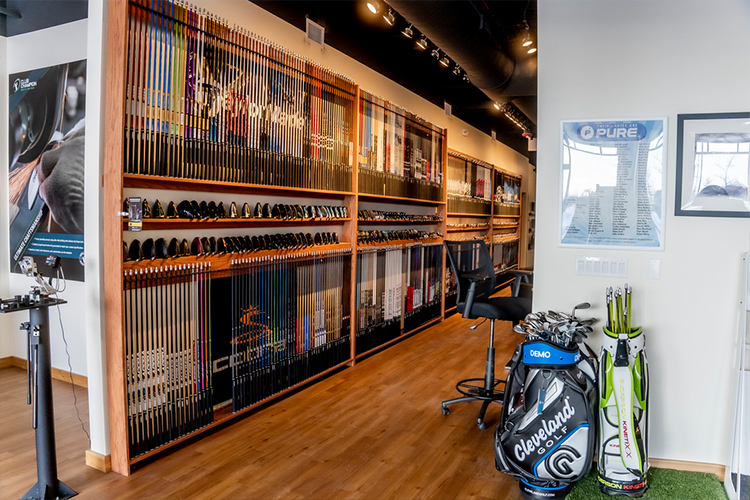
Level 5: Premium, Brand Agnostic Fitting
This is the gold standard of club fitting: specialized, full-time club fitters with access to all the best equipment and fitting tools. We’re talking about Club Champion, True Spec, Cool Clubs, and top level independent fitters.
Why is this the best option? We can start with the fitters. At Club Champion, every fitter goes through Club Champion University, a four week, 200 hour training program where they learn about equipment and shadow veteran fitters. Once they graduate, all they do is fit. They don’t stock shelves or fold shirts; they spend every working hour fitting and learning about clubs.
The next reason Level 5 is the the best are the tools. Every Level 5 fitter is going to have a professional grade launch monitor. You’re also going to be fit with the ball you actually play. Club Champion also has AI Co-Pilot [more on that HERE] to make the fitter even sharper and the ability to modify the club you’re hitting. You won’t have to guess that a two degree lie angle change will help your dispersion – they’ll bend the club so you can find out.
Finally, the key difference between Level 4 and Level 5 is the range of choices and the brand agnostic approach. Club Champion carries every major OEM, loads of smaller brands, and they often have access to products that are made only for high end fitters. They have over 65,000 hittable combinations of head, shaft, and grip. Not only can you mix and match all these components, the fitter has no vested interest in what you end up with. They’re focused only on your performance, not pushing a specific brand.
Now let’s get explicit about the boogey man that lives at Level 5: cost. I’m going to focus on Club Champion since they’re the biggest custom club fitter and the one that I know best. Their fittings cost anywhere from $100 for a full bag to $50 for an individual club, with a custom club purchase.
With the standard caveat that, “I don’t spend other people’s money,” I think that the full bag fitting is one of the best values in golf. I’ve been fit dozens of times, and I still learn something every time I get fit. If you’ve never been fit, your mind will be completely blown by a full bag fitting. Even if you don’t buy the clubs, you’ll walk away knowing exactly what you need and how high your golf performance can go with the right tools.
There’s also the cost of custom clubs. Getting your clubs from a high end builder is going to cost more money, but there are good reasons why. When you order clubs from an OEM, they are built to certain tolerances. That might mean the lofts and lies are within two degrees of the stated specifications. The shaft weight might be listed at 120 grams but can range from 115 grams to 124 grams.
With a high end builder, those tolerances virtually disappear. Every club is built by hand to match your exact specifications. Every shaft in the iron set is weight sorted. Each wedge is bent to the perfect loft and lie. Even the weight of the grips is taken into account to make sure the swing weights are perfect. If you’re going to invest in learning exactly what you need to play your best, there’s no reason to stop short and order clubs that you only hope are going to be right.
Pros: The highest level of fitting. You will maximize your performance and try things you won’t find anywhere else.
Cons: Cost.
What Level of Club Fitting Have You Used?
Share Your Experiences in the Comments Section.

He founded Plugged In Golf in 2013 with the goal of helping all golfers play better and enjoy the game more.
Matt lives in the northwest suburbs of Chicago with his wife and two daughters.
- Aldila Rogue ∞ Blue Shaft Review - October 9, 2026
- Avoda Golf W2 Wedge Review - October 8, 2026
- SlackBoard Review - October 7, 2026



Join the Conversation | 32 Comments
Not always the case. I had a level five fitting at club champion. Spent a lot of money on new clubs. There was no noticeable improvement in either distance or dispersion.
Bruce,
Did you see an improvement in the fitting bay but not in reality?
-Matt
Yes, I did But it didn’t translate to the course. I returned to club champion, and we could not duplicate the original results.
Got it. Were you able to use Club Champion’s Perfect Fit Guarantee to find something that did deliver those results?
-Matt
No sadly, I don’t think they had that guarantee at the time. It was a full bag fitting and so I went back to fit the hybrid and Fairway Woods and driver, but after hitting a number of clubs, they said there wasn’t anything that would improve on the stock Callaways that I had at the time. After the trouble we had with the irons, it didn’t really seem like their heart was in it.
I’ve had a great experience with what I think is called the Tour Van fitting at PGASS. The fee was $99 and was totally brand agnostic. The fitter had 10 years of experience working for individual golf brands as well as club champion. The PGASS fitting studio did not carry the high-priced exotic shafts that club champion tends to recommend, rather we tested just the stock and upgrade shafts available from each brand. My pings are the first set of irons where there is a consistent 12 yard gap between clubs. I ordered the recommended clubs from the store – after they arrived the store measured the lie, lofts, and lengths of each club. The Ping assembly was spot-on their specs. Finally, stores such as PGASS and Edwin Watts offer a 90 day trial period – if the fitting did not work they try another set-up at no extra cost.
Just recently went through a fitting at Club Champion. Specifically went for a mini-driver and a 9 wood. Only 2 mini driver heads were available for me to try! I settled on the TaylorMade simply because the numbers were better than the other head (Titleist) but I did feel like I did not get the “full experience” given the other heads I wanted to hit, Callaway and Tour Edge, were not available. I reluctantly selected the TM based solely on the playability guarantee, but honestly, that’s not what I think I was signing up for when I made the appointment. As far as the 9 wood fitting, I am not 100% sure, but I really believe the shafts I tried were definitely not 9 wood length. Closer to 3 or 5 wood shafts would be my guess. I did not think about this until after I got home from the fitting so it was too late to do anything about it at that point. Again, I’m left relying on the playability guarantee.
I found your information on the AI copilot interesting only for the fact that this was something that was never discussed/offered. So, I am waiting for my clubs to be built, second guessing myself about the whether I should have bothered with this or not. Retrospectively, this was not my idea of what a Level 5 fitting should be like.
Ken,
I’m sorry to hear that the fitting didn’t meet your expectations.
With regard to AI CoPilot, I obviously can’t say for sure, but I wonder if the fitter wasn’t using it without talking to you about it. I’m not suggesting that’s ideal, just throwing it out as a possibility.
In any case, I hope the clubs work well for you.
Best,
Matt
matt, inthe past, you have determined that puring clubs is effective for performance. In my club champion fittings, puring has been highly recommended, which is impossible for me to tell if , while playing, it actually works. The question is, if it is so effective, why don’ t OEM’s do it for all of their clubs. At $30 a club puring is one of those ephemeral things in golf that is done on faith. thanks Matt love your analysis
Sean,
For me, there’s no faith required – I’ve seen the data and shared it here.
There’s no big secret as to why OEMs don’t do it: it’s very time consuming and it’s expensive. I don’t like to appeal to authority, but the people the OEMs pay to play their clubs – Tour pros – do use it.
Best,
Matt
The full disclosure is that Club Champion purchased SST Pureing in 2019. So they are absolutely going to try and sell the add-on.
A few years ago I decided to get serious and pony up for fitted clubs. I had a Level 3 fitting for both irons and driver. I did mine at Dick’s House of Sport and while I understand the concerns you pointed out at that level, I can also say that the head pro at my store is excellent and very helpful. We hit a variety of brands, shafts and flexes before ultimate settling on Callaways irons. He even let me hit some blades, game improvements and super game improvements just so I could see the differences in all of them. They charged me $100 for the fitting but then took that off the price of the clubs once we ordered them. For driver, I also went back to the same pro for help and ultimately ended up with a Ping, but had the same experience.
One thing I think it would been helpful for you to mention is that anybody in the market for a new club or clubs should absolutely take their current setup with them to their fitting. My pro was actually surprised that I did this (feels like they should mention this at the start) and it was extremely helpful. I was playing stock clubs at the time and having my set with me really allowed me to see and compare the side-by-side data from my stock set to my fitting specifications that we settled on. I was playing with clubs that were .5 inches shorter that what I needed! In the case of my driver, he said he’d love to sell me a brand new one but wouldn’t do so until he was convinced that a new one could better my current one, and that’s how we ultimately landed on the Ping after a couple of visits. This is also how we figured out the best ball for me to play!
I think the big box works well for most weekend hacks, but you really should try to build a rapport with your fitter. We chatted a lot about everything under the sun, not just golf, while working together and in turn, I feel like that made him take a real stake in helping me find the clubs that would improve my game. Loved this article!
Thanks, Matt.
There’s definitely tremendous potential in the Level 3 fitting. I love hearing stories like yours – a pro who cares, testing against your gamers, not selling you a club that won’t beat the old one. It’s just important for golfers to know that this is not necessarily the norm in big box environments.
Best,
Matt
Oh yeah, I agree. On the other side of my Dick’s experience, I went to my local PGA Superstore last year to upgrade my 3w because I had gift cards and they had a great trade in/up deal on Callaway clubs. All they did for me was log into the Trackman. Ultimately, I got the club I wanted but I had to sort out the best settings on the club myself, through time on the range and the course.
I also forgot to mention that for wedges, I got those from the Callaway rep through my club on a fitting day. For that, I knew I wanted the wedges that matched my irons (game improvement) so I took my iron specs to him for his opinion on if the wedges needed to match. We got to the point where we didn’t use the exact specifications on my irons, but we used them to dial in the wedges.
At the end of the day, I think where I land on this subject is that if you’re new to the game, someplace like Club Champion is the best bet, but if you are an experienced player and know your game well, a big box is sufficient.
There are a few more cons to the Level 5 fittings that might be of interest to some.
– Very few offer stock shafts in the brands/clubs they offer, only the upcharge options. True Spec doesn’t offer any, that I’m aware of. At least certain locations where I’ve had friends go for fittings and stated as much. I’ve heard similar experiences at the other L5 fitters.
– Your costs for CC are based on purchasing a high-priced club, not just a base wedge or something inexpensive. You can save that $125 on the driver fitting, if you spend upwards of $800-$1200 on the driver. Other L5 fitters offer similar discounts, but only during sales as TrueSpec is doing now. But people should be prepared for a single club fitting to be $125-$175 minimum, with full bags upwards of $500 at the various L5 fitters.
– These fitters push the upgrades … HARD. Puring, high cost shafts, and countless other services are pushed really, really hard at these fitters. I had an iron fitting scheduled at a CC, and when the fitter called me to talk about it, he informed me that a set of irons averaged about $2300 and I should be aware of that. I almost dropped my phone after hearing that number. And that’s average, not peak cost. So a set of custom Wilson DPF’s that would be $1050 at GG (shaft, grip, loft, lie, length) could cost upwards of 2x that from CC.
Personally, I’d use the L5 fitters for the fitting experience and to get that option 1 and option 2 outcomes. Then I’d go get them elsewhere and save a lot of money. Like, a LOT.
For someone who has the time and has already whittled down the options, doing several OEM fittings is a great way to get their final club options. High quality fitting, and for those that enjoy the process it’s a lot of fun.
Just my $0.02, which is $1.27 at an L5 fitter. ;-)
Following up on your story of CC upselling shafts, I visited CC about 5 years ago for a putter fitting. The fitter decided a SIC putter was best for me – and I still use it today. The price of that putter was $500 with a stock shaft. The fitter tried to up-sell me on a LAB putter shaft that was an additional $500! He pushed hard for about 15 minutes, telling me I would win so much money on the course it would easily cover the cost of the shaft!! He finally gave up and then chuckled the average price of a driver out of that store was $1,300 – and that was the price five years ago.
I have used pluggedingolf.com & trottiegolf
After playing for years with a set of Ping G5’s, I took the plunge and was fit at Club Champion for a set of Srixon MKII irons, based upon the monitor numbers. However, I never saw real world improvement over my G5’s. After two years, I decided to try it on my own. I custom-ordered from Golf Galaxy an individual Ping G430 6-iron. After experiencing much better results with this club, I ordered 7 & 8 irons. Again, better than the Srixons. I ordered the remaining irons in my set (9, PW, GW, LW). Completely satisfied. Sold my Srixons ( for a fraction of the original cost).
Great write up and this is all consistent with my own experiences. Just to add another perspective, I did a driver and fairway wood fitting at Club Champion and it was well worth it for me. That was over 4 years ago and I have no interest in swapping out the setup we landed on. It is perfect for me. I went into my session completely open minded but ready to make the investment. We got a baseline with my gamer and dove in from there. Some setups were bad for me so we quickly moved on while others were clearly in the running. Ultimately, it came down to two heads and one shaft that were absolutely the best fit for me. This conclusion came from objective Trackman data points that we reviewed together and our ongoing conversations about what I was feeling. We did not talk price point at all during the fitting, literally just locked in on performance and my feel. Just a personal observation, especially with driver, the benefits of a level 5 tend to be most noticeable for above average swing and ball speeds. I am not saying the fitting does not help more average or slower speeds (in fact, I am sure it does), but my observation is that changes to spin rates and dispersion are simply easier to see when a faster speed player gets dialed in.
I think having 65,000 combos doesn’t help the average golfer. As a club fitter myself, I wouldn’t have someone hit 100 + shots in one session.
I also believe that Club Champion fitters work on commission because I’ve talked to multiple people who have been fitted at CC and all were fitted with the same shaft plus paid 3 times the OEM amount.
Dale,
What is the connection between having 65,000 combinations and having a player hit 100+ shots in a session? The reason for having 65,000 combinations is so that you can offer options to every player type, every swing type, every speed. As a fitter, I want all the options I can possibly have.
-Matt
From the comments here it appears that finding an experienced, honest, local fitter is the way to go unless money is no object. Set the parameters to standard or low cost shaft upgrades which most OEM’s have a good selection of. Even really good amateurs don’t need more than this. Then maybe spend a little of the money you save on short game lessons. Only tour pros need $300 shaft upgrades and they don’t pay for them anyway.
Mark,
Finding an experienced, honest fitter is certainly best, and that’s true regardless of which level you’re being fit at.
I’ve never understood the idea that “only Tour pros need $300 shaft upgrades”. What is the data for that? I’m far from a Tour player, and I have loads of data to show that well-fit, premium shafts help my driving.
Also – and I can’t believe this post has been live for several days without having had to say this – lessons and club fitting are not mutually exclusive, nor is one universally better than the other.
-Matt
Several years ago I went to CC for a driver fitting. I was very impressed with the options regarding heads and shafts. After an hour of hitting drivers, we settled on the T/M M-6 with a pured custom shaft. The total came to just over $600.00. The driver was selling retail for $400.00. I paid the 50% upcharge based on the monitor results. While I did see some gains on the course, they were not matching the fitting results. Two years ago I went to a Titleist demo day at my club. We tried several heads and shafts but at the end the fitter told me if I decided to buy a new driver I should keep my current shaft. He said he could not sell me a head only. I still have my shaft in my current driver.
I went through two fittings at Club Champion. The first was for a putter and I thought it was great. The second was for irons. Extremely disappointing.
Same outlet, but different fitters. One worked with me to get to a solution, the other pre-determined what I needed.
To be honest perhaps the second was influenced by what I said I thought I liked. But he just offered/tried two brands and then focused on one. Left the fitting disappointed.
Leaving this here for everyone to consider:
You, the customer, bear some – probably the majority – of the responsibility for the fitting being what you want it to be because you are the one who knows what you want. I understand that the fitter is the “authority figure,” but if you want to try a TM driver, you need to ask to try to the TM driver. If you want to roll ten different putters, say so. If you ask for something and they refuse, by all means, leave the bad review. However, you don’t get to complain about a “bad fitter” because they didn’t telepathically know that you wanted to try _____.
-Matt
The closest fitter to me is a PXG studio literally five minutes from my house, so I’ve become a fan of level 4. I also like that I can bring the PXG clubs I’ve impulse purchased to them for some tweaking. So far, I’ve mostly just bought hybrids and woods from them, but when I turn 50 in a few years, I’m considering going there for a full bag fitting mostly for the convenience.
That being said, I’ve also had mostly positive big box experiences. My very first fitting was at a regional big box where I got shafts that were way too heavy and stiff for me, but I’ve had excellent experiences at my local Golf Galaxy. That’s also where I’ve found the best instructor for me.
i don’t know. I’m just trying to have a good time one the course. For me fitting is less performance than finding a club I enjoy hitting.
I have been to CC three times, once for a driver fitting and twice for irons. The first two times I couldn’t justify the markup CC charges. I also felt like I couldn’t get the exact specs they dialed in for the irons. I found it interesting when going for the second time for irons that the fitter had to improve on what his colleagues had originally recommended. I needed a lighter and shorter shaft. I loved the process and getting to try numerous different options.
Strong believer in fittings. Recently fitted by Titleist for my GTS2 Driver and I have never hit a driver more consistently or better. The fitter took the time to try a ton of different heads, lofts, shaft options and explained the differences we were seeing outdoors on the range. His insights educated me and helped debunk a number of misconceptions I had developed over the years. Just this past Saturday I went to a Srixon fitting event to try their new irons. The fitter was amazing, took the time to get to know my game, my swing and what I was looking for. I ended up being fit with KBS TGI 70 gram shafts in a Srixion combo set. I was really skeptical when he suggest the TGI 70 until we compared it with other steel and graphite options and I saw the results with my own eyes on the range and the launch monitor. Clearly what I am gaming is ok but there is certainly improvement to be had by upgrading. The other thing that really impressed me was the fact that there was zero pressure to order from him at the event. I explained that I had a credit at a local shop and he said he was not paid on commission and simply wanted me to play Srixon. He also said when I got the irons if I was struggling with them I could reach out and meet him at another local event and he would take a look and make them right if need be. Needless to say I was super impressed and will be putting Srixons in the bag
“You, the customer, bear some – probably the majority – of the responsibility for the fitting being what you want it to be because you are the one who knows what you want.”
So, here are my 3 boutique fitting experiences. Once with Cool Clubs about 13 years ago. Got fitted for TM RocketBladez (pound for pound, maybe the best irons I ever had) and a $900 PING driver with exotic shaft upgrade (I ditched it in a year. Couldn’t hit it in the air. Turns out it was the shaft, as I plugged it in to later drivers and had the same problem).
Two times with Club Champion. First time about 7 years ago, went with an open mind. The good: fitted for a driver shaft that I gamed for several years. Got a hybrid that was a missile launcher off the tee. The bad: got a 3 wood with a $300 upcharge exotic shaft. Do not know why I did not second guess myself there as I did not need a shaft that cost that for a club I use maybe 2 times in a round at most. The really bad: fitted for new Mizuno irons with graphite shafts, at a cost of over $2k which I’d never used. What a disaster of a set. I ended up finally going back to my old irons.
I went back a second time a few years ago because they were running the deal of buy something, get a full bag fitting for $100 (note – when you do the full bag fitting, you will be darn tired by the time you get to driver). Armed with Matt’s advice above, I had been messing with clubs prior and was down to Titleist and Callaway irons. The fitter was good to work with in that he let me hit what I want, but the downside was, he had nothing to offer as far as ideas. (I also don’t understand why CC fits on a 6-iron. For me, it’s the least used club in my bag.) But here is where the real cost difference is: the set of 6 Titleist irons I decided on would cost $2,200 through CC. I bought them through my course for under $1,000. The reasons they cost so much are that you have to pay for each shaft, even if they are no-upcharge shafts through the OEM, plus the build fee, plus the Pureing if you want it. Of course, that’s up to the individual as to how they want to spend their money. And, brand name or not, it always comes down to who works at an individual store and how good they are. I understand CC’s connection to this site. I wouldn’t use them again. I’ve had good experiences with OEM fitters and local pros.
I will NEVER use CC again, did a fitting for new clubs after I retired, they were better than my old clubs but the push to upgrade to high end Oban shafts that didn’t get me anything extra was bad. Then there was the 8 iron head that flew off the shaft the very first time I played the irons, almost flew into a lake. Not sure what they would have done with that. They did reattach the head, but never again. The PGATSS van fittings are way better, they don’t push the high end shafts unless you ask them for it. If I want to find out in advance what I want to hit, I go to PGATSS and hit clubs in the standard bays, then once I have an idea of what I want, I go do the fitting.
Genuine question, not trying to be snarky: if the OBAN shafts didn’t give you anything extra, why did you buy them?
-Matt