

Moving from 2D to 3D
If you ask a golfer – one who knows a good bit about equipment – to describe a shaft, you’ll probably hear the words “launch” and “spin” in the first sentence. For my entire golfing life, shafts have been grouped together by those traits: “high launch,” “low spin,” etc.
But what if that’s not the right way to think about shafts at all? That’s the argument Mitsubishi is putting forward with their new fitting protocol. They describe this as moving from 2D fitting to 3D fitting, and it could be a huge step toward helping more golfers play better.
Conventional Wisdom
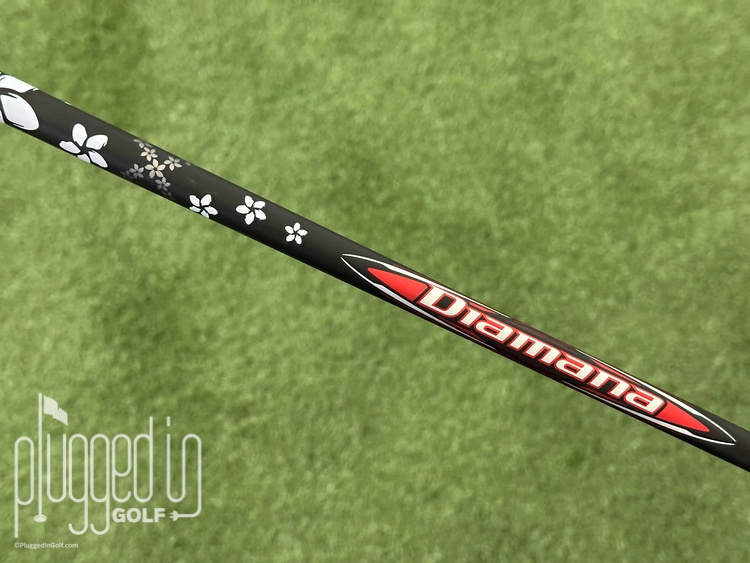
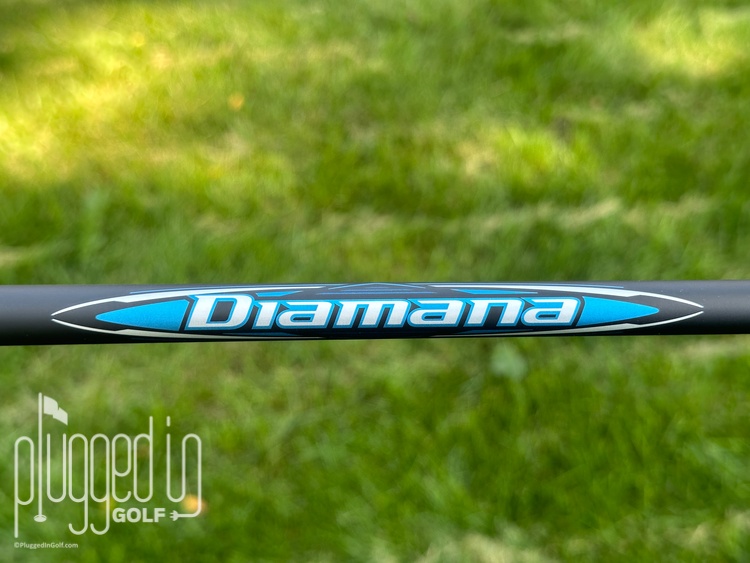
Let’s start with some of the conventional wisdom around shafts and shaft fitting, using the Diamana family’s well-known and oft-copied color structure. Historically, the Red Board or RB has been viewed as high launch, high spin, and a possible way for slower swingers to add speed. The BB is the middle of the road option, mid launch and spin, appropriate for a majority of golfers. On the other end, we have the White Board or WB which is low launching, meant to fast swingers.
If we stick to this idea of “shaft as tool for manipulating launch and spin,” fitting is pretty straightforward. A player walks in, the fitter sees where their ball flight is, tells them where it should be, and hands them the appropriate shaft. For example, if they’re using a Blue Board and hitting the ball a mile high, the fitter puts them into a White Board and everything gets better.
Unfortunately, this isn’t how fitting actually works in real life. I’m a perfect example. As a very low spin player off the tee, conventional wisdom would put me in a Red Board for more spin. However, most RB-style shafts produce less spin for me because they’re busy hitting massive hooks. Clearly conventional wisdom is missing something…
Getting Back to Basics
When discussing this new fitting paradigm with Mitsubishi, they said something simple but profound:
“The purpose of the shaft is delivering the club head to the ball.”
This seems so obvious, but so many golfers (and fitters) speed past it. If we stopped trying to impress each other with fancy terminology and buzzwords, starting instead with this simple truth, how would that change the fitting process?
“Advanced Fitting Protocol”
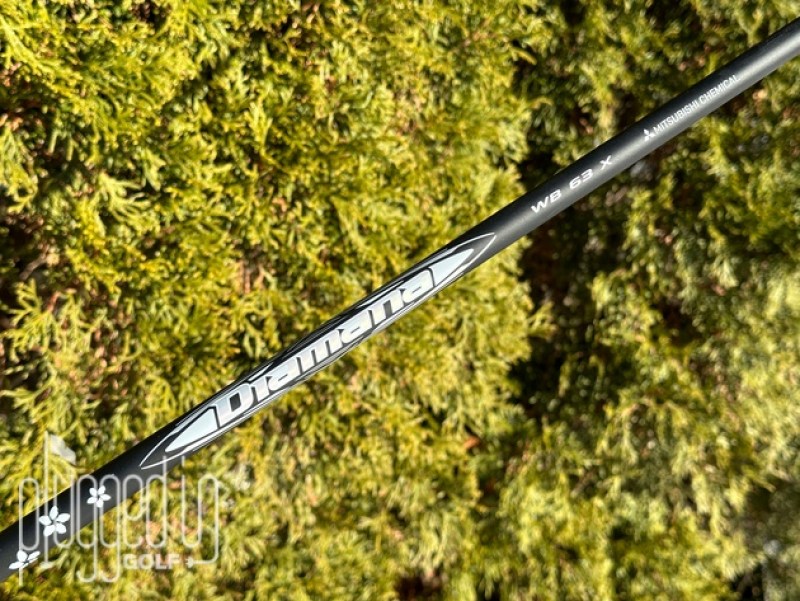
One possible answer is that we would end up with Mitsubishi’s new “Advanced Fitting Protocol.” This is a straightforward, three step process to finding the right shaft for every golfer, and it barely requires a launch monitor.
Step one: focus on start line. The shaft’s droop and twist can have a huge impact on where the ball starts. Put simply, a shaft that has more twist (higher torque) will have more closure and one with less twist (lower torque) will have less closure. A shaft with a softer tip (more droop) will start the ball to the right and a shaft with a stiffer tip (less droop) will start the ball to the left.
To make this more practical, we can consider two questions: Where does your ball start now? Where would you like it to start?
Step two is dialing in impact location. All else equal, a shaft with a softer tip (more droop) will help move strikes away from the low heel. A shaft with a stiffer tip (less droop) will move impact away from the high toe.
The third step is matching the weight and flex to the player’s swing and preferences. Mitsubishi’s fitting guide states, “Feel is subjective but critical.” In my oft-used words, “Fittings don’t happen on paper.” A player needs to like the feel of a shaft to deliver it well. If they feel like they’re swinging a piece of rebar, all the launch monitor data in the world won’t make that a good fit.
Advanced Fitting in Practice
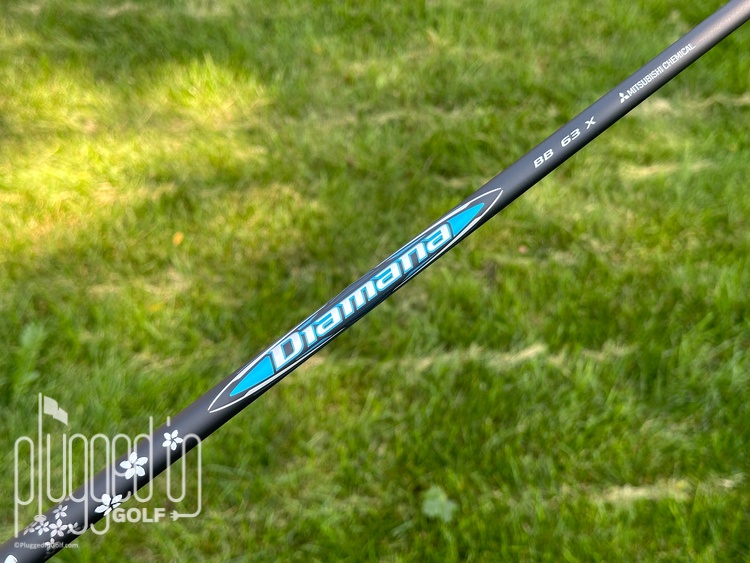
To see what this new process looked like in person, I went through a fitting at my local Club Champion with Master Fitter Alex Praeger. We started with the Diamana BB [review HERE] because it’s the middle profile and could give us a baseline. The results were solid but definitely left room for improvement. My smash factor was good, not perfect, and those off-center strikes led to some higher-than-normal spin rates. What Alex and I both liked were the start lines: several were right down the middle.
From the BB, we moved to the Diamana WB [review HERE]. As predicted, this moved the start line left – not ideal, but the shots were still in play. More importantly, the quality of contact jumped up. This led to higher smash factor, higher ball speed, and lower, more consistent spin rates.
Though we didn’t expect it to be a big success, Alex had me try the Diamana RB [review HERE] to round of the testing. Interestingly, the RB produced the tightest dispersion thanks to the more rightward start direction. However, I had the lowest quality of contact with the RB which made my spin rates and distance less consistent.
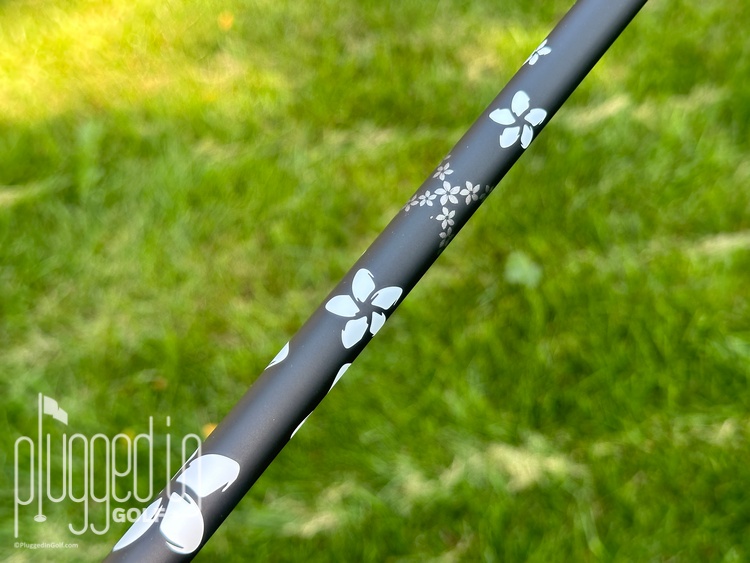
Less Mystery, More Love
The conventional wisdom on shaft fitting needs to be left behind. So does all the jargon and hand-waving mystery about what makes a shaft great. If you’re ready to find the right shaft for your game, all you need are three simple questions:
“Does this shaft help me to start the ball where I want it?”
“Does this shaft help me to hit the ball in the center of the face?”
“Do I like how this shaft feels?”
Mitsubishi’s current ad campaign encourages you to “Love Your Driver More.” With the right shaft, that’s easy to do.

He founded Plugged In Golf in 2013 with the goal of helping all golfers play better and enjoy the game more.
Matt lives in the northwest suburbs of Chicago with his wife and two daughters.
- What Is the Best Zero Torque Putter – Golf Myths Unplugged - July 27, 2026
- SpineAlign AI Golf Coach Review - July 27, 2026
- Best Headcovers for LAB Putters - July 22, 2026









9 Comments
Great review. I’ve always been considered by most fitters a low low player, but I’m actually feel oriented and the left miss is my killer. It’s not a spin or launch issue. Got lucky enough to get an in at The Kingdom and they softened the iron flex and moved me from Ventus Black to TR Red to help with impact position based on the tip dragging and staying open. Great to see a company fitting the way the best fitters apply approach the session
Very interesting article Matt, I have a Mitsubishi shaft but they do not publish the tip specs on their website just torque. How do I get around that?
Wayne,
What tip specs are you looking for?
Best,
Matt
Tip stiffness
Wayne,
Mitsubishi makes the EI Curves of their shafts fairly easy to find.
Best,
Matt
Hi Matt
Can you explain why the stiffer tipped shaft would start further left and the softer tipped shaft would start further right ?
Straight from Mitsubishi:
Stiffer tipped shafts have less droop which means their dynamic lie at impact will be more upright than a softer tipped shaft. Lie angle is a contributing factor to start line.
I will add: as with anything, this is a rule of thumb, a starting point. This is not a statement of, “Every softer tipped shaft will start farther right for every golfer.”
Best,
Matt
Lots of truth to this. I’m not a high swing speed player but I have a tendency to create a lot of spin on every club in the bag. When the Jaws wedges first came out, I spent some time on a simulator and with the right ball I could sometimes spin that 56 over 12k and was consistently over 10k.
When going to lighter shafts became trendy, everyone kept fitting me into lighter iron shafts, which of course also meant higher launch shafts. I spent years hitting the ball shorter (and higher) than before when I was playing much heavier TT Dynamic Golds. I originally chalked up the lack of distance to the fact that I had also gone from game improvement irons to players irons.
My most recent driver fitting changed everything. My driver swing speed is around 95 mph so I’m not a high speed guy. The fitter convinced me to get a 53 gram Diamana WB (stiff) with the low spin model QI head. I have always been pretty consistent with my driver but with this setup I’m hitting more fairways, gaining some distance, and just crushing the ball like never before. I don’t think that a conventional fitting would have ever put a guy with my swing speed into this setup.
Next up is a new iron set. I don’t know what shafts I am getting yet but I can guarantee they will be something with a low launch profile. I hit some Aerotech i80’s and the numbers were pretty good.
The back-and-forth about EI curves answered a lot of fitting questions. Thanks for sharing examples from the simulator.